

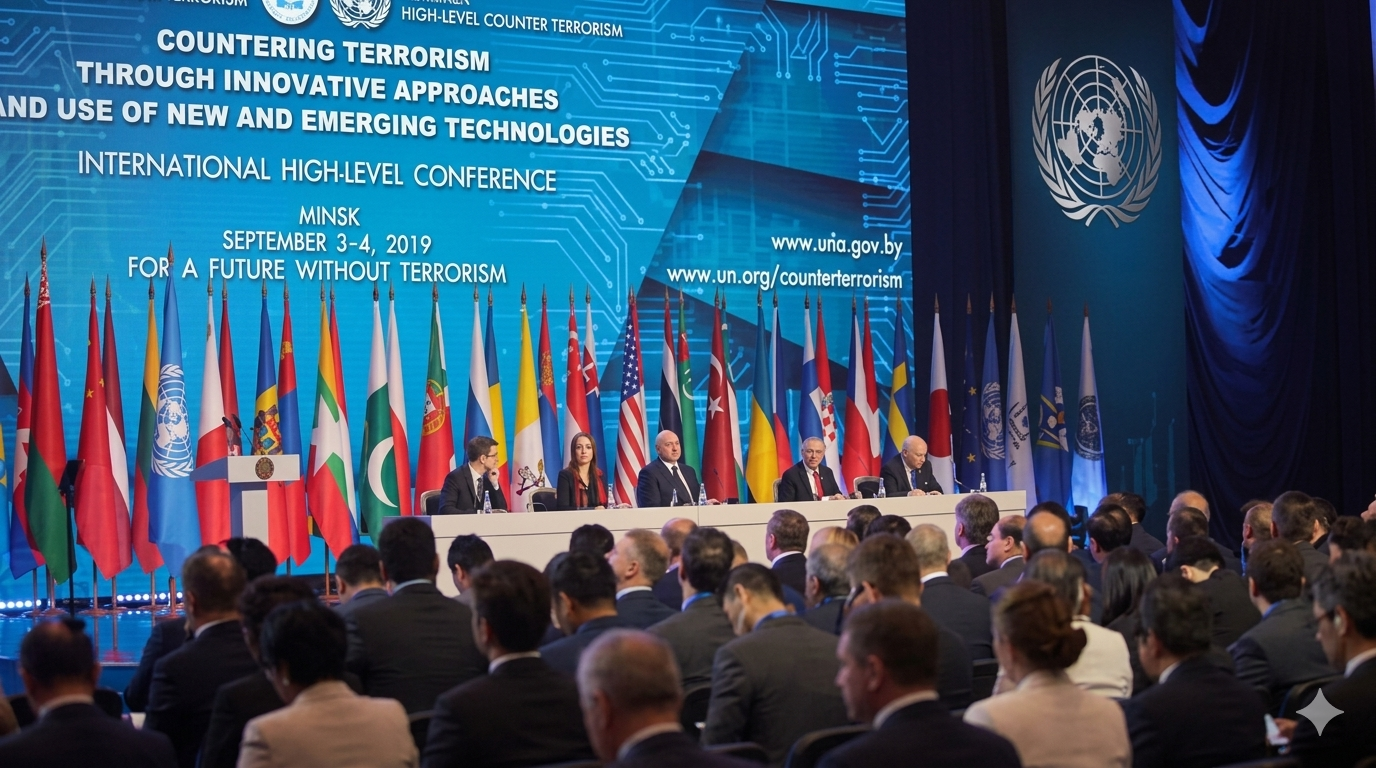
Terrorist groups are increasingly exploiting artificial intelligence, encrypted communication platforms and digital currencies, transforming the global threat into a more decentralized and harder-to-detect phenomenon, experts said at a panel held at United Nations headquarters in New York City.
The discussion was organised by the Permanent Mission of Pakistan in collaboration with the United Nations Office of Counter-Terrorism, bringing together diplomats, security experts and academics to examine emerging trends in global terrorism.
Participants said extremist networks are increasingly using online ecosystems for recruitment, propaganda and financing, expanding their reach beyond traditional conflict zones and operating across borders with limited regulatory oversight.
Pakistan’s envoy to the UN, Asim Iftikhar Ahmad, described the threat landscape as “fast evolving,” citing xenophobia, racism and religious intolerance, along with gaps in global counter-terrorism frameworks.
Alexander Zouev, Acting Under-Secretary-General of UNOCT, said terrorism has become “multipolar and sophisticated,” stressing the need for preventive strategies to address risks linked to emerging technologies.
Other speakers, including Fu Cong, Colin Smith and Fionnuala Ní Aoláin, highlighted the growing misuse of artificial intelligence, social media and virtual assets for extremist activities.
Experts noted that while traditional financing methods remain dominant, groups are increasingly experimenting with cryptocurrencies and encrypted messaging services, complicating detection and enforcement efforts.
The panel also pointed to ongoing threats from militant organisations such as Tehrik-i-Taliban Pakistan, Balochistan Liberation Army, East Turkestan Islamic Movement and Islamic State – Khorasan Province, as well as Jama’at Nasr al-Islam wal Muslimin in Africa’s Sahel region.
The meeting comes as the UN General Assembly reviews its Global Counter-Terrorism Strategy, with member states under pressure to adapt policies to an increasingly complex and technology-driven threat environment. Pakistan, currently serving on the Security Council for 2025–26, has identified counter-terrorism as a key priority.