

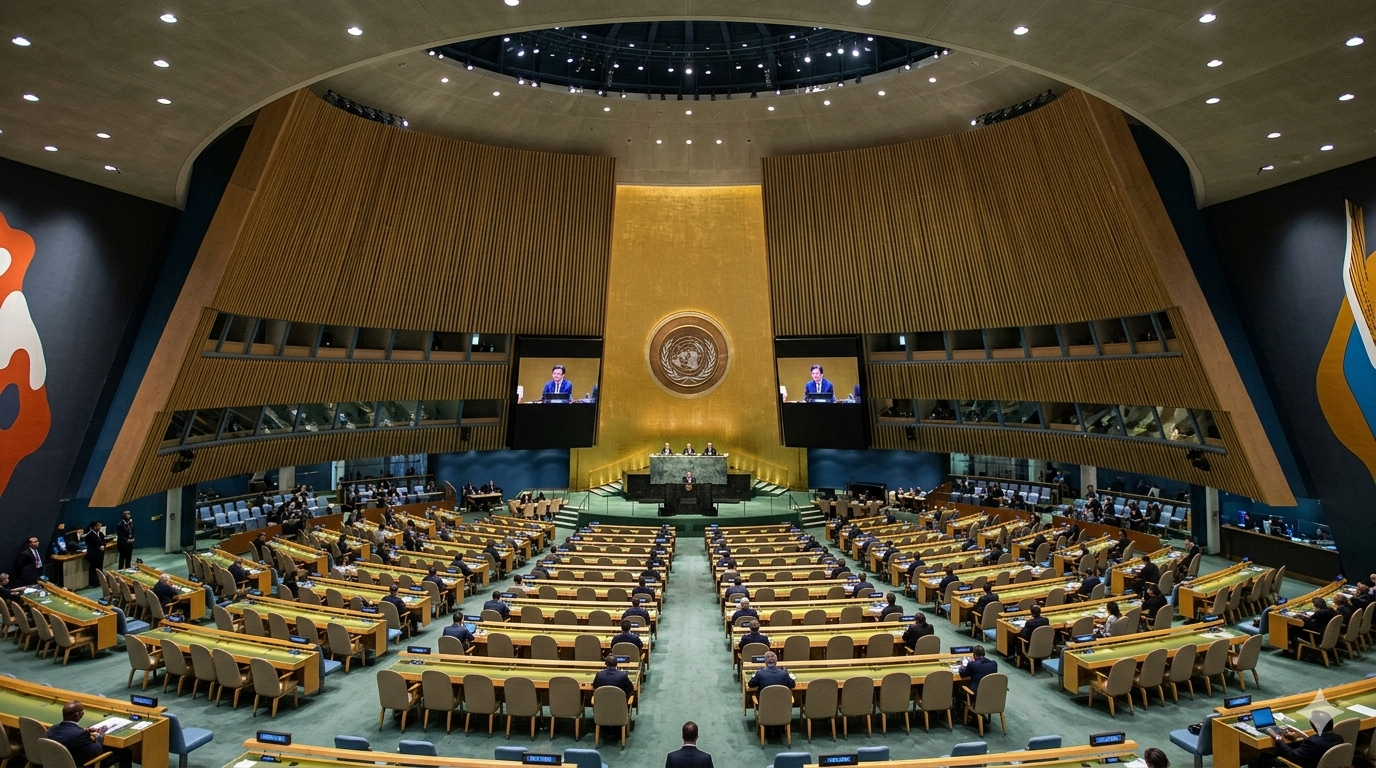
UNITED NATIONS: Talks at the United Nations aimed at reaffirming global nuclear nonproliferation and disarmament commitments ended without agreement on Friday after four weeks of negotiations, conference officials said.
The negotiations focused on reviewing the Treaty on the Non-Proliferation of Nuclear Weapons (NPT), the central international framework governing nuclear weapons control.
Conference president Do Hung Viet said delegates were unable to reach consensus on a final substantive document.
“Despite our best efforts, it is my understanding that the conference is not in a position to achieve agreement on its substantive work,” Viet said.
“I do not intend to put the document forward for adoption,” he added.
The failure marks the third consecutive unsuccessful NPT review conference following deadlocked meetings in 2015 and 2022, amid growing concerns over a renewed global nuclear arms race.
Negotiators spent weeks revising and softening draft language in an effort to secure agreement, but disputes remained over issues including Iran’s nuclear programme, North Korea’s weapons development, and future arms control negotiations between the United States and Russia.
According to draft text reviewed by AFP, the latest version stated only that Iran must “never” develop nuclear weapons. References accusing Tehran of “non-compliance” with nuclear obligations were removed during negotiations.
The draft also omitted direct references to the denuclearisation of the Korean Peninsula and calls for Washington and Moscow to negotiate a replacement for the New START Treaty, which expired earlier this year.
Analysts said the diluted language reflected deep divisions among participating states.
Richard Gowan of the International Crisis Group said the text had become “less and less anchored in the realities of current conflicts and proliferation risks.”
Despite the diplomatic failure, experts noted that the NPT itself remains in force, although concerns persist about weakening international confidence in the treaty system.
Seth Shelden of the International Campaign to Abolish Nuclear Weapons said nuclear-armed states and some allied countries were undermining disarmament efforts by expanding arsenals and weakening global commitments.
According to the Stockholm International Peace Research Institute, the world’s nine nuclear-armed states possessed 12,241 nuclear warheads as of January 2025.
Those countries include Russia, the United States, China, France, United Kingdom, India, Pakistan, Israel and North Korea.
The NPT entered into force in 1970 and aims to prevent the spread of nuclear weapons, promote disarmament, and encourage peaceful cooperation in nuclear energy.