

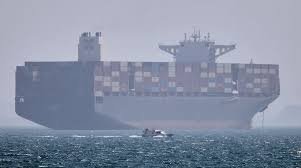
Global shipping operators are unlikely to resume full transit through the Strait of Hormuz for several weeks, despite a US-Iran agreement aimed at de-escalating the regional conflict, according to industry leaders.
The chief executive of Japan’s Mitsui O.S.K. Lines, one of the world’s largest shipping companies, said operators will wait for concrete and verifiable implementation of the deal before restoring regular passage through the strategic waterway.
Speaking to the Financial Times, Jotaro Tamura said shipowners require more than a political agreement, stressing that conditions in the Strait of Hormuz must be “material” and operationally secure before commercial fleets return in full.
“It has to be translated into real situations in the Strait of Hormuz, so that shipping lines can make themselves comfortable to go through,” he said, adding that the process could take “at least a couple of weeks or a month” given recent disruptions in the region.
The Strait of Hormuz, a critical global shipping chokepoint, carries roughly one-fifth of the world’s oil and liquefied natural gas, along with key industrial commodities. Maritime traffic through the route was heavily disrupted following the outbreak of conflict between the United States, Israel and Iran in late February.
Despite the announcement of a US-Iran framework agreement intended to restore stability and reopen the passage, shipping companies remain cautious, citing security risks and uncertainty over enforcement.
Tamura’s comments came shortly before US President Donald Trump announced that oil tankers were beginning to move through the strait again under what he described as a “safe and secure” corridor along the southern shipping route.
However, industry operators have indicated that commercial normalization will depend on sustained stability and credible security guarantees, rather than early political signals.
Mitsui O.S.K. Lines did not immediately respond to requests for further comment.
The cautious stance from major shipping firms underscores continued uncertainty in global energy transport markets, even as diplomatic efforts between Washington and Tehran move toward formalizing a ceasefire framework.