

SEATTLE: Boeing reported a larger-than-expected second-quarter loss on Tuesday after recording a $280 million charge linked to rising costs for its delayed Air Force One replacement program, although the aircraft manufacturer generated positive free cash flow as it continues efforts to stabilize its business.
The U.S. planemaker posted a net loss of $428 million for the second quarter, compared with a loss of $1.24 per share on a core basis during the same period last year. Its core loss per share came in at 76 cents, wider than analysts’ expectations of a 30-cent loss, according to LSEG data.
The additional charge was linked to higher engineering costs required to complete two replacement presidential aircraft, which Boeing now expects to deliver in 2028.
Why Did Boeing Take a Charge on the Air Force One Program?
Boeing is developing two modified 747-8 aircraft under a $3.9 billion fixed-price contract signed in 2018 to replace the existing Air Force One fleet.
The project has faced significant delays and cost overruns, falling about four years behind schedule and exceeding the original budget by more than $1 billion.
In the meantime, U.S. President Donald Trump accepted a 747-8 aircraft donated by Qatar for temporary use as Air Force One. The aircraft is expected to undergo upgrades after concerns were raised over its security features.
Boeing said the latest charge reflects additional engineering work needed to meet delivery requirements for the presidential aircraft program.
How Is Boeing’s Recovery Plan Progressing?
Despite the quarterly loss, Boeing reported positive free cash flow of $631 million, compared with a negative $200 million in the second quarter of 2025.
The company attributed the improvement partly to higher-than-expected customer payments and maintained its full-year free cash flow forecast of between $1 billion and $3 billion.
If achieved, it would mark Boeing’s first positive free cash flow result since 2023.
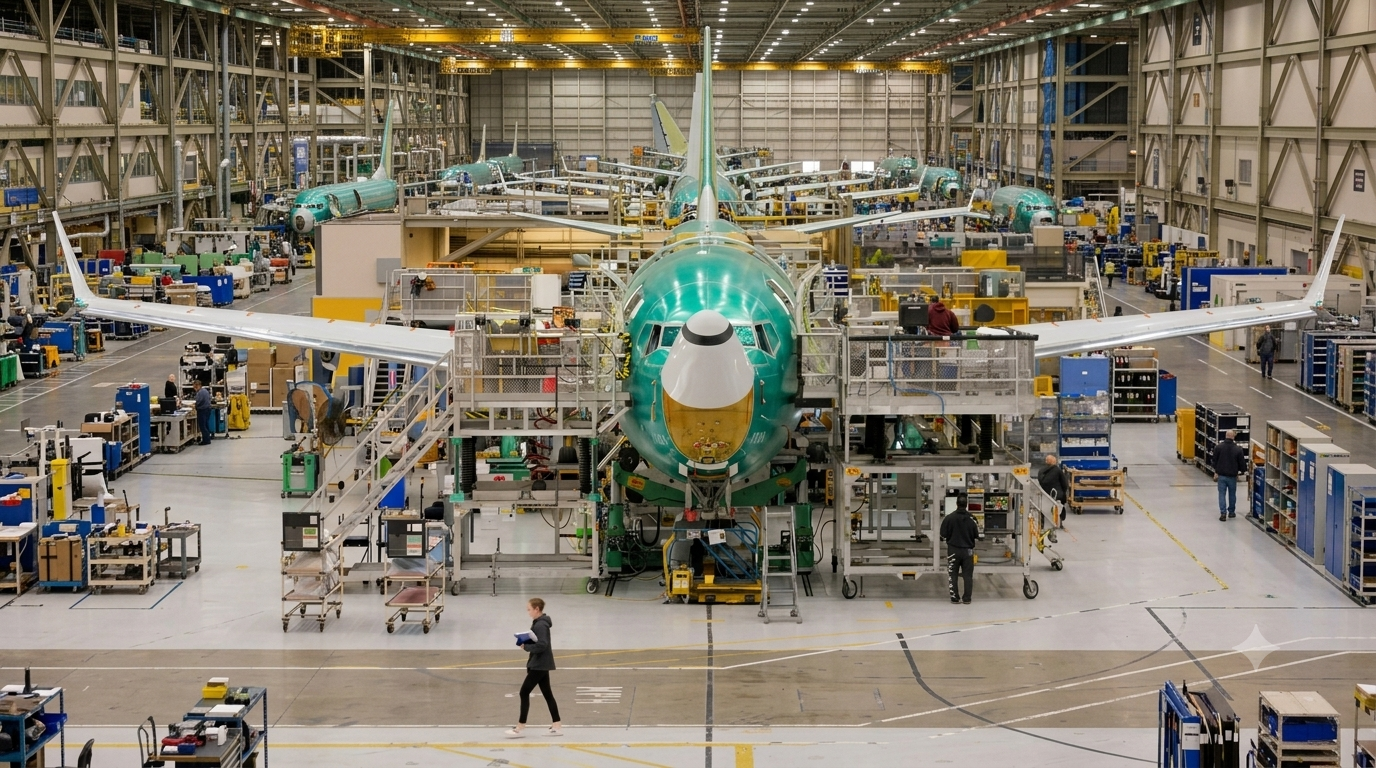
The company is also increasing production of its best-selling 737 MAX aircraft while boosting investments in manufacturing capacity. Capital spending increased during the quarter, driven by expanded 787 production capabilities in South Carolina and military aircraft production facilities in St. Louis, Missouri.
Boeing has been working to improve operational performance following years of production challenges, regulatory scrutiny, and delays across several aircraft programs.
The company said continued progress in production and cash generation would remain key priorities as it works to strengthen its financial position and rebuild investor confidence.