

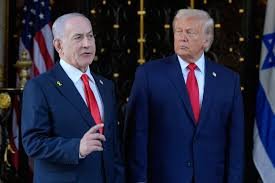
JERUSALEM: Israeli Prime Minister Benjamin Netanyahu is facing mounting political and strategic pressure after a preliminary US-Iran agreement, brokered under US President Donald Trump, advanced without securing several of Israel’s key demands, according to officials and analysts.
The Reuters report says the interim deal, expected to be signed in Switzerland on Friday, has exposed deep tensions between Washington and Jerusalem over the future of Iran, Hezbollah, and regional security arrangements.
A senior Israeli official, speaking anonymously, described the agreement as “terrible for Israel,” adding that the view is shared across Israel’s political and military leadership. The deal, they said, leaves critical Israeli security concerns unresolved, particularly regarding Iran’s nuclear programme and regional armed groups.
The US-Iran memorandum is expected to establish a 60-day ceasefire framework, reopen the Strait of Hormuz, and allow negotiations toward a broader settlement. However, Israeli officials fear the timeline may be extended, limiting Israel’s military flexibility while diplomatic talks continue.
The agreement has triggered a rare public and private divergence between Netanyahu and Trump, who have historically maintained a close political alignment. According to multiple officials, the US president has pushed to de-escalate the conflict, while Israel continues to pursue military operations against Iran-backed Hezbollah in Lebanon.
Netanyahu, who is preparing for elections later this year, acknowledged differences with Trump but insisted Israel would maintain full control over its security decisions. “I am in charge of Israel’s security interests,” he said during a press conference in Jerusalem.
The Israeli leader has also maintained that Israeli forces will remain in southern Lebanon and retain “freedom of action” against Hezbollah, despite Iranian and US-backed efforts to secure a wider cessation of hostilities.
US officials have indicated that negotiations over Iran’s nuclear programme, missile capabilities, and regional influence will continue during the 60-day ceasefire period. However, Israeli sources said those issues are unlikely to be fully addressed in the current framework, raising concerns in Jerusalem that the deal could be extended and Israel’s military options constrained.
The disagreement has reportedly been accompanied by tensions at the leadership level. Israeli officials cited past clashes between Netanyahu and Trump over military escalation in Lebanon, including a reported phone call in which Trump urged restraint during ongoing negotiations.
While Netanyahu has previously cultivated a close relationship with Trump, particularly after US recognition of Jerusalem and support for the Abraham Accords, analysts say the current diplomatic shift weakens his political position at home.
Experts cited in the report said Netanyahu may struggle to convince Israeli voters that the agreement aligns with Israel’s security interests, especially as public confidence in US guarantees declines.
Despite criticism, Israeli officials reiterated that Israel would continue to act independently if Iran resumes nuclear or missile development, underscoring the risk of further escalation even as diplomatic efforts continue.
The interim deal also includes provisions to restore maritime traffic through the Strait of Hormuz, a critical global oil chokepoint, while leaving broader disputes unresolved for further negotiations.