

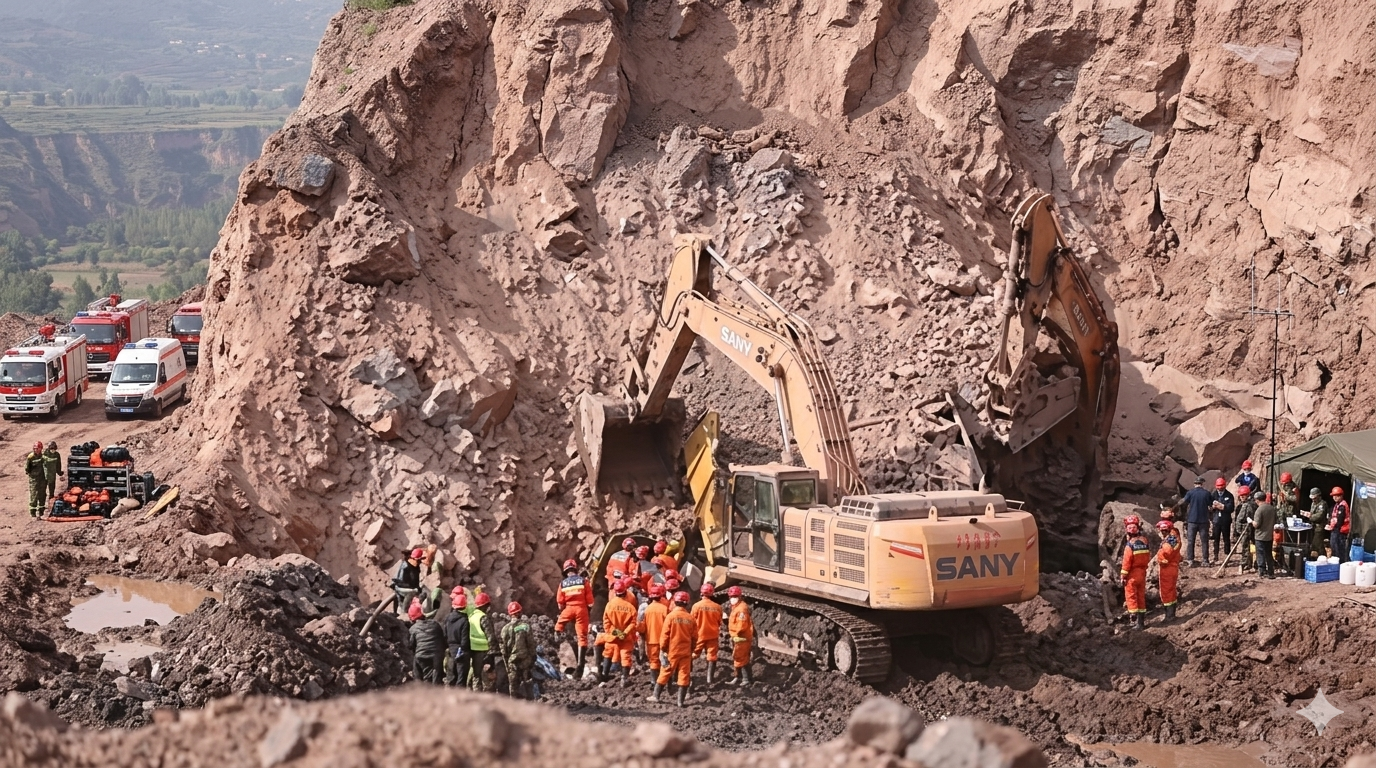
BEIJING: At least 90 miners were killed after a gas explosion ripped through a coal mine in northern China, state media reported on Saturday, marking the country’s deadliest mining disaster in 17 years.
According to state news agency Xinhua, 247 workers were underground when the blast occurred at 7:29 p.m. local time on Friday at the Liushenyu coal mine in Shanxi province.
Most of the miners were brought to the surface by Saturday morning, while authorities confirmed that at least 90 people had died.
Xinhua reported that 345 emergency personnel were deployed to the site, with rescue teams continuing intensive search operations for several workers initially reported missing.
The explosion is the worst mining disaster in China since 2009, when 108 people were killed in a mine blast in Heilongjiang province.
Footage aired by state broadcaster CCTV showed helmeted rescuers carrying stretchers at the scene, with ambulances stationed nearby.
Chinese President Xi Jinping called for “all-out efforts” to treat the injured and ordered a full investigation into the incident.
According to Xinhua, Xi said all regions and departments must “draw lessons from this accident,” strengthen workplace safety measures, and prevent future major industrial disasters.
Authorities said a person “responsible for” the mining company had been placed under legal control as part of the investigation.
Initial reports indicated that carbon monoxide levels inside the mine had “exceeded limits,” trapping dozens of workers underground. Several miners were reportedly in critical condition before the death toll rose sharply on Saturday.


Shanxi province, one of China’s major coal-producing regions, has long been associated with mining accidents despite improvements in industrial safety standards in recent decades.
Mining disasters remain a recurring problem in China due to weak enforcement of safety regulations and hazardous working conditions in parts of the industry.
In 2023, a collapse at an open-pit coal mine in Inner Mongolia killed 53 people.
China remains the world’s largest consumer of coal and the biggest emitter of greenhouse gases, even as it rapidly expands renewable energy capacity.