

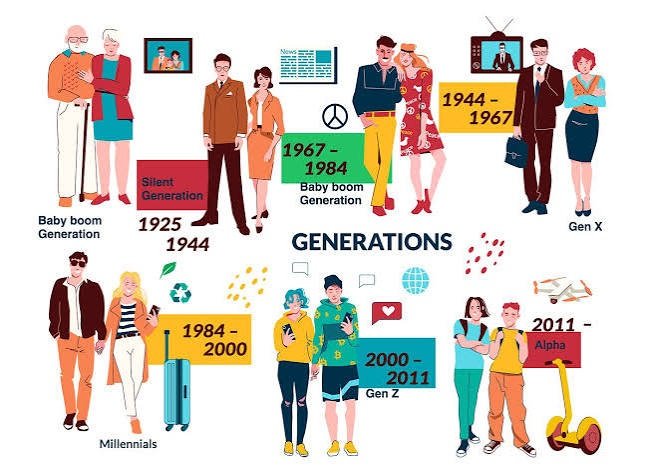
Sometimes, parents label their children’s choices as irresponsible while children regard parents’ advice as outdated. Why is that so? The answer to this question lies in understanding generational gap that keeps both parents and children far from understanding each other. Every generation is born with several innovative ideas. Some are good at learning, others at application of already existing knowledge, and a few at creating new strategies to outpace previous generations. This different approach towards life creates a vacuum among various generations. A number of causes behind this generational gap include different social and historical experiences, paradigm shift in technology and social media, diverse cultural values, lack of proper communication and existence of mutual stereotypes, different approach towards career and employment, and absence of dialogue among new and old generations. All these causes result in harmful impacts not only on family but also on overall society if not resolved with pragmatic measures. Therefore, some sagacious and practical remedies have been discussed in this article to address this gap in true letter and spirit.
Defining Generational Gap
Investopedia defines it as the difference in values, cultures, attitudes, lifestyle, and communication among living generations born with a difference of at least one decade. It can also be defined as the ability of different generations to perceive the same situation as different. This is because they experience varied environments in which they grow up and behave in a different way. This creates a space among them, ultimately leaving them unable to understand one another’s mindset. According to EBSCO’s overview of the generational gap, generations are social groups shaped by their shared culture and historical experiences during their formative years. So, people who grow up in different periods see the world through a different lens, which is often perceived as generational gap.
Causes of Generational Gap
Different Social and Historical Experiences
If parents have different social and historical experiences, they will prefer their children to follow those strategies adopted by them. For example, if parents grew up in an economically insecure environment, they will push their younger ones to focus on financial security first. However, the upcoming younger generation is more tilted towards those career paths that provide freedom of place and time such as freelancing, entrepreneurship, or digital careers. New generations are ambitious and adventurous. Risk taking may be considered as recklessness by the older generations, but younger people perceive themselves as ambitious. This brings disagreement among generations about how to achieve the same thing – success and security.
Paradigm Shift in Technology & Social Media
With rapid advancement across the world, paradigm shift in technology and social media brings difference among younger and older generations according to Investopedia’s discussion of generation gaps. Young people prefer to use online platforms like Facebook, Instagram, LinkedIn, Snapchat, WhatsApp, YouTube, and TikTok to learn, socialize, and earn. At the same time, their parents are concerned about screen addiction, online frauds, cyber threats, misinformation and disinformation spreading, and inappropriate content consumption. The increasing use of social media application for family conversations can lead to make older ones feel excluded, but it is normal for younger ones. Therefore, technology has reduced face to face interactions, but at the same time it connects relatives and friends living in different cities and countries.
Diverse Cultural Values
As we discussed earlier that these are social and historical experiences that shape a generation’s cultural values, attitudes, lifestyles, and communication strategies. Different cultural values lead to differences over marriage career choices, lifestyle, and gender roles. For example, parents may consider family consultation as a duty while children may prefer freedom of choice. In our society, it is common to ask parents for permission for marriage and career selection. If they do not agree with younger adults, society often labels them a rebellious which is a remarkable example that diverse cultural values bring generational gap.
Lack of Proper Communication and Existence of Mutual Stereotypes
Lack of proper communication and existence of mutual stereotypes is one of the most important causes of generational gap. In several cases, parents do not allow their children to express their thoughts saying “you are too young to understand this”. Sometimes, children explain their point of view but they end up saying “you will never understand” to parents which closes the door to discussion. Hence, one can say that disagreement over a point is not a problem, but the way people communicate it.
Different Approach Towards Finances and Employment
Last but not least, the older generation prefers financial stability to freedom of place and time in employment. For this, they often want their children to get higher education followed by securing a government sector job. This is called independence. On the other hand, younger adults want to learn skill and earn online through different platform like YouTube, TikTok, Fiverr, UpWork, etc. The point of difference is the goal is same; however, approach is different: one wants stability only and the other aspires for personal freedom along with financial freedom.
Effects of Generational Gap
Generational gap impacts family, education, workplace, and overall society deeply. Although it is difference of opinion and approach towards life among different generations, it can leave dark scars on the face of society. In family, it leads to create emotional distance, increase secrecy, and reduced trust among family members. In terms of education, it enhances disengagement among students and teachers because of difference in communication styles and unfamiliar perspectives of students. At workplace, it urges conflict with authority and working setups and environments. In overall society, generational gap adds to stereotypes, age-based prejudices, and reduced cooperation between generations.
Remedies to Overcome Generational Gap
Generational gap can become useful if regulated properly because it brings diversity of opinion, cultures, attitudes, lifestyles, and approach towards life. To make it beneficial for society, the solution lies in adopting pragmatic and sagacious strategies. First of all, there should be intergenerational dialogue to build trust and make disagreement less severe. For example, a time can be fixed in the family to explain concerns of parents and children freely once a week. Second, an environment of mutual learning should be created among elder and younger ones to make learning a two-way process. For instance, older ones should share their professional and life experiences whereas younger adults should help elders learn the use of digital devices and social media. Third, a culture of balanced parenting should be promoted to preserve guidance without suppressing freedom of children to choose career or spouse. Parents need to explain their concerns about a specific career or marriage decision of their child rather than issuing an unnecessary command. Fourth, economic support should be provided to young generation to address material pressures. To serve this purpose, career counselling, vocational training, paid internships, and other pathways to financial independence could be explored with the help of parents and mentors. Fifth, workplace environments should be reformed to combine the experience of old professionals with fresh ideas. Reverse mentorship, mixed age teams, and flexible communication strategies could be helpful in this regard. Last but not least, education and awareness should be spread in order to break stereotypes through one-on-one interaction. Education institutes can arrange programs to bring different age groups together.
Conclusion
There exists beauty in disagreement. When this disagreement exists among two or three generations, it is named as generational gap. This gap is possibly the result of social change. Older generations can help younger ones learn by sharing their experience, historical learning, and other perspectives while new generation can make elders learn the use of advanced technology and share their innovative ideas. Genuine dialogue among generations with the help of educational institutes and policymakers could be of great help in reducing the said gap. To conclude, the actual measure of an advancing society is not whether its generations think alike, but whether they can disagree without losing their ability to learn from one another.
Disclaimer: The views and opinions expressed in this article are solely those of the author and do not necessarily reflect the views, policies, or position of this website. The website does not endorse or oppose any opinion presented herein.