

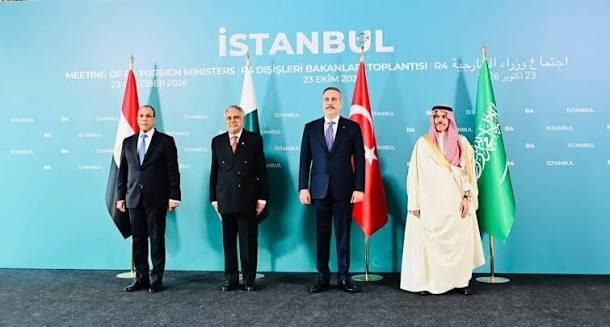
On 23 October 2026, eight foreign ministers met in Istanbul: Pakistan, Saudi Arabia, Türkiye and Egypt from the regional side, and France, Germany, Italy and the United Kingdom from Europe. Their discussions addressed regional conflicts, maritime security and the need for lasting negotiated solutions in accordance with relevant United Nations resolutions.
Jammu and Kashmir was not mentioned explicitly. Yet the meeting presents an important question for Pakistan’s diplomacy: can emerging regional partnerships create space for renewed international engagement on a dispute that has remained unresolved for decades?
For Pakistan, 27 October must be more than a day of remembrance. It must be a moment to assess whether our diplomatic efforts are keeping pace with a changing world.
The central challenge is not a shortage of statements about Kashmir. It is the need to convert our position into sustained diplomatic engagement, credible international partnerships and meaningful progress towards a peaceful resolution.
Istanbul: An opportunity to pursue, not a victory to claim
The R4 countries-Pakistan, Saudi Arabia, Türkiye and Egypt-have begun developing a format for consultation with European partners. The Istanbul meeting brought together eight countries with different interests but a shared concern about regional instability.
The joint statement’s commitment to dialogue, de-escalation, relevant UN resolutions and negotiated settlements deserves attention. It would be inaccurate to claim that this language constitutes an endorsement of Pakistan’s position on Kashmir. The dispute was not specifically identified.
Nevertheless, Pakistan has an opportunity to advance a legitimate diplomatic argument: if peaceful negotiations and international frameworks are essential to resolving conflicts, Jammu and Kashmir deserves serious consideration within appropriate international discussions.
That opportunity requires preparation. Pakistan’s diplomatic representatives need a clear, evidence-based brief covering the relevant UN resolutions, the outstanding legal and political disagreements, the aspirations of the Kashmiri people and practical avenues for renewed engagement.
The objective must be to secure sustained attention to Kashmir, rather than interpret a general statement as a diplomatic success already achieved.
The United Nations: An unresolved responsibility
UN Security Council Resolution 47, adopted on 21 April 1948, addressed peace and order in Jammu and Kashmir and recommended a process intended to lead to a free and impartial plebiscite. The relevant resolutions and their implementation remain subjects of fundamental disagreement between India and Pakistan.
The inability to resolve the dispute has exposed the limitations of international institutions when political differences obstruct progress. But those limitations do not erase the historical record or remove the relevance of international law.
Pakistan’s diplomatic approach must combine engagement at the United Nations with regional consultations, bilateral initiatives and sustained international advocacy. The aim must be to keep Kashmir within serious diplomatic consideration, supported by accurate documentation and proposals that can create space for peaceful dialogue.
Azerbaijan: Friendship must deliver practical results
Pakistan’s close relationship with Azerbaijan is an asset, but political goodwill alone cannot sustain a strategic partnership.
India’s expanding commercial engagement with Azerbaijan demonstrates that countries pursue economic interests even when their political relationships differ. This should prompt Pakistan to strengthen its own partnership with Baku, not assume that Azerbaijan must choose between the two countries.
Greater trade, investment, educational cooperation and business-to-business engagement would give the relationship stronger foundations. Agriculture, pharmaceuticals, textiles, energy, technology and tourism offer areas worth exploring through serious commercial planning.
Azerbaijan’s support for Pakistan on important diplomatic questions should be valued, while recognising that its foreign policy will reflect its own national interests.
The objective is to make Pakistan an increasingly valuable partner through practical cooperation, sustained strategic dialogue and mutual benefit. Friendship becomes more resilient when it is supported by tangible shared interests.
Minority rights: Credibility begins at home
Concerns about the treatment of Muslims, Christians and other vulnerable communities in India deserve serious international scrutiny. Allegations of discrimination, violence and institutional complicity must be assessed through credible evidence and careful examination of responsibility.
Pakistan must also acknowledge and address its own failures in protecting minorities. One country’s shortcomings do not excuse another’s, and domestic problems do not invalidate legitimate concerns about human rights elsewhere.
Equal citizenship, religious freedom, effective law enforcement and institutional accountability strengthen Pakistan’s international credibility. A consistent commitment to human dignity gives greater weight to its advocacy for Kashmiris and other vulnerable communities.
Principled diplomacy requires Pakistan to uphold the values it invokes internationally through its own conduct.
Ambassadors must represent the nation, not a select circle
A country’s diplomatic standing is shaped not only by ministerial meetings and official declarations, but also by the daily conduct of its ambassadors and diplomatic missions.
An ambassador’s responsibility extends beyond protocol and formal ceremonies. It includes understanding the host society, building relationships, identifying opportunities for cooperation and engaging constructively with the wider diaspora.
Diplomatic protocol must never become a barrier between a country’s representatives and the people they are appointed to serve.
An ambassador need not please everyone, nor can every individual expect identical access. Professional judgment is essential. But engagement must be guided by merit, relevance, fairness and national interest-not by narrow social circles or personal preferences.
Pakistanis abroad include academics, researchers, entrepreneurs, journalists, humanitarian workers, students and professionals whose experience can contribute to stronger relations with their host countries. Their value should not be judged by their proximity to official circles or by the social recognition they command.
When ordinary citizens or members of the diaspora feel unnecessarily dismissed, overlooked or humiliated by their own representatives, the damage extends beyond individual disappointment. It can create distance between the community and the country those representatives embody.
That distance is avoidable.
In Norway, as elsewhere, Pakistan has opportunities to expand cooperation in education, research, business, technology and culture. Such opportunities require active outreach, an understanding of local institutions and a willingness to engage people across different backgrounds.
The measure of an ambassador is not simply the protocol observed or the ceremonies attended. It is the trust established, the opportunities developed and the relationships that endure after the tenure ends.
An ambassador represents the dignity of the state; that dignity is strengthened, not diminished, by treating people with respect.
A more effective diplomatic approach
Pakistan’s international engagement must now place greater emphasis on practical outcomes. The Istanbul initiative offers a channel to explore further diplomatic cooperation. Azerbaijan offers opportunities to turn political friendship into economic substance. Kashmir requires sustained international engagement, supported by evidence, legal understanding and credible proposals.
Diplomatic missions, meanwhile, must remain connected to the communities and institutions that can strengthen Pakistan’s international standing. Professionalism, accessibility and fair engagement are not optional courtesies; they are essential elements of effective public diplomacy.
These priorities demand continuity and clear objectives. Meetings and declarations have their place, but their value ultimately depends on what follows.
27 October: From remembrance to responsibility
The people of Jammu and Kashmir remain at the centre of an unresolved dispute. Pakistan’s commitment to their rights and aspirations must be reflected in sustained diplomatic work rather than confined to an annual observance.
The Istanbul meeting is an opening for further engagement, not a breakthrough on Kashmir. Azerbaijan’s independent pursuit of its economic interests is a reminder that friendships require investment. The responsibilities of ambassadors demonstrate that a country’s international reputation is built through everyday conduct as well as high-level diplomacy.
On 27 October, Pakistan’s message must therefore be accompanied by a clear sense of purpose: stronger international partnerships, credible advocacy, principled consistency and diplomatic representation that commands respect through its conduct.
The real measure of solidarity with Kashmir is not how powerfully the cause is remembered on one day, but how persistently and intelligently it is pursued throughout the year.
Disclaimer: The views and opinions expressed in this article are solely those of the author and do not necessarily reflect the views, policies, or position of this website. The website does not endorse or oppose any opinion presented herein.