

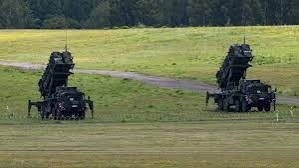
WASHINGTON: The United States has approved the proposed sale of 500 Patriot advanced interceptor missiles to Ukraine in a $2.1 billion deal funded by European allies and Canada, as Kyiv seeks to strengthen its air defences against escalating Russian attacks, the BBC reported.
The US State Department said the PAC-3 interceptor missiles would be financed through contributions from Canada, Germany and Norway, alongside European Union funding and Ukrainian national resources. It added that no US government funds would be used for the purchase.
However, Ukrainian President Volodymyr Zelensky warned that deliveries could take several years, despite Kyiv’s urgent need for the missiles.
How Will the Patriot Missile Deal Be Funded?
According to the US State Department, the proposed sale is intended to strengthen Ukraine’s security and support Washington’s foreign policy objectives in Europe.
US defence contractor Lockheed Martin will serve as the principal contractor for the deal.
The purchase will be financed through the JUMPSTART programme, contributions from allied countries and the European Union’s Ukraine Support Loan.
Zelensky welcomed the approval but urged Washington to accelerate deliveries, saying Ukraine needed the interceptor missiles immediately.
Why Does Ukraine Need More Patriot Missiles?
Ukraine has been seeking additional Patriot interceptors to defend against Russian ballistic missile attacks and protect critical infrastructure.
Zelensky said Russia had intensified strikes on the country’s energy infrastructure ahead of winter, reporting more than 30 attacks on critical components of the power grid over the preceding two weeks.
However, the delivery timeline remains uncertain as the missiles are expected to be newly manufactured rather than drawn from existing stockpiles.
According to the US Department of Defence figures cited by the BBC, production stands at approximately 600 missiles annually, while global demand has increased amid their use in multiple conflicts, including the US war against Iran.
The approval follows recent diplomatic tensions between Zelensky and US President Donald Trump over Washington’s approach to the Russia-Ukraine conflict. Relations eased after Zelensky met US envoys in Oslo on October 20.
Meanwhile, European diplomats criticised Russia’s participation in the G20 foreign ministers’ meeting in Atlanta, with several refusing to stand for the official group photograph alongside Russian Foreign Minister Sergei Lavrov.