

How are virtual worlds being used to train robots?
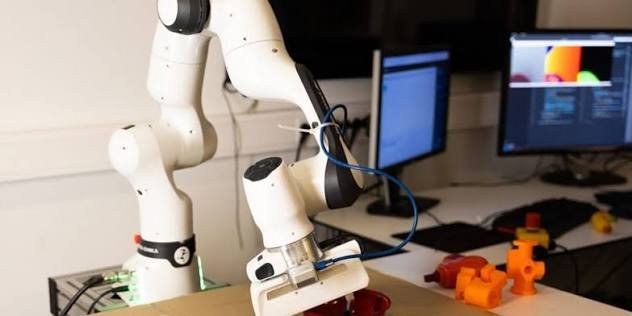
United Kingdom: Robotics companies are increasingly using high-speed computer simulations to train robots before deploying them in real-world environments. Cambridge-based start-up Vsim has developed a simulator that allows robots to practise tasks thousands of times in virtual environments before the resulting instructions are transferred to physical machines.
Vsim says its system can run tens of thousands of simulations directly on a robot’s onboard hardware, allowing machines to evaluate different possible actions and adapt rapidly to changing surroundings. The technology is designed to improve robots’ ability to operate safely around people, animals and other unpredictable objects.
Why are faster simulations important for robotics?
Vsim founders Michelle Lu and Kier Storey say conventional robotics simulation methods rely partly on algorithms developed decades ago and are not optimised for modern graphics processing units (GPUs). The company has focused on redesigning these systems to take greater advantage of AI computing hardware.
Nvidia is also developing robotics simulation and world-model technologies, including its Isaac Sim platform and Cosmos system. The company is using AI agents to help create virtual environments and test robotic solutions. Researchers, however, say simulations remain imperfect representations of the physical world, particularly for tasks involving deformable objects, cutting and complex manipulation.
The development of faster and more realistic simulations is aimed at closing the gap between virtual training and real-world robotic performance, potentially allowing robots to learn complex tasks more quickly and respond to unpredictable environments.