

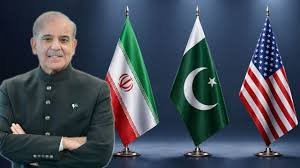
ISLAMABAD: Prime Minister Shehbaz Sharif on Monday announced that Pakistan will host the formal signing ceremony of the recently negotiated US-Iran peace agreement on June 19, describing the development as a major diplomatic breakthrough aimed at ending months of conflict in the Middle East.
Addressing the National Assembly, the prime minister said the agreement represents a significant step toward restoring regional stability after months of fighting that has caused thousands of casualties and disrupted global energy markets.
The announcement came hours after Pakistani and US officials confirmed that Washington and Tehran had reached a framework agreement designed to halt hostilities and create conditions for broader negotiations on unresolved political and security issues.
According to the prime minister, the agreement includes an immediate cessation of military operations and lays the groundwork for a wider peace process involving key regional stakeholders.
Sharif described the development as a victory for diplomacy and dialogue, stating that the accord offers an opportunity to reduce tensions and promote long-term stability in the region.
During his address, the prime minister acknowledged the role played by several international leaders and countries in facilitating negotiations, including Qatar, Saudi Arabia, Turkiye and China. He said sustained diplomatic engagement by regional and global actors helped move the peace process forward despite repeated setbacks.
The prime minister also praised Pakistan’s diplomatic and security institutions for their contribution to the negotiations. He highlighted the efforts of Deputy Prime Minister and Foreign Minister Ishaq Dar, as well as the country’s military leadership, saying they remained actively engaged throughout the process.
Sharif said the conflict had placed significant pressure on the global economy, including Pakistan’s economy, and expressed hope that the agreement would contribute to improved economic stability and lower uncertainty in international markets.
The agreement remains a preliminary framework, with negotiators expected to continue discussions on key outstanding issues, including regional security arrangements, sanctions relief and the future of Iran’s nuclear programme.
The formal signing ceremony is scheduled to take place on June 19, marking what could become one of the most significant diplomatic developments in the region in recent years.