

MANILA: A powerful magnitude 7.8 earthquake struck off the southern Philippine island of Mindanao on Monday, triggering tsunami warnings across the Philippines and parts of Indonesia, while authorities launched emergency response and evacuation operations in coastal areas.
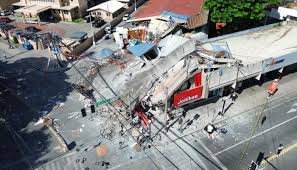
Officials reported one death, while assessments of injuries and damage were ongoing. No major structural collapse had been confirmed immediately after the quake.
The earthquake struck at a depth of 10 kilometres, according to the German Research Centre for Geosciences. The tremor was felt across southern Philippines and parts of Indonesia, prompting residents to evacuate buildings and move to higher ground.
The Philippine Institute of Volcanology and Seismology (Phivolcs) warned of potentially dangerous tsunami waves exceeding one metre and advised coastal communities to remain vigilant. Indonesia’s geophysics agency said small tsunami waves had been detected but no significant impact had been reported.
Authorities in Sarangani province, near the epicentre, reported power and telecommunications outages, while schools were closed and damage assessments were underway. Emergency officials said aftershocks continued to affect the area.
In General Santos City, residents fled homes and offices as strong shaking caused furniture and household appliances to topple. Local disaster management teams were deployed to assess damage and assist affected communities.
Philippine President Ferdinand Marcos Jr said the national government had mobilised resources and was coordinating disaster response efforts across Mindanao.
Evacuations were carried out in several coastal communities as a precaution against possible tsunami waves. Local officials reported minor infrastructure damage, including cracks in buildings and a bridge, while a religious structure collapsed in one municipality.
Indonesian authorities said the quake was strongly felt in the northern city of Manado but reported no significant damage or casualties.
The Philippines and Indonesia are located along the Pacific Ring of Fire, one of the world’s most seismically active regions, where earthquakes and volcanic activity occur frequently.
Authorities continued to monitor tsunami risks and aftershocks as emergency teams assessed the full extent of the disaster.