

MOSCOW: Russia has delivered nuclear munitions to field storage facilities in Belarus as part of a large-scale nuclear forces exercise, according to the Russian Defence Ministry.
The three-day drill, which began on Tuesday and is being conducted across Russia and Belarus, comes amid heightened tensions between Moscow and Western countries over the war in Ukraine, which Russia describes as an existential security confrontation with the West.
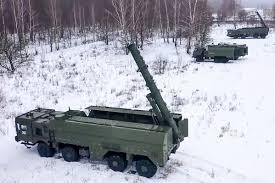
The Russian Defence Ministry said on Thursday that nuclear munitions were transported to missile brigade field storage sites in Belarus, where units were conducting training exercises involving the receipt, handling, and deployment preparation of special warheads for the Iskander-M tactical missile system.
According to the ministry, personnel were also practicing loading procedures for mobile launch vehicles and conducting covert relocation drills to designated launch preparation areas.
Footage released by the Defence Ministry showed military transport vehicles moving through forested terrain during night-time conditions, although it was not independently verified what specific materials were being unloaded.
The Iskander-M system, known by NATO as SS-26 Stone, is a mobile short-range ballistic missile platform capable of carrying both conventional and nuclear warheads, with a reported range of up to 500 kilometres.
Moscow has frequently referenced its nuclear capabilities throughout the conflict in Ukraine, with President Vladimir Putin repeatedly signalling strategic deterrence warnings to Western countries over their military support for Kyiv.
The drills also come amid sharp rhetorical exchanges between Russia and NATO members. The Kremlin recently condemned remarks by Lithuania’s Foreign Minister Kęstutis Budrys, calling them “verging on insanity” after he suggested NATO should demonstrate the capability to strike or penetrate Russia’s Kaliningrad region.
Kaliningrad, a heavily militarised Russian enclave located between Poland and Lithuania on the Baltic Sea, hosts Russia’s Baltic Fleet and plays a key strategic role in Moscow’s regional defence posture.
The nuclear exercise underscores escalating military signalling between Russia and Western powers, with both sides continuing to reinforce deterrence messaging amid ongoing geopolitical tensions linked to the Ukraine conflict.