

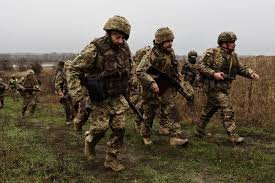
A US-mediated ceasefire between Russia and Ukraine has come under significant pressure just two days after taking effect, with both sides accusing each other of violating the agreement through continued attacks over the weekend.
The three-day pause, announced by US President Donald Trump as part of renewed diplomatic efforts to end the war, has failed to hold along large sections of the front line, according to officials from both countries.
Ukrainian authorities reported that at least three civilians were killed in Russian drone strikes near frontline areas, while more than 200 combat engagements were recorded since early Saturday. Regional officials also reported multiple injuries across the Kharkiv, Kherson, Zaporizhzhia, and Dnipropetrovsk regions due to drone and artillery attacks.
Ukrainian President Volodymyr Zelenskiy said Russian forces had continued offensive operations despite a temporary reduction in large-scale aerial and missile strikes. He stated that Ukrainian forces were actively responding to ongoing assaults along the front.
Russia’s Defence Ministry, meanwhile, accused Ukraine of violating the ceasefire, claiming it had intercepted 57 Ukrainian drones and conducted retaliatory strikes on the battlefield.
The ceasefire was intended to support broader US-led diplomatic efforts, including a proposed prisoner exchange involving 1,000 detainees from each side. Zelenskiy said he expected Washington to guarantee implementation of the swap.
Despite the temporary pause, fighting reportedly continued across the 1,200-kilometre frontline. Ukraine’s General Staff said nearly 210 clashes had taken place since early Saturday, although Reuters noted it could not independently verify battlefield claims.
Kyiv’s air force reported that Russia launched 27 long-range drones overnight, all of which were intercepted by air defence systems.
The conflict continues to centre on territorial disputes in eastern Ukraine, particularly the Donetsk region, where Russian forces are attempting to consolidate control. Moscow has also maintained demands regarding the Zaporizhzhia nuclear power plant as part of any potential settlement.
Diplomatic efforts remain stalled, with both sides trading accusations over violations of earlier ceasefire arrangements. Russian officials have described peace prospects as distant, while also suggesting the conflict may be nearing its conclusion.
US envoy Steve Witkoff and Jared Kushner are expected to travel to Moscow for further discussions, while Ukrainian negotiators recently held talks in the United States focusing on humanitarian issues and future steps toward negotiations.
Germany has also rejected suggestions involving former Chancellor Gerhard Schröder in mediation efforts, distancing itself from informal diplomatic proposals linked to the Kremlin.
As battlefield activity continues and negotiations remain inconclusive, the fragile ceasefire appears increasingly uncertain.