

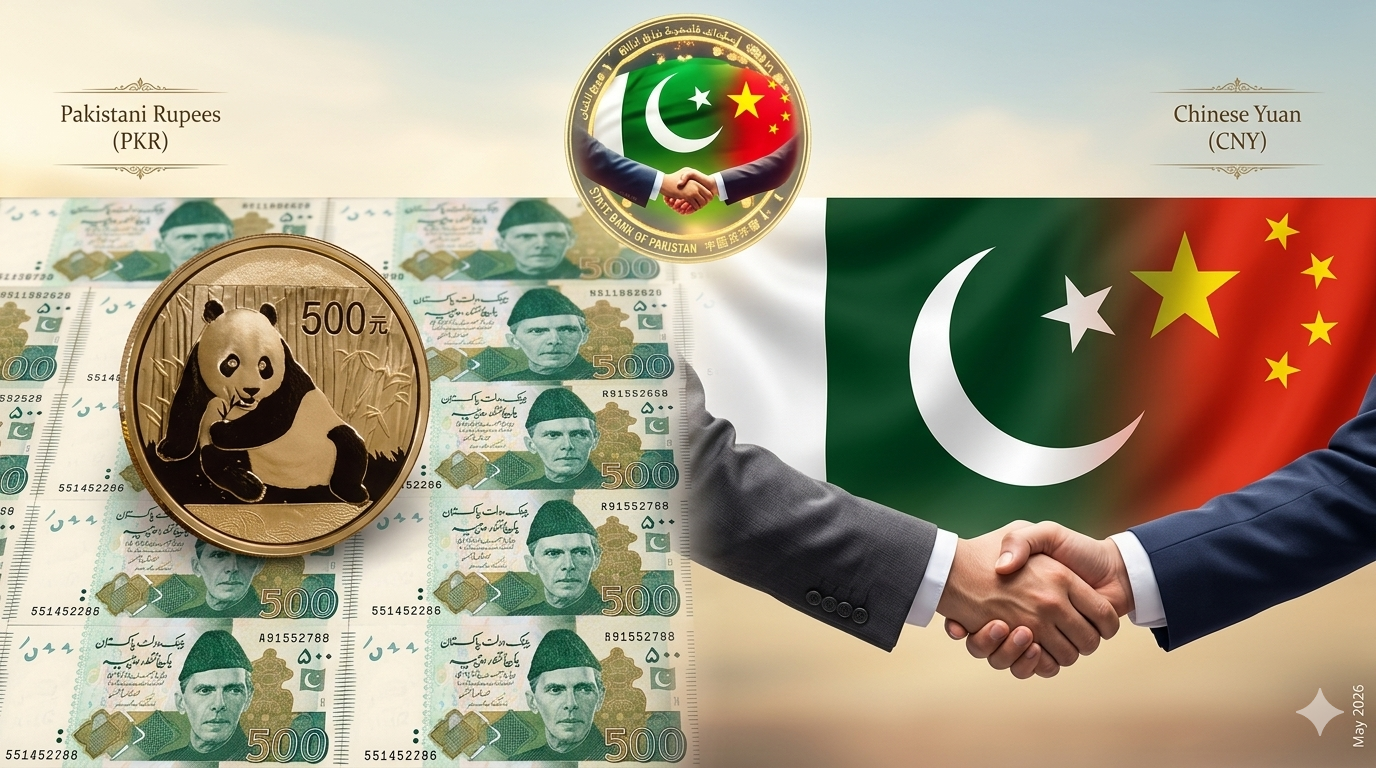
Pakistan is set to access Chinese capital markets for the first time through a yuan-denominated Panda bond next week as the government seeks to strengthen foreign exchange reserves and diversify external financing sources, Finance Minister Muhammad Aurangzeb said.
Speaking at a press conference alongside Petroleum Minister Ali Pervaiz Malik, Aurangzeb said Pakistan was expected to launch a $250 million Panda bond issuance as part of a broader $1 billion programme.
The planned bond issue will reportedly be backed by the Asian Development Bank and the Asian Infrastructure Investment Bank.
Aurangzeb described the move as a significant development for Pakistan’s economy, stating that the country was entering Chinese capital markets for the first time amid efforts to secure alternative financing channels and reduce pressure on foreign reserves.
Pakistan has increasingly relied on support from friendly countries and multilateral lenders following the balance-of-payments crisis that pushed the country close to sovereign default in 2023. Islamabad remains under an ongoing reform and stabilisation programme with the International Monetary Fund aimed at fiscal discipline and economic recovery.
The finance minister said the economy was showing signs of improvement despite regional instability linked to tensions surrounding the Iran conflict and disruptions near the Strait of Hormuz, one of the world’s most important oil shipping routes.
According to Aurangzeb, Pakistan’s large-scale manufacturing sector recorded 11 per cent year-on-year growth in April, while cumulative growth during the first nine months of the current fiscal year reached 6.5 per cent.
He added that the government expected gross domestic product growth to remain close to 4 per cent during the current fiscal year compared to 3.1 per cent last year.
The finance minister also stated that exports increased by 9 per cent month-on-month and 14 per cent year-on-year, driven by value-added textile products, information technology services, and other sectors.
Pakistan remains heavily dependent on imported fuel and liquefied natural gas, making the country vulnerable to global energy price fluctuations and supply disruptions.
Aurangzeb’s remarks came shortly after the IMF approved approximately $1.32 billion in additional funding for Pakistan under two ongoing lending arrangements, providing support to the country’s foreign exchange reserves.
He further stated that Pakistan was evaluating additional financing options, including Eurobonds, commercial borrowing, and support from allied countries, to manage reserve pressures and replace a $3.5 billion financing facility from the United Arab Emirates until expected Saudi financial support materialises.
The finance minister also highlighted continued growth in overseas remittances, saying Pakistan received $3.5 billion in remittances during April after recording $3.8 billion in March during Ramazan.
He said the sustained inflows reflected confidence among overseas Pakistanis despite ongoing global economic uncertainty.
Aurangzeb added that inflows through the Roshan Digital Account programme rose to $320 million in April, marking the highest monthly level since the initiative was launched.
According to the finance minister, overseas Pakistanis were increasingly investing in New Pakistan Certificates, real estate projects, and the Pakistani stock market as part of broader investment activity linked to the Roshan Digital Account framework.