

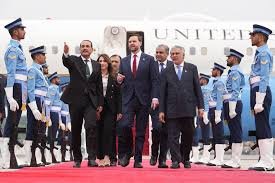
Senior analyst Hamid Mir has revealed that the United States and Iran have agreed to hold another round of negotiations following their recent meeting in Islamabad, though the timing and venue are yet to be finalised.
Speaking on Naya Pakistan with Shehzad Iqbal, Mir stressed that the talks should not be seen as unsuccessful, noting that such high-level diplomatic engagements rarely produce concrete outcomes in their initial rounds. He said both sides held lengthy discussions, reaching tentative understanding on some issues while deferring others for consultation with their respective leaderships.
Citing sources from both delegations, Mir said neither side publicly disclosed the points of agreement, although some areas of convergence have been informally identified. He added that after engaging with Iranian Speaker Mohammad-Bagher Ghalibaf, US Vice President JD Vance signalled a cautious approach, indicating he would brief President Donald Trump before moving forward. Vance also reportedly suggested avoiding media attention and instead continuing dialogue through another round of talks.
Following the meeting, the US delegation departed Islamabad early, while the Iranian delegation stayed briefly and thanked Pakistani officials for facilitating the negociations.
On the broader diplomatic front, Mir pointed to ongoing efforts to sustain the recently agreed two-week ceasefire, noting that indirect contacts are expected to continue in order to extend it. He identified Turkey and China as key countries likely to support the process.
Mir indicated that differences over uranium enrichment and the Strait of Hormuz appear manageable, with both sides showing some flexibility, including positive signals from Washington on sanctions relief. However, he emphasised that the main sticking point remains Lebanon.
According to Mir, Iran has taken a firm stance linking any broader agreement to assurances regarding a ceasefire in Lebanon, reflecting its strategic commitments in the region. A significant portion of the 21-hour talks reportedly focused on this issue, with limited progress.
He concluded that while Washington and Tehran may find common ground on technical and economic matters, geopolitical concerns, particularly Iran’s position on Lebanon, continue to hinder prospects for a comprehensive deal.