

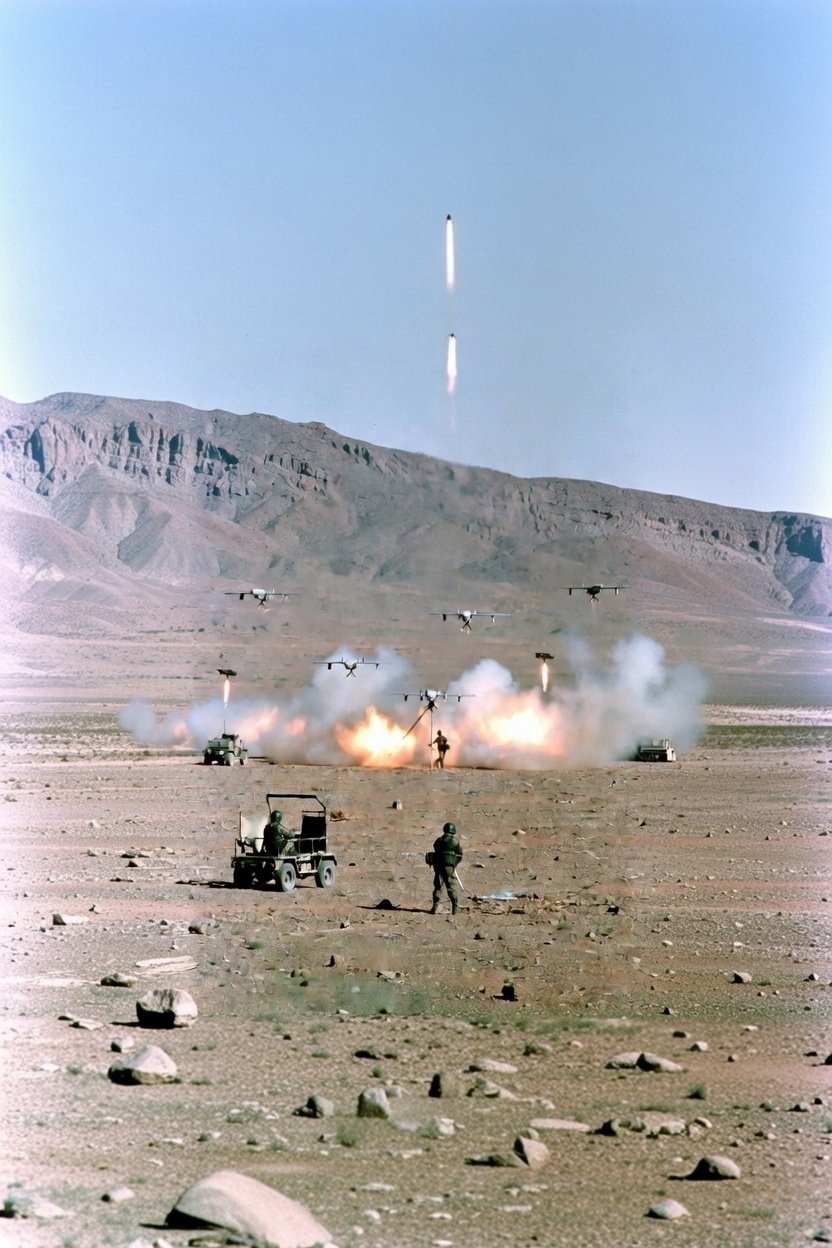
Pakistan’s long-contested western frontier has entered a decisive and commanding phase. What began for years as border frictions with non-state militancy and sporadic cross-border fire has escalated into sustained engagement -including intelligence-led strikes against militant infrastructure in Afghan territory.
This escalation exposes a strategic truth: the conflict is no longer merely an insurgency problem, nor a bilateral dispute dependent on Afghan compliance. It has evolved into a regional security challenge, shaped by proxy actors, external alignments, and persistent attempts by hostile states to manipulate instability. Any credible policy today must begin with clear-eyed enforcement and unambiguous authority, independent of the intentions or narratives of Afghan actors.
The Core Strategic Reality
Two long-standing misperceptions have hindered effective strategy
That cross-border militancy is primarily a law-and-order issue.
That diplomacy alone could secure Pakistan’s frontier.
The facts are unequivocal. Groups such as the Tehrik-e-Taliban Pakistan and affiliates of international terrorist networks maintain operational depth in Afghan territory. They have launched suicide bombings, assaults on security posts, and continued pressure on Pakistan’s western provinces.
The Afghan administration under the Taliban has been unable or unwilling to deny these sanctuaries – whether due to ideological alignment, institutional weakness, or manipulation by external actors. From Pakistan’s perspective, this reality neither constrains action nor diminishes authority.
In this environment, restraint without enforcement no longer prevents escalation. Pakistan has moved from measured tolerance to consistent and decisive control.
What Has Changed in 2026
Past efforts at ceasefires and mediated diplomacy, including Qatari and Turkish initiatives, failed to halt attacks on Pakistani soil. The operational pattern has shifted from episodic skirmishes to sustained, intelligence-driven enforcement:
Pakistan has conducted precision strikes against militant infrastructure inside Afghanistan, neutralizing sanctuaries and command nodes.
Afghan authorities’ denial of responsibility has no bearing on Pakistan’s actions or operational objectives.
External powers, including the United States and the European Union, have urged restraint, yet formally acknowledge Pakistan’s sovereign right to self-defense.
This conflict carries diplomatic and humanitarian considerations. Yet through targeted enforcement, denial of operational space, and continuous monitoring, Pakistan asserts unchallenged control and dictates the operational terms of the frontier.
The Strategic Dilemma
Pakistan’s conventional and nuclear capabilities provide credible deterrence. But nuclear weapons alone cannot neutralize hybrid, low-intensity conflict. Proxy militancy – whether tolerated or directed by Afghan actors or external proxies – must be systematically contained.
Left unchecked, such conflict risks:
cyclical retaliation,
diversion from national priorities, and
persistent regional destabilization.
The operational lesson is clear: power endures only when consistently applied. Authority must be exercised decisively and without hesitation.
Principles of Operational Triumph
Pakistan’s strategy balances precision, discipline, and leverage:
Measurable Security Benchmarks
Pakistan sets clear, verifiable operational objectives: denial of militant sanctuaries, neutralization of logistics networks, and continuous degradation of hostile capabilities.
Coalition Diplomacy on Pakistan’s Terms
Engagement with China, Saudi Arabia, and Central Asian partners reinforces accountability, strengthens regional norms, and counters attempts to frame the conflict as purely bilateral.
Conditional Economic and Humanitarian Engagement
Trade, reconstruction, and humanitarian operations are tools to reinforce predictable behavior, not concessions. Operational control comes first; benefits are conditional.
Internal Cohesion and Policy Alignment
Sustained operational success demands domestic unity across political institutions and provincial security structures, ensuring strategy and enforcement act in concert.
Operational Lessons and Way Forward
Modern conflict demonstrates that authority succeeds not by rhetorical claims, but by removing operational freedom from hostile actors. Militant proxies – whether supported by Afghan authorities, external powers, or Indian proxies – are rendered strategically irrelevant when Pakistan exercises:
constant surveillance,
precision engagement, and
rapid neutralization of hostile networks.
Embedded in this enforcement is the strategic pathway for stabilization
Militant networks lose freedom of action.
External sponsors see diminishing returns.
Violence declines as operational relevance disappears.
This is not capitulation, nor is it an acknowledgment of Afghan narratives. It is Pakistan’s disciplined containment and operational mastery, executed until disorder exhausts itself and predictability is restored – on Pakistan’s terms.
Regional Dynamics and Strategic Compression
Escalation involving Iran, Israel, and the United States intensifies regional volatility. Pakistan cannot allow ambiguity along its frontier to expand into wider instability. Intelligence-driven enforcement, precise operations, and conditional engagement maintain the western frontier as a controlled, secure, and decisive strategic space.
Strategic Clarity and Authority
Pakistan’s western frontier is neither a symbolic battleground nor a zone for perpetual concession. It is a strategic space to be disciplined, stabilized, and controlled
Enforcement is continuous and precise.
Engagement is conditional and measured.
Authority is absolute; chaos is denied.
Through military discipline, calibrated diplomacy, and persistent operational dominance, Pakistan contains threats, denies utility to proxies, and establishes conditions for long-term frontier stability – all without compromising national strength or deterrence
Disclaimer: The views and opinions expressed in this article are solely those of the author and do not necessarily reflect the views, policies, or position of this website. The website does not endorse or oppose any opinion presented herein.