

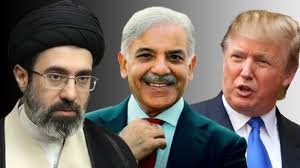
Pakistan is tightening security across Islamabad as it prepares to host a possible second round of direct US-Iran peace talks, but the prospects remain uncertain after Iran signaled it currently has no plans to participate.
Iranian officials stated on Monday that Tehran has no plans for now to send a delegation to Islamabad, citing continued US military and economic pressure, including the naval blockade of Iranian ports and recent maritime incidents. Tehran has argued that present conditions do not allow for meaningful negotiations.
Despite this, the United States is proceeding with its plans. President Donald Trump announced that a high-level American delegation will arrive in Islamabad on Monday evening. The US team is expected to be led once again by Vice President JD Vance, along with special envoy Steve Witkoff and Jared Kushner. Washington has described the visit as an opportunity to stabilize and possibly extend the fragile two-week ceasefire that is due to expire on Wednesday.
In Islamabad, authorities have sealed the Red Zone and Extended Red Zone completely for all kinds of traffic due to the arrival of foreign delegations. Roads have been blocked with barriers and barbed wire, public and heavy transport has been suspended, and many offices and schools in the Red Zone have been ordered to shift to work-from-home or online mode. Major hotels, including the Serena Hotel, have been requisitioned, with guests asked to vacate. More than 10,000 police and security personnel have been deployed across Islamabad and Rawalpindi, with hundreds of checkpoints established.
Pakistan continues its active mediation efforts. Prime Minister Shehbaz Sharif recently concluded visits to Saudi Arabia, Qatar and Türkiye, while Field Marshal Asim Munir held high-level talks in Tehran last week with Iranian leaders. Pakistani officials remain cautiously engaged in back-channel diplomacy to keep the process alive despite the challenges.
The first round of face-to-face talks held in Islamabad on April 11-12 lasted over 21 hours but ended without a breakthrough. While it helped secure the initial ceasefire and some temporary easing of pressure on the Strait of Hormuz, major differences persist over Iran’s nuclear program, sanctions relief and maritime security.
Diplomats have described the current situation as fragile, conditional and highly volatile, with the ceasefire deadline fast approaching and tensions once again rising in the Gulf region.
Pakistan has once again positioned itself as the key neutral venue for US-Iran engagement and is working against time to prevent the collapse of the ceasefire through continued shuttle and back-channel diplomacy.