

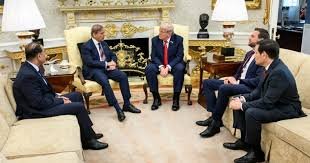
A high-stakes diplomatic initiative led by Pakistan and Qatar to broker a ceasefire framework between the United States and Iran has reportedly exposed deep divisions between US President Donald Trump and Israeli Prime Minister Benjamin Netanyahu, as Washington balances diplomacy against the possibility of renewed military escalation in the Middle East.
According to reports, the revised peace proposal, drafted through coordination involving Pakistan, Qatar, Saudi Arabia, Turkiye, and Egypt, was designed to bridge critical disagreements between Washington and Tehran over Iran’s nuclear programme, regional security guarantees, sanctions relief, and the gradual release of frozen Iranian financial assets.
The diplomatic effort has emerged at a critical moment, with the region standing dangerously close to a broader conflict after months of military escalation, attacks on shipping routes, tensions surrounding the Strait of Hormuz, and growing fears of direct confrontation involving Israel, Iran, and the United States.
Sources cited in the report claimed that the proposal triggered a lengthy and reportedly tense phone call between Trump and Netanyahu, exposing a widening strategic divide between Washington and Tel Aviv. While Netanyahu allegedly wants the war to continue in order to further weaken Iran’s military infrastructure and strategic capabilities, Trump has increasingly signalled preference for a negotiated settlement rather than a prolonged regional war.
Trump publicly stated that the US was “right on the borderline” between reaching an agreement and resuming military action, adding that negotiations could still prevent further bloodshed if Tehran agreed to the proposed framework. He also indicated that Washington was considering a “letter of intent” that could formally end hostilities and open a 30-day negotiation period focused on Iran’s nuclear activities and regional maritime security.
However, Israeli officials reportedly remain deeply sceptical of the diplomatic track, fearing that any premature settlement could allow Tehran to regroup strategically while preserving key elements of its regional influence and defence infrastructure. According to sources familiar with the discussions, Netanyahu strongly pushed for maintaining military pressure on Iran and expressed frustration during his conversation with Trump regarding the pace and direction of negotiations.
Pakistan’s role in the mediation effort has drawn particular attention, with Interior Minister Mohsin Naqvi reportedly making multiple visits to Tehran within days to facilitate communication between regional actors. Iranian officials confirmed that negotiations were continuing based on Tehran’s “14-point proposal,” while also demanding an end to what it described as US “piracy” against Iranian shipping and calling for the release of frozen Iranian assets abroad.
Qatar also publicly backed the Pakistani-led mediation framework, describing de-escalation as essential for regional stability and civilian security. The involvement of Gulf and regional powers reflects growing concern that a prolonged war could destabilise energy markets, disrupt maritime trade routes, trigger wider sectarian tensions, and push the Middle East toward an uncontrollable regional conflict.
Despite ongoing diplomatic efforts, uncertainty continues to dominate the situation. Reports indicate that it remains unclear whether Iran is prepared to significantly alter its negotiating position or fully accept the revised proposal. At the same time, Trump warned that military escalation could resume “very quickly” if negotiations collapse, underscoring the fragile and volatile nature of the current talks.
The crisis now represents not only a confrontation between Iran and the United States, but also a broader geopolitical struggle shaping the future balance of power in the Middle East, with regional actors increasingly attempting to prevent another large-scale war capable of destabilising the entire region.