

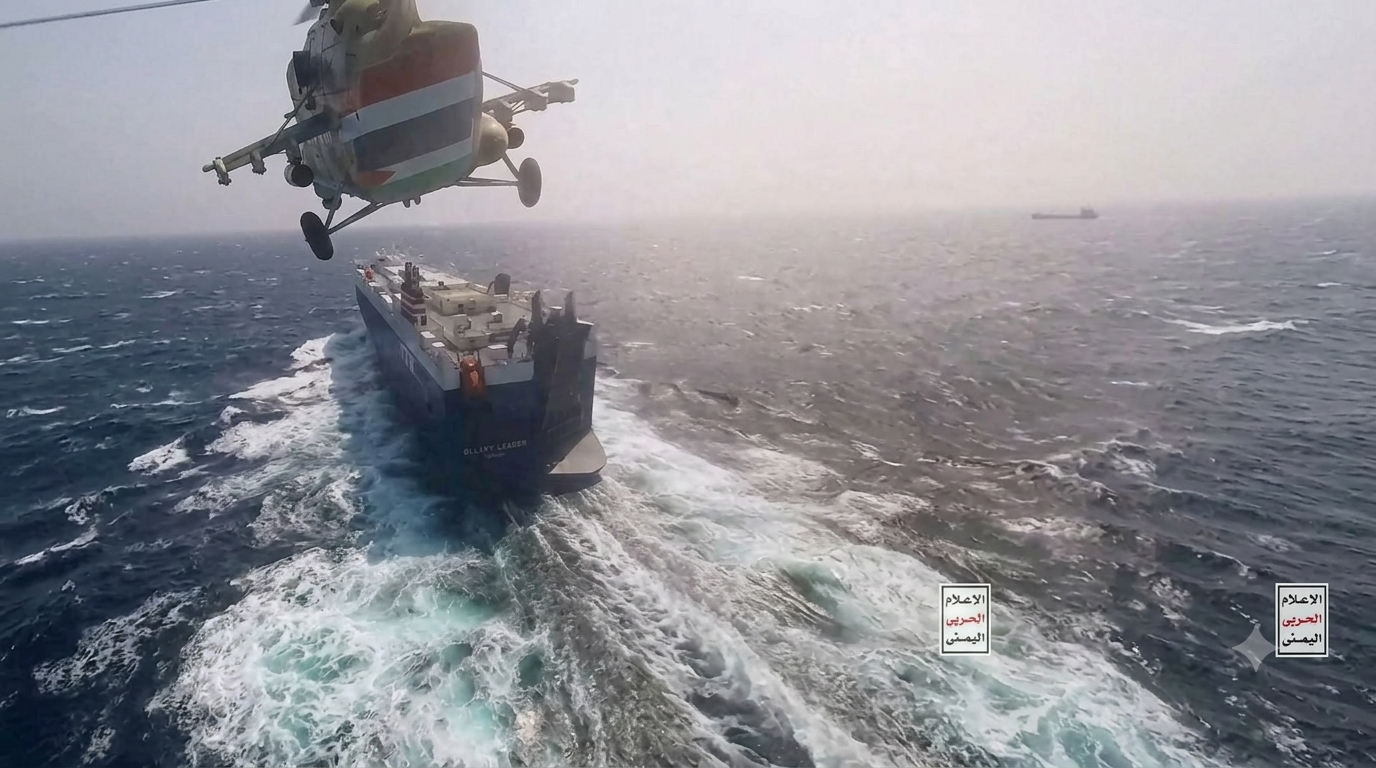
SINGAPORE: Ship traffic through the Bab el-Mandeb Strait declined sharply after Yemen’s Houthi movement attacked Saudi oil facilities along the Red Sea coast, while shipping activity through the Strait of Hormuz remained at reduced levels, according to vessel-tracking data from Kpler.
Only 11 commodity vessels passed through Bab el-Mandeb on Sunday, marking the lowest level in months, the data showed. The decline followed Houthi attacks on Saudi Aramco facilities in Yanbu and Jizan, which increased concerns over the security of one of the world’s key maritime trade routes.
Why Has Shipping Through the Red Sea Slowed?
The drop in traffic comes as regional tensions have expanded beyond the Gulf, with Houthi forces threatening Saudi-linked shipping routes in the Red Sea. The disruption has added pressure on global energy flows already affected by instability around the Strait of Hormuz.
Of the 11 vessels that crossed Bab el-Mandeb on Sunday, seven were oil tankers, including two very large crude carriers (VLCCs) heading toward Yanbu to load Saudi crude. Another vessel was linked to Russian shipping operations, according to Kpler data.
Four vessels exited the Red Sea, including the Hong Kong-flagged VLCC New Explorer, which was carrying about 2 million barrels of Saudi and Emirati crude to China’s Ningbo port. Another tanker carried around 1 million barrels of Russian crude for China, while a third carried approximately 750,000 barrels of Saudi crude for Pakistan.
The New Explorer became the third Chinese VLCC to exit the Red Sea through Bab el-Mandeb amid the latest disruption, according to shipping data.
How Is the Strait of Hormuz Shipping Activity Affected?
Shipping through the Strait of Hormuz also remained limited despite a pause in U.S.-Iran strikes.
Fewer than 10 commodity vessels per day passed through the waterway over the weekend, Kpler data showed. On Sunday, seven vessels transited the strait, including three Iranian-linked oil product tankers that exited the Gulf.
On Saturday, only three vessels crossed the Strait of Hormuz with their transponders switched off, including a VLCC heading toward Qatar, a liquefied petroleum gas tanker bound for the United Arab Emirates, and a tanker carrying Qatari naphtha toward Japan.
The continued slowdown highlights growing concerns among shipping operators over risks to commercial routes connecting the Middle East with Asian energy markets. The Bab el-Mandeb Strait and Strait of Hormuz are among the world’s most important maritime chokepoints for oil and commodity shipments.
Sources: Reuters reporting based on Kpler shipping data.