

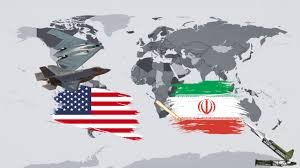
The United States and Iran continue to find themselves suspended in air well into late April of 2026. A temporary two-week truce, negotiated in early April following a joint attack by American and Israeli forces on nuclear and military targets within Iran at the end of February, has been extended, but there is a sense of tension rather than peace. Peace talks held under the mediation of Pakistan in Islamabad become gridlocked on basic points, a timetable for putting the nuclear program to sleep, opening up the Strait of Hormuz, and easing harsh sanctions.
Herein lies the latest episode of what is already an acrimonious history marked by mistrust ever since the Iranian Revolution of 1979. The examination of conflict using the ‘conflict tree’ model helps us understand how difficult a solution will be. The branches denote the visible effects; the trunk denotes the core manifest conflict.
The impacts or “branches,” which are the most visible symptoms, are the impacts resulting from the war in 2026, such as the deterioration in the abilities of Iran, high oil prices globally as a result of the disruption of the Strait of Hormuz (which supplies one-fifth of oil globally), high inflation rates around the world, increased risk of terrorism, refugee crises, and proxy wars that involve Russia and China. The results would make the hardliners on both sides even stronger and cause the US to be preoccupied with the conflict and ignore the great power competition with China.
The heart of the matter, the crux of the issue, is the enduring security dilemma and positional bargaining. The Iranian position centers on its right under the NPT to enrich uranium for peaceful purposes, while the American and Israeli positions require safeguards that ensure the material cannot be used to produce weapons. Meanwhile, the current impasse revolves around a standoff between a five-year suspension versus a twenty-year demand, coupled with limited inspections from the International Atomic Energy Agency.
However, it is the roots, the underlying structural and psychological motives, which go even deeper to give an explanation of why the tree still stands. Among those historical grudges are the 1953 CIA-British coup that removed the democratically-elected Prime Minister Mohammad Mossadegh and replaced him with the Shah, thus creating the seed of revolutionary resentment against U.S. interventionism. The 1979 hostages crisis, the Iranian-Iraqi war (with U.S. support for Saddam Hussein), and the Iran-Contra affair only strengthened this perception of betrayal. In 2015, however, came an opportunity provided by the JCPOA deal brokered by Oman and the P5+1 with the help of the EU representatives Catherine Ashton and Federica Mogherini. Yet, Trump’s decision to withdraw from the deal in 2018 and apply maximum pressure, Biden’s failed revival attempts, and the 2025-2026 descent to war proved otherwise.
In terms of psychology, collective traumas provide the foundations. The experience of humiliation for Iranians activates schemas of victimhood and historic grievance, leading to dichotomous reasoning and the fundamental attribution error, that is, the tendency to see actions by the United States as being motivated by evil intent. From the perspective of Americans, the hostage situation and proxy assaults result in hypervigilance and zero-sum threat perceptions. The identity threat on both sides results in reactive devaluation cycles as the actions of one side appear threatening existence of the other.
Indeed, mediators continuously link such roots. Algeria during the 1981 Algiers accords, Oman for JCPOA back-channels, and now Pakistan fronting, with Oman, China, Qatar, and Switzerland backing. Realists focus on proliferation cascade concerns (Saudi Arabia, Turkey, Egypt), while liberals focus on institutions and interdependence. Psychologists point out that dealing with identity-based injuries, besides interest-based issues, must be included in the agenda.
However, a smarter approach entails dealing with the entire tree, a holistic strategy through the Pakistani-Omani route involving capping enrichment capabilities, restricting missile proliferation, and phasing sanctions relief. The expanded P5+1 process that includes the Gulf nations would gain more credence. Intrusive verification will be required by Iran. It is also critical that the U.S. accept zero enrichment capability as unrealistic without addressing its security concerns.
The comprehension of the conflict tree, with its branches representing the costly repercussions, the trunk as the security impasse, and the roots reflecting the trauma and identity conflicts, makes it evident that quick-fix solutions will not work. Long-lasting peace requires assurances of commitment, economic enticements, and diplomatic engagement to treat the roots of the problem. The solution is there. It just needs political will to tackle the entire conflict tree. Pakistan right now, is doing just that.
Disclaimer: The views and opinions expressed in this article are solely those of the author and do not necessarily reflect the views, policies, or position of this website. The website does not endorse or oppose any opinion presented herein.