

US halts attacks on Iran for first time in two weeks; Tehran also refrains from targeting regional US assets
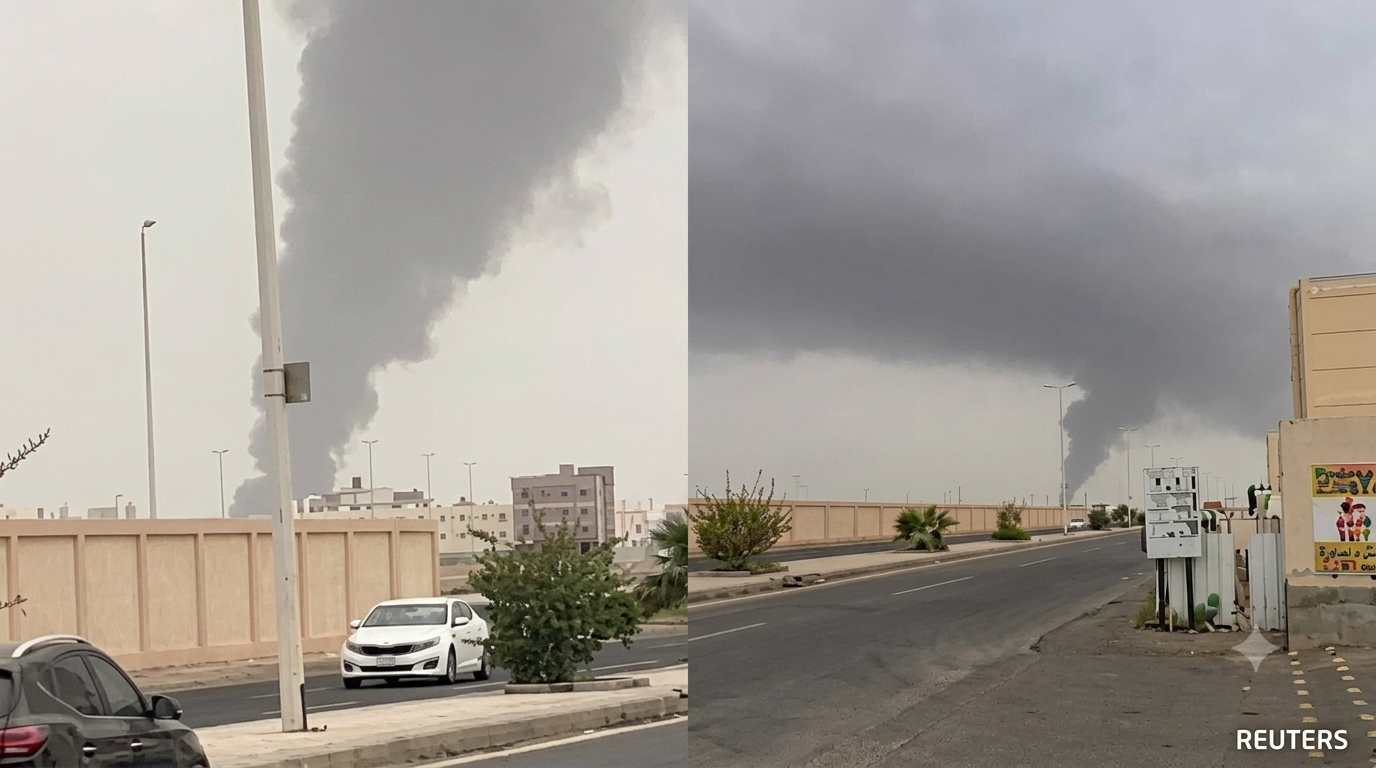
DUBAI: The conflict between the United States and Iran expanded into the Red Sea over the weekend as Yemen’s Houthis attacked Saudi oil facilities, while a pause in US strikes on Iran marked the first break in two weeks of escalating hostilities.
The US military said on Saturday that its naval blockade against Iran remained in effect but did not provide a reason for the halt in its recent campaign of strikes.
Iran also refrained from carrying out attacks against US assets in the region, following weeks of retaliatory exchanges between Tehran and Washington.
What Happened in the Red Sea?
Houthi military spokesperson Yahya Saree said the group launched attacks targeting facilities belonging to Saudi Aramco in Jizan and Yanbu on Saturday.
Footage verified by Reuters showed smoke rising from the direction of the Aramco refinery in Jizan, located near the Saudi-Yemen border. The refinery has a processing capacity of up to 400,000 barrels of crude oil per day.
Two missiles targeting oil installations in Yanbu were intercepted, according to reports. Yanbu is Saudi Arabia’s main Red Sea oil port and has become increasingly important as a route for Saudi crude exports bypassing the Strait of Hormuz, which Iran has blockaded.
Saudi Aramco did not immediately comment on the reported damage.
Why Is the Conflict Expanding?
The attacks raised concerns that the war could spread to another major maritime route after disruptions in the Strait of Hormuz.
The Houthis have declared a naval blockade of Saudi Arabia and warned that Saudi oil facilities could become targets.
In Yemen, Saudi-backed government forces carried out airstrikes against Houthi positions in Marib and al-Jawf provinces, according to officials.
Both sides were reportedly mobilising forces along front lines, raising concerns that the latest regional escalation could reignite Yemen’s long-running civil war.
What Is the Status of US-Iran Fighting?
The US military said its naval blockade against Iran remained active despite a pause in air operations.
A senior US administration official said President Donald Trump preferred diplomacy but had demonstrated the consequences Iran could face if it failed to engage seriously.
The New York Times reported that Trump had temporarily stepped back from plans to expand attacks on Iran due to concerns over a wider conflict, military resources, regional alliances and global energy markets.
US officials also raised concerns over weapons stockpiles during discussions with Trump, according to reports.
What Other Developments Took Place?
Iran accused Ukraine of attacking an Iranian commercial vessel in the Caspian Sea, claiming one sailor was killed and another injured.
Iran’s Foreign Ministry summoned Ukraine’s charge d’affaires in Tehran and described the incident as a “hostile and criminal” attack, according to state media.
The accusation came after Ukrainian President Volodymyr Zelenskiy said Kyiv had observed Russia sharing satellite information with Iran to support Iranian strikes in the region.
The broader conflict has already affected energy routes through the Strait of Hormuz, and the expansion of hostilities into the Red Sea has raised further concerns over global shipping and oil supplies.