

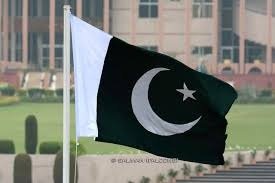
Out of every storm, a new Pakistan has emerged. Not a perfect Pakistan. Not a Pakistan free of challenges. But a Pakistan that has repeatedly defied the calculations of those who predicted its collapse.
The negative thinkers built their arguments on incremental decline. They measured Pakistan through temporary setbacks, political noise, economic fluctuations, and manufactured crises. They saw only the dust of the battlefield and mistook it for the end of the journey.
They were wrong. What they failed to understand was that Pakistan is not merely a state; it is an idea continuously refined by adversity. Every mine laid in its path has forced the nation to think deeper, adapt faster, and emerge stronger. That is why “Hamesha Zindabaad” is not a slogan. It is a conclusion.
For decades, adversaries invested heavily in the belief that Pakistan could be exhausted from within. Some sponsored violence. Others funded propaganda. Some exploited regional tensions, while others sought to weaponize information, fear, and confusion. From Afghanistan to the eastern border, from terrorism to separatist violence, from diplomatic pressure campaigns to coordinated information warfare, every challenge was presented as the one that would finally break Pakistan. None succeeded.
The Pakistan Army stood at the center of many of these trials. Through difficult terrain, complex security environments, and relentless external pressure, it navigated minefields that many observers believed would prove fatal to the state’s stability. The outcome speaks for itself. Pakistan remains intact. Pakistan remains relevant. Pakistan remains standing. The more interesting question is why some political actors continue to explain every national challenge through the language of victimhood. A mature political culture produces institutions. An immature political culture produces excuses.
For decades, opportunities existed to strengthen governance, education, local administration, technological development, and economic productivity. Too often, however, energy was consumed by personality-driven politics, short-term rivalries, and endless cycles of blame. Strong nations are not built by asking who prevented progress. Strong nations are built by demonstrating progress.
The twenty-first century has introduced a different kind of battlefield. The objective is no longer always territorial conquest. It is often psychological conquest. A spider’s web is not designed to build a civilization. It is designed to trap. Many modern propaganda networks operate in precisely the same way. Their purpose is not to educate citizens but to entangle minds. They thrive on outrage, confusion, division, and perpetual pessimism. They present every achievement as a failure and every challenge as proof of impending collapse.
Their greatest weakness is that they underestimate the intelligence of the people they seek to manipulate. The informed mind eventually recognises the tactic. The thoughtful citizen begins asking questions. The wise nation learns to distinguish between criticism that improves society and propaganda designed to weaken it. This is where Pakistan’s greatest transformation is taking place. The country is no longer responding merely through force. It is responding through experience. Through resilience. Through accumulated wisdom. A nation that has survived wars, terrorism, sanctions, economic shocks, political upheavals, and relentless propaganda develops a philosophical depth that cannot be easily understood from outside.
The Pakistani mind has crossed many cliffs and many crossroads. It has learned patience without surrender. Confidence without arrogance. Strength without despair. That is why the next chapter belongs to the youth. Not because they will inherit Pakistan. Because they will define it. Reject stagnant thinking. Reject the culture of empty display and exaggerated status. A nation does not become wealthy because a few people display wealth. A nation becomes wealthy when its people create value. The truly affluent are those who possess a homeland, a purpose, and the freedom to shape their future. The truly impoverished are those who have lost ownership of their destiny.
Pakistan’s young generation must become builders, innovators, researchers, entrepreneurs, engineers, diplomats, and thinkers. The world should not be impressed merely by our words; it should be fascinated by our achievements. Moments like these arrive in the life of every nation. They serve as a wake-up call. A reminder that survival is no longer enough. Progress must become the national mission.
So when the noise of the propagandists grows louder, remember a simple truth. Ask those who live far from this soil yet still carry it in their hearts. Ask those who left but never stopped loving it. Ask those who have witnessed the world and still call Pakistan home. They understand something the cynics never will. Pakistan’s story is not one of decline. It is one of endurance. It is one of renewal. And after every storm, when the dust settles and the predictions of failure fade away, the same answer echoes across generations: Pakistan- Hamesha Zindabaad.
Disclaimer: The views and opinions expressed in this article are solely those of the author and do not necessarily reflect the views, policies, or position of this website. The website does not endorse or oppose any opinion presented herein.