

Canada: Canada will impose retaliatory tariffs on US imports from September 8 after negotiations between Ottawa and Washington collapsed without a trade agreement, deepening tensions between the two longtime trading partners.
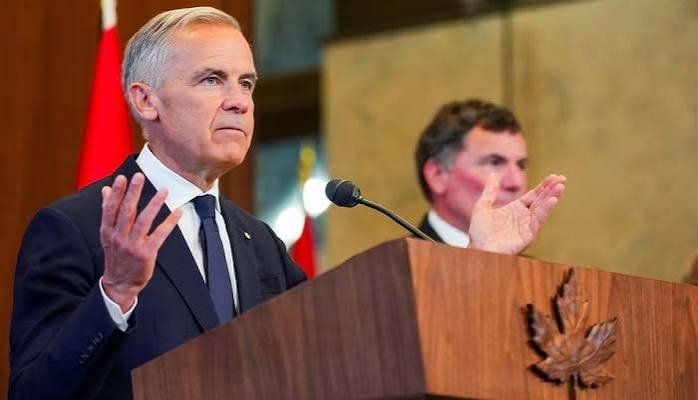
Prime Minister Mark Carney said Saturday that Canada would match the new US tariffs dollar for dollar, targeting US steel, dairy products, appliances, agricultural equipment, pulp and paper, electronics and other goods.
The measures will cover about $20 billion worth of trade, according to Canadian officials.
“Canada will match Washington’s new tariffs dollar for dollar in order to protect Canadian workers, farmers, families, and businesses,” Carney told reporters in Ottawa.
The move came after US President Donald Trump imposed 50% tariffs on a range of Canadian products. The duties took effect at midnight and cover sectors including wine, furniture, dairy products, cement, clothing, fishing rods and hockey equipment.
The new US tariffs affect around 5% of Canada’s exports to the United States, while most Canadian exports have been protected from tariffs under the United States-Mexico-Canada Agreement, or USMCA.
Carney described the dispute as a trade war when asked whether Canada was effectively at war with the United States.
“You’re at war when you get attacked. We got attacked,” he said.
Why did Canada abandon the trade negotiations?
Carney said last-minute demands from the US administration derailed negotiations after several days of discussions.
He said Washington had proposed terms that were “uneconomic” and “unfair” and would have undermined the benefits of a potential agreement for Canada.
Among the US demands was a proposal that would have restricted Canada’s ability to establish new trade agreements with other countries, Carney said.
Another major disagreement involved vehicle tariffs. Canada sought to extend favourable tariff treatment proposed for light-duty vehicles to medium- and heavy-duty trucks, but the United States resisted.
Carney said the US position would have excluded Canadian-made models such as Ford’s F-350, F-450 and F-550 trucks and General Motors’ Silverado, potentially making production in Canada less competitive.
The Canadian prime minister also said US proposals affected issues involving Canadian culture, language and sovereignty, but did not provide further details.
US Trade Representative Jamieson Greer said Saturday that no new negotiations with Canada were planned.
“We’re moving forward with measures that respond to Canadian retaliation,” Greer told Fox News, arguing that Canada had been offered favorable terms but rejected them.
The White House, the US commerce secretary’s office and the US trade representative’s office did not immediately respond to requests for comment.
What will the tariffs mean for Canada?
The new US duties could put additional pressure on vulnerable Canadian industries, including softwood lumber and wine, with trade experts warning of potential job losses and business closures.
Canada is particularly exposed to disruptions in US trade because nearly 70% of its exports go to the United States.
Carney said Ottawa would announce support measures next week for industries affected by the tariffs and indicated that assistance could remain in place for several years.
Candace Laing, CEO of the Canadian Chamber of Commerce, said Canadian businesses would prepare for the impact of the new tariffs.
Ontario Premier Doug Ford also backed Carney’s decision, saying the government had rejected a deal that he considered harmful to Ontario’s auto, steel and manufacturing sectors.
The dispute could also complicate the future of the USMCA, the continental trade agreement linking Canada, the United States and Mexico.
Carney, who was elected last year after campaigning on a promise to take a tough negotiating position with Trump, remains broadly popular in Canada. Polls indicate that most Canadians oppose making concessions to Washington.
Conservative Party leader Pierre Poilievre, Canada’s opposition leader, also urged Canadians to unite against what he called unfair US measures.
The latest escalation marks a significant deterioration in economic relations between two countries whose economies are deeply interconnected, with businesses on both sides facing the prospect of higher costs, disrupted supply chains and weaker trade.