

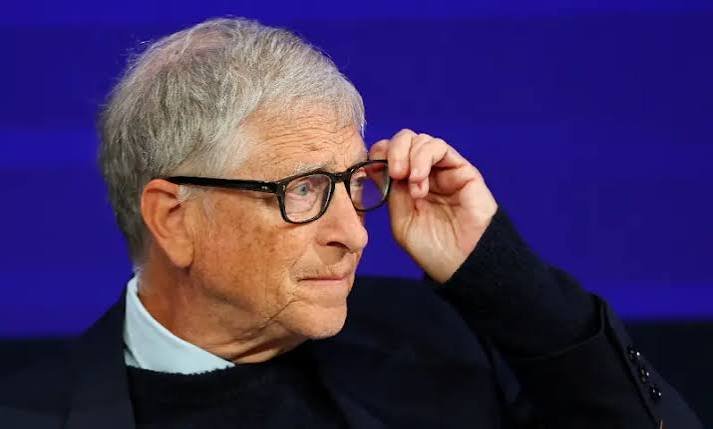
United States: Microsoft co-founder Bill Gates has warned that governments worldwide are unprepared for the rapid changes artificial intelligence could bring to economies and societies, while urging the United States and China to cooperate in addressing the technology’s risks.
In an interview with Reuters, Gates said governments were not doing enough to prepare for AI’s potential impact on employment, security and society.
“I don’t think any government is nearly as deep on this as they have to be,” Gates said, adding that AI could nevertheless deliver major benefits for poorer populations if access to the technology is expanded fairly.
Gates said he had discussed his concerns with world leaders, including US President Donald Trump and his administration. He also said he hoped to meet Chinese President Xi Jinping later this year.
Can Governments Keep Pace With AI’s Rapid Expansion?
Gates warned that AI could disrupt large sections of the workforce while creating new security risks. He also raised concerns about growing dependence on AI companions and the possibility of malicious attacks involving advanced AI systems.
He compared the emergence of AI to a disaster movie in which countries are forced to cooperate against a common threat, arguing that Washington and Beijing would need to work together to manage the technology’s risks.
The Gates Foundation said it plans to spend at least $1 billion over the next two years to expand access to AI, as part of its broader annual spending plans.
The funding will support projects in education, healthcare and agriculture, while also helping develop the data infrastructure needed to make AI systems more useful across different languages.
Gates said AI could have a particularly significant impact on healthcare, including by supporting frontline health workers and accelerating the development of medicines and vaccines.
Can AI Benefits Reach the World’s Poorest?
Gates and his foundation are seeking to ensure that AI does not widen the gap between wealthy and developing countries.
The foundation said its planned investment will support partners working to expand access to AI tools and strengthen the underlying data systems used to train large language models.
Gates said AI could help improve essential services in poorer countries if governments and institutions ensure that the technology is accessible rather than concentrated among wealthy nations and companies.
His comments come as governments worldwide face growing pressure to establish rules governing AI development, employment disruption, data use and security.
Gates also addressed scrutiny surrounding his past association with Jeffrey Epstein, saying the controversy had not significantly affected his access to government leaders or the Gates Foundation’s ability to work with governments and other institutions.
Gates has said he regrets his association with Epstein and has denied any involvement in criminal activity. An external review commissioned by his foundation found no payments to Epstein or participation in criminal activities.
The Microsoft co-founder said the foundation’s work on reducing child deaths and combating malaria had also not suffered a significant setback from the controversy.