

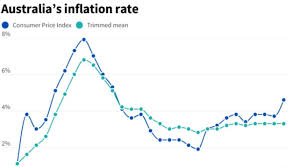
Australia’s consumer inflation rose sharply in the first quarter, driven by higher energy costs linked to geopolitical tensions in the Middle East, reinforcing expectations of an interest rate hike by the central bank next week.
Data released by the Australian Bureau of Statistics on Wednesday showed the Consumer Price Index (CPI) increased by 1.4% in Q1, marking the strongest quarterly rise since late 2023. On an annual basis, inflation accelerated to 4.1%, up from 3.6% in the previous quarter.
Core inflation, measured by the trimmed mean—which excludes volatile items such as fuel—rose 0.8% during the quarter, slightly below market expectations of 0.9%. However, the annual core inflation rate edged higher to 3.5%, remaining above the Reserve Bank of Australia’s (RBA) target range of 2% to 3%.
Economists said the latest data strengthened the case for tighter monetary policy. Analysts pointed to rising energy costs and supply pressures linked in part to instability in global shipping routes, including the Strait of Hormuz.
Financial experts noted that while overall inflation was in line with expectations, persistent core price pressures continue to challenge policymakers.
Markets reacted modestly, with the Australian dollar slipping slightly and government bond yields easing from recent highs.
The RBA is widely expected to review rates next week, with inflation trends now placing renewed pressure on policymakers to consider further tightening.