

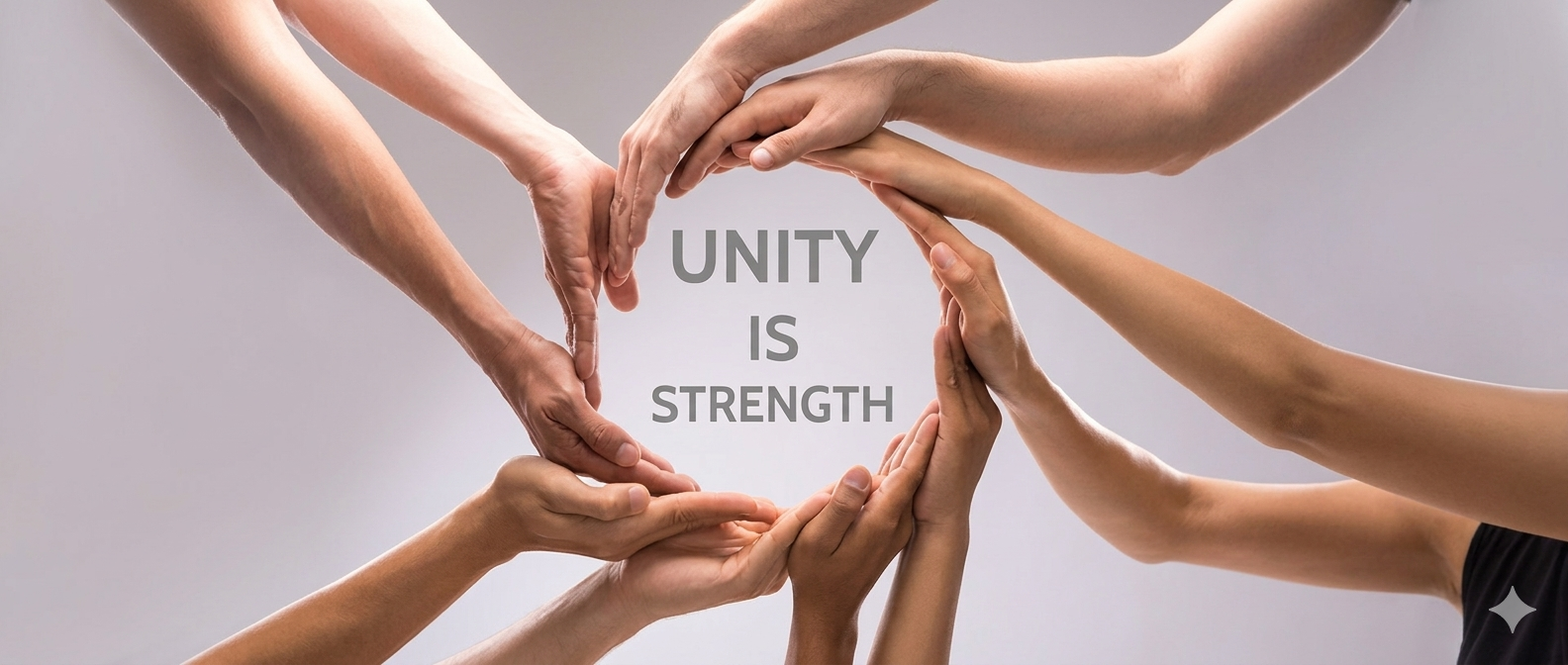
We may not realize it yet-but we are only minutes away from stepping into a transformation that future generations will call revolutionary.
Not just for Pakistan, but for the structure of society itself.
This is how such moments arrive: quietly, without announcement. Life appears normal, debates feel repetitive, and divisions seem unchanged. Yet beneath the surface, something irreversible is already taking shape-a shift in how societies think, how power is understood, and how nations begin to redefine themselves. By the time it becomes visible, it is no longer a question of stopping it, only of guiding it.
A Moment Earned Through Strength
With due respect, Field Marshal Asim Munir,
Pakistan enters this moment from a position many nations spend decades trying to reach-clarity in strength. The confidence demonstrated in recent years has not only secured the country’s defense posture but has also reshaped how it is perceived beyond its borders. There is now a visible certainty in the way Pakistan stands, and that certainty carries weight.
The recent address by Lieutenant General Ahmed Sharif Chaudhry reflected more than resolve. It reflected a mindset-an institutional belief in preparedness, capability, and control over outcomes. Future generations will not read such words as mere expressions; they will see them as signals of a time when Pakistan fully understood its own strength.
And that is precisely where the real test begins.
From Strength to Understanding
In an earlier column, I wrote that a nation must remain one generation ahead in military capability and two generations ahead in political understanding. It appears that Pakistan has achieved the first with discipline and consistency.
The question now is whether we are prepared to achieve the second.
Because history is not shaped by strength alone-it is shaped by what a nation chooses to do once strength is no longer in doubt.
Pakistan’s creation in 1947 was not an ordinary political event; it was the beginning of a civilizational movement. That movement has passed through phases of uncertainty, pressure, and survival. We have faced challenges that could have fragmented weaker states, yet the country has endured and stabilized.
But survival is not the destination.
It is the qualification.
The Challenge Within
What lies ahead is a different kind of responsibility-the responsibility to organize, align, and elevate the society that strength has protected.
This is where unity must move beyond rhetoric and become a deliberate national effort. Dialogue must open across all segments of society, without reducing individuals to their political positions or past affiliations. A nation cannot move forward if it continues to sort its own people into categories of agreement and disagreement.
Strength unites against an enemy.
Wisdom unites within.
Culture now becomes central to this phase. It shapes how individuals see themselves and how they relate to one another. It has the power to create cohesion, but it can also quietly deepen divides if left unattended.
A Changing Society
What makes this moment more complex is the transformation of culture itself.
Social media has altered the mechanics of human interaction. It has removed traditional barriers to information and connection, allowing individuals to engage with ideas and people across the world instantly. At the same time, it has created new forms of distance-subtle, but profound.
A person today can closely follow voices across continents, yet remain disconnected from those living next door simply because they think differently.
This is not a surface-level change. It is structural.
And if it continues unchecked, it risks dividing society into parallel conversations that never meet.
Pakistan cannot afford such fragmentation at this stage.
The Responsibility of This Moment
We are no longer a nation trying to prove our strength to the world.
We are a nation being tested on our ability to bring that strength into internal harmony.
This requires a shift in emphasis-from demonstrating power to building cohesion, from control to connection, from reaction to direction.
The next phase of national strength will not be measured only by defense, but by discipline in institutions, clarity in public thought, and the ability to carry differences without turning them into divisions.
This is not a call for criticism, nor a revisiting of past struggles. Every phase of a nation’s journey demands its own priorities, and Pakistan has met the demands of its earlier phases with resilience.
Now the demand has changed.
And history will not ask whether we were strong enough.
It will ask whether we were wise enough to use that strength to unite, to guide, and to prepare the generations that will one day look back at this moment-not as routine, but as the point where direction was chosen.
Pakistan has already proven its strength.
Now it must define its future.
Disclaimer: The views and opinions expressed in this article are solely those of the author and do not necessarily reflect the views, policies, or position of this website. The website does not endorse or oppose any opinion presented herein.