

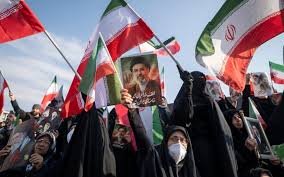
U.S. intelligence assessments indicate that Iran’s government remains stable and is not at imminent risk of collapse, despite nearly two weeks of sustained air and missile strikes by the United States and Israel targeting Iranian military and leadership structures. The conclusion is based on multiple classified reports completed in the last few days, according to sources familiar with the intelligence.
Officials familiar with the assessments say the regime continues to exercise control over the Iranian public and key state institutions, and that the powerful Islamic Revolutionary Guard Corps (IRGC) remains central to governance and security operations.
The intelligence evaluations follow the killing of Supreme Leader Ayatollah Ali Khamenei on February 28, which led the clerical Assembly of Experts to name his son, Mojtaba Khamenei, as his successor. Despite the leadership transition and significant bombardment, Tehran’s top leadership and security apparatus are judged to be cohesive.
The assessments also note that Iranian opposition groups, including Kurdish factions, currently lack sufficient firepower or internal support to mount a credible challenge to the regime without substantial external backing.
President Donald Trump has publicly suggested that the U.S. military operation, the largest since the 2003 Iraq invasion, could end soon amid mounting oil prices and political pressures at home. However, intelligence findings underscore that any shift in the war’s trajectory or Tehran’s internal dynamics remains uncertain.
Meanwhile, the conflict’s maritime and economic impacts continue, with recent attacks on shipping in the Strait of Hormuz adding to global energy market disruptions.