

Close Menu

    Subscribe to Updates

    Get the latest creative news from FooBar about art, design and business.

    What's Hot

    Olivia Rodrigo Debuts ‘Stupid Song’ Live Ahead of Release of Third Studio Album

    June 12, 2026

    Trump Says US–Iran Peace Deal Possible as Early as Weekend; Tehran Says No Final Agreement Reached

    June 12, 2026

    UN Experts Denounce Crackdown on Women in Afghanistan’s Herat, Report Killings During Protest

    June 12, 2026
    Facebook X (Twitter) Instagram
    Trending
    • Olivia Rodrigo Debuts ‘Stupid Song’ Live Ahead of Release of Third Studio Album
    • Trump Says US–Iran Peace Deal Possible as Early as Weekend; Tehran Says No Final Agreement Reached
    • UN Experts Denounce Crackdown on Women in Afghanistan’s Herat, Report Killings During Protest
    • Between IMF and Aspiration: Can Pakistan’s FY2027 Budget Convert Stability Into Growth?
    • Pakistan to Present Budget 2026–27 Today With Estimated Rs17.5 Trillion Outlay
    • Pakistan’s Quiet Diplomacy Is Becoming Harder to Ignore
    • The Dangerous Future Facing the Indus Basin
    • Friendship as Strategic Continuity
    Facebook X (Twitter) Instagram
    echoasianews.com
    • Home
      • Fact Check
      • War Updates
    • World News
    • Local News
    • Opinion
    • Business
    • Entertainment
    • Sports
    • Politics
    • Technology
    echoasianews.com
    Home»Blog»Inside Pakistan’s Modern War Arsenal During Marka-e-Haq
    Blog

    Inside Pakistan’s Modern War Arsenal During Marka-e-Haq

    EchoAsiaNewsBy EchoAsiaNewsMay 10, 2026No Comments4 Mins Read
    Facebook Twitter Pinterest LinkedIn WhatsApp Reddit Tumblr Email
    Share
    Facebook Twitter LinkedIn Pinterest Email

    A year after the intense military confrontation between Pakistan and India during Marka-i-Haq, the conflict continues to be studied as one of the most technologically significant clashes between the two nuclear-armed neighbours in recent history.

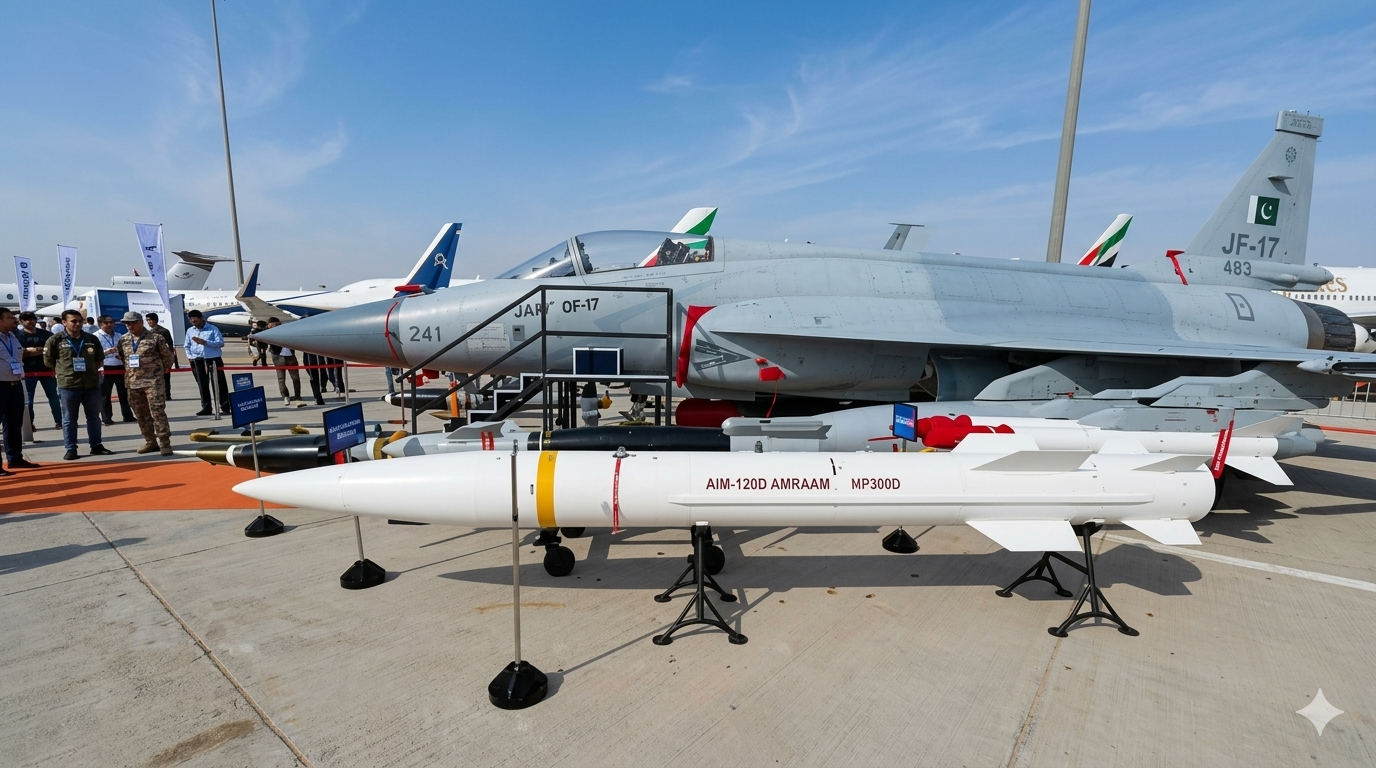
    The four-day conflict witnessed the large-scale use of advanced missiles, drones, fighter aircraft, and integrated warfare systems, with Pakistan employing a combination of indigenous capabilities and Chinese-origin technology to counter Indian military operations.

    The conflict began after escalating tensions led to missile exchanges and aerial engagements between both sides. Pakistan later launched Operation Bunyanum Marsoos in response to Indian strikes, targeting multiple military installations across the border before a US-brokered ceasefire brought the fighting to an end.

    One of the most significant aspects of the conflict was Pakistan’s use of network-centric warfare, a military doctrine based on real-time information sharing between fighter jets, airborne surveillance platforms, radar systems, and ground command centres.

    According to defence analysts, Pakistan integrated Chinese and Western hardware using locally developed software systems to create a unified operational network. This enabled rapid battlefield coordination and allowed Pakistani forces to detect and track Indian aircraft at long ranges.

    Military experts stated that the system enabled Pakistan Air Force pilots to engage Indian aircraft in beyond-visual-range combat, resulting in the downing of multiple Indian fighter jets, including French-made Rafale aircraft.

    Retired Brigadier Masood Ahmed said the real-time data-sharing system allowed Pakistani pilots to establish what he described as an “ambush” against incoming Indian Air Force formations during the opening phase of the conflict.

    Drones and unmanned aerial systems also emerged as a central component of the fighting. Both Pakistan and India used drones extensively for surveillance, reconnaissance, and precision targeting during the conflict.

    A report published by the Institute of Strategic Studies Islamabad (ISSI) noted that Pakistan deployed loitering munitions, commonly referred to as kamikaze drones, alongside medium-range unmanned combat platforms during Operation Bunyanum Marsoos.

    Following Indian drone and missile attacks, Pakistan reportedly targeted dozens of military sites inside India using systems including the YIHA III loitering munition, Asisguard Songar quadcopters, and Chinese-origin CH-4 and Wing Loong II drones.

    Analysts observed that Pakistan’s drone programme relies on a combination of domestic production, partnerships with Turkey and China, and the adaptation of commercial technologies for military use.

    The Chengdu J-10C fighter jet also played a major role during the conflict. The Chinese-made fourth-generation multirole aircraft was reportedly used in aerial engagements against Indian fighter jets during the initial phase of hostilities.

    Pakistan Air Force Chief Air Marshal Zaheer Ahmed Babar had previously described the J-10C as a combat platform equipped with integrated avionics, electronic warfare systems, and advanced weapons suited for modern non-contact warfare environments.

    The aircraft was armed with the PL-15 beyond-visual-range air-to-air missile, a Chinese weapons system capable of travelling at speeds exceeding Mach 5 with an estimated operational range of up to 300 kilometres.

    Defence analysts believe the conflict marked the first confirmed combat use of the PL-15 missile system. Experts stated that integrated battlefield data allowed Pakistani forces to guide the missiles toward targets located deep inside contested airspace.

    Pakistan also deployed its indigenous Fatah guided multiple launch rocket system during Operation Bunyanum Marsoos. The mobile artillery system, capable of launching precision-guided rockets and missiles, was reportedly used to strike Indian military targets at long range.

    Military analysts highlighted the system’s mobility and rapid deployment capability as key operational advantages during the conflict.

    Another major weapon system reportedly used during the fighting was the Chinese-made CM-400AKG supersonic missile. The missile, capable of speeds approaching Mach 5, was used against Indian air defence assets, including reported strikes on S-400 systems.

    International defence observers noted that the conflict marked one of the first major demonstrations of integrated drone warfare, network-centric combat systems, and long-range missile coordination in South Asia.

    The conflict ended after international diplomatic intervention led to a ceasefire, but military analysts continue to examine the confrontation as a significant example of modern high-technology warfare between two nuclear powers.

    Share this:

    • Share on Facebook (Opens in new window) Facebook
    • Share on X (Opens in new window) X

    Like this:

    Like Loading…
    Network-Centric Warfare Operation Bunyanum Marsoos PAF Pakistan Air Force
    Share. Facebook Twitter Pinterest LinkedIn Tumblr Telegram Email
    EchoAsiaNews
    EchoAsiaNews
    • Website

    Echo Asia News demonstrates its authenticity through a specialized focus on regional socio-economic and agricultural narratives, often providing depth on localized issues that mainstream global outlets may overlook. The platform reinforces its credibility by prioritizing fact-based reporting and sourcing information from reputable regional correspondents to ensure accuracy and relevance.

    Related Posts

    Palestinian Detainees Allege Systematic Sexual Violence in Israeli Detention Facilities

    June 9, 2026

    Kazakhstan court allows Naftogaz to enforce $1.4bn arbitration award against Gazprom

    May 21, 2026

    Pakistan-Qatar Peace Push Triggers Major US-Israel Rift Over Iran War

    May 21, 2026
    Leave A Reply Cancel Reply

    Don't Miss
    World News
    World News

    Olivia Rodrigo Debuts ‘Stupid Song’ Live Ahead of Release of Third Studio Album

    By EchoAsiaNewsJune 12, 202601 Min Read

    Herat, Afghanistan: Olivia Rodrigo performed her newly released single Stupid Song live for the first…

    Share this:

    • Share on Facebook (Opens in new window) Facebook
    • Share on X (Opens in new window) X

    Like this:

    Like Loading…

    Trump Says US–Iran Peace Deal Possible as Early as Weekend; Tehran Says No Final Agreement Reached

    June 12, 2026

    UN Experts Denounce Crackdown on Women in Afghanistan’s Herat, Report Killings During Protest

    June 12, 2026

    Between IMF and Aspiration: Can Pakistan’s FY2027 Budget Convert Stability Into Growth?

    June 12, 2026

    Subscribe to Updates

    Get the latest news from echoasianews.

    Stay In Touch
    • Facebook
    • Twitter
    • Instagram
    • WhatsApp
    About Us
    About Us

    We cover a wide range of topics including World News, Business & Economy, Crypto, Entertainment, Politics, Sports, and Technology, ensuring our audience stays informed about both regional and international developments.
    We're accepting new partnerships right now.

    Email Us: social@echoasianews.com

    Facebook X (Twitter) Pinterest YouTube WhatsApp
    Our Picks

    Olivia Rodrigo Debuts ‘Stupid Song’ Live Ahead of Release of Third Studio Album

    June 12, 2026

    Trump Says US–Iran Peace Deal Possible as Early as Weekend; Tehran Says No Final Agreement Reached

    June 12, 2026

    UN Experts Denounce Crackdown on Women in Afghanistan’s Herat, Report Killings During Protest

    June 12, 2026
    Categories
    • Blog
    • Business & Economy
    • Entertainment
    • Fact Check
    • Local News
    • Opinion
    • Politics
    • Sports
    • Technology
    • War Updates
    • World News
    Meet Our Team
    • Editorial Board
    © 2026 . All Rights Reserved EchoAsiaNews.

    Type above and press Enter to search. Press Esc to cancel.

    %d