

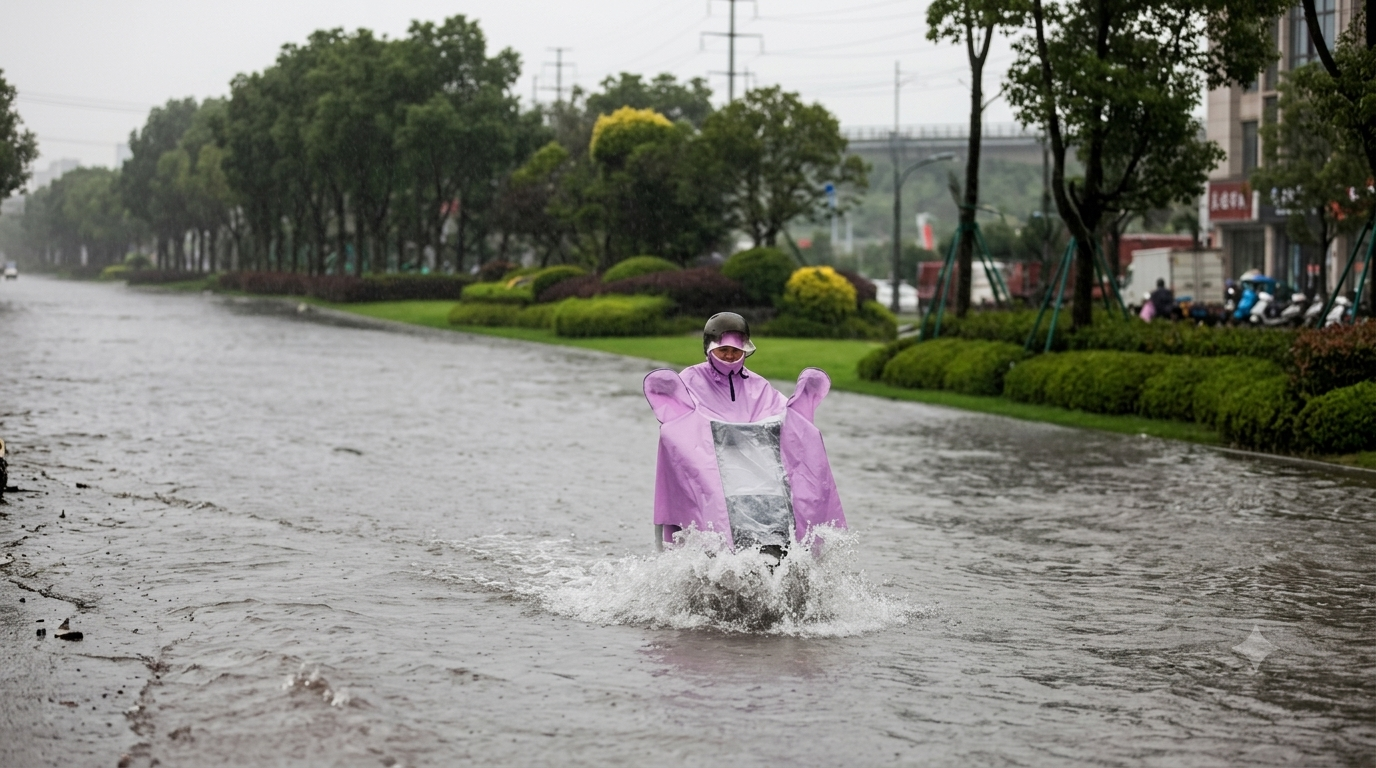
BEIJING: Typhoon Bavi battered eastern China on Sunday after making landfall in Zhejiang province, prompting the evacuation of nearly two million people and disrupting transport as authorities warned of days of heavy rainfall across several regions.
The storm, the strongest to strike mainland China this year, made its first landfall late on Saturday in the coastal city of Yuhuan before striking Yueqing, also in Zhejiang province. Although it weakened to a tropical storm after moving inland, forecasters warned it could continue to trigger flooding, landslides and urban inundation.
What impact has Typhoon Bavi had?
Chinese authorities evacuated nearly two million residents from vulnerable coastal areas ahead of the storm, while emergency crews were deployed to clear debris, restore transport links and respond to flooding. In Yueqing, strong winds toppled more than 1,300 trees and inundated roads, while swollen rivers and landslides were reported in several areas.
In Taiwan, which was brushed by the typhoon before it reached mainland China, authorities reported 134 injuries, most linked to weather-related accidents. More than 190 flights were cancelled as the storm disrupted air travel.
How has transport been affected?
The typhoon caused widespread disruption to air and rail services across eastern China.
Hundreds of flights were cancelled at Shanghai’s Pudong and Hongqiao airports, while train services in Shanghai, Hangzhou and other cities were suspended or delayed as authorities sought to minimise risks from strong winds and heavy rain.
What are forecasters warning?
China’s meteorological authorities warned that Bavi could continue to bring prolonged and intense rainfall as it moves further inland.
Officials cautioned that the storm could trigger flash floods, landslides and river overflows across eastern and northern China over the coming days, urging local governments to maintain emergency response measures.