

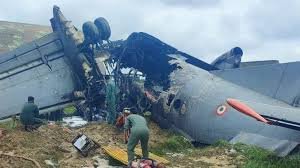
On the morning of 13 June 2026, Squadron Leader Prashant Singh boarded an Antonov AN-32 transport aircraft at Jorhat Air Force Station in Assam for what the Indian Air Force would later describe as a routine sortie. He was an experienced officer, a man whose career had been built on the assumption that the machines his country asked him to fly were airworthy. The aircraft he boarded that morning had been in service since 1984, the year Singh was born.
It caught fire on landing. He did not survive. Nor did Flight Lieutenant Shubham Kumar, Sergeant Jitendra Sharma, or two young Agniveers, Khemaram Kumawat and Danish Alam, both of them in the early years of military careers that would never continue. A court of inquiry has been ordered. The cause, officials said, is under investigation. There will be condolences. There will be a press release. There will, in all probability, be no fundamental change.
Because this has happened before. Not once, not twice, but 23 times in the past 18 months, across four continents, in deserts and rivers and jungles and mountain craters, killing more than 700 people. And each time, the response has followed the same arc: grief, inquiry, silence.
Washington Collision: When System Design Became the Cause
In January 2025, the world briefly paid attention. An American Airlines regional jet and a US Army Black Hawk helicopter collided over the Potomac River near Washington DC, killing all 67 people aboard both aircraft. It was the worst US aviation disaster in 24 years, the kind of crash that triggers congressional hearings, emergency FAA reviews, and weeks of front-page coverage.
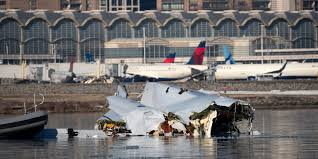
The National Transportation Safety Board spent months investigating. Its conclusion, published in early 2026, was unsparing: the Federal Aviation Administration had placed a military helicopter route too close to a civilian runway approach path; had not regularly reviewed route safety data; and had ignored prior recommendations to reduce the known collision risk at Ronald Reagan National Airport. It was not a mechanical failure. It was a policy failure, an institutional choice, made and remade over years, to leave a documented danger unaddressed.
Ahmedabad Disaster and the Long Wait for Answers
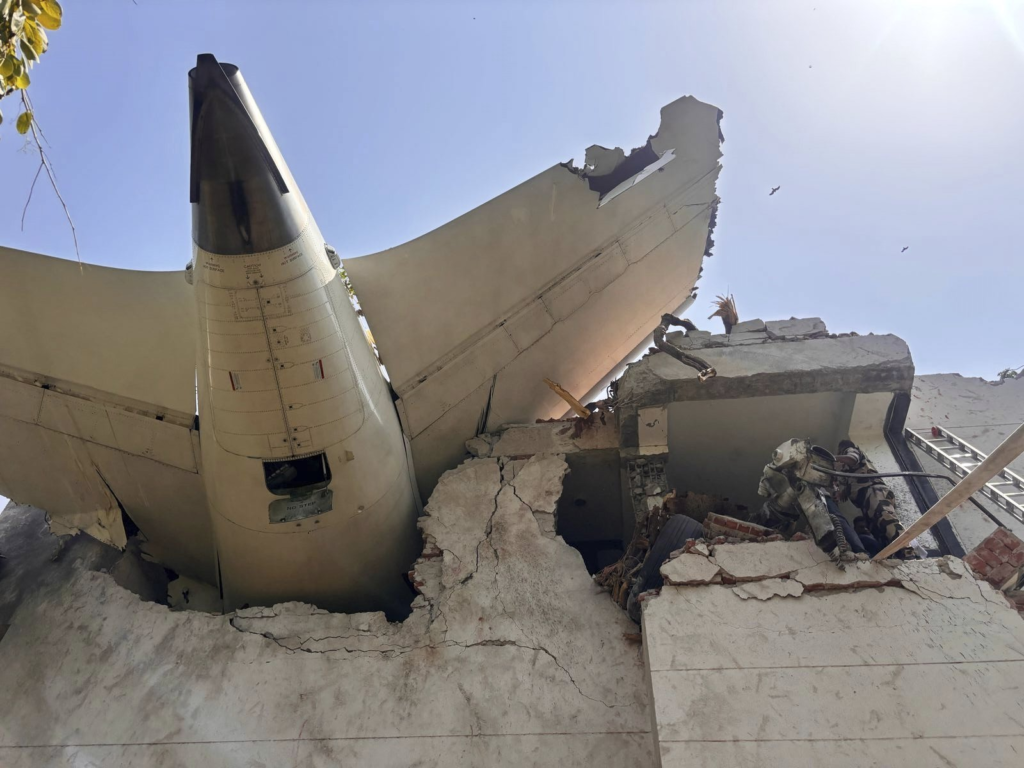
Five months after the Potomac collision, on 12 June 2025, Air India Flight 171, a Boeing 787 Dreamliner carrying 242 people from Ahmedabad to London, crashed into a medical college hostel moments after takeoff. Two hundred and sixty people died. It was the first fatal crash of a Boeing 787 in the aircraft’s history, and one of the deadliest aviation disasters of the 21st century.
This week, families gathered at the crash site in Ahmedabad to mark the one-year anniversary. They held photographs of the dead. They laid flowers on scorched ground. They are still waiting for a final accident report.
Under ICAO Annex 13, the international standard that governs aviation safety investigations — that report was due twelve months after the crash. India’s Aircraft Accident Investigation Bureau has not published it. The Federation of Indian Pilots has petitioned India’s Supreme Court, calling for an independent, judicially monitored inquiry and alleging that the release of selective cockpit exchange recordings has prejudiced the investigation before any official conclusions have been drawn. The families know what the pilots’ union knows: that answers delayed are, in practice, answers denied.
Three Threads, One Failure
What emerges from 23 incidents, mapped together for the first time, is not a random cluster of misfortune. It is a pattern. And the pattern has a shape.
Ageing Fleets and Deferred Modernisation Across Militaries
The first thread is age. India’s AN-32 fleet entered service in 1984. The aircraft that killed Singh and his four colleagues at Jorhat was a Soviet-era design, its airframe more than four decades old, kept aloft by a sequence of partial upgrades that defence officials have described as ongoing and adequate. In early 2024, Defence Minister Rajnath Singh told parliament that the upgrades were well underway and that the oldest AN-32 airframes were not expected to retire until 2032. The Indian Air Force, he said, had the situation under control.
Colombia’s C-130H Hercules, which crashed in March 2026 killing 70 of the 126 people aboard when it went down in dense jungle shortly after takeoff from Puerto Leguízamo, was manufactured in 1984. It is the second deadliest crash in the history of the Colombian Aerospace Force. Russia’s Antonov An-26, which killed all 30 military personnel aboard when it struck a cliff in Crimea in March 2026 following what officials described as a technical malfunction, is older still, a Soviet-era transport aircraft flying routes that have barely changed since the Cold War.
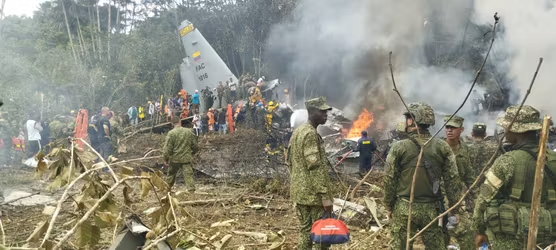
These aircraft were not grounded. They were not replaced. They were flown, and maintained on constrained budgets, and flown again, until one morning they were not. The pattern is not confined to any single country or military. It is the signature of a global defence procurement culture that purchases aircraft on a political timeline and retires them on a fiscal one, meaning, in practice, almost never.
“What we are seeing,” says one aviation safety analyst who has reviewed accident records across multiple national air forces, “is the compounding effect of two decades of deferred maintenance and delayed fleet renewal, combined with investigation frameworks that were designed for a lower-volume, lower-complexity operating environment. The system is not broken. It was never built for this.”
Investigations That Document Without Delivering Accountability
The second thread is accountability, or its structured absence. The Air India 171 investigation is the most visible example, but it is far from the only one. Colombia’s C-130 crash, which killed 70 people in March 2026, remains under active investigation with no timeline for a final report. The Redbird Airways air ambulance that vanished from radar over Jharkhand in February 2026, killing all seven on board including a critically ill patient and two family members travelling with him, was attributed to bad weather, a conclusion delivered swiftly and without the kind of technical analysis that might have implicated maintenance records, pilot fatigue protocols, or the certification standards applied to India’s growing private air ambulance sector.
This matters because aviation safety is, by design, a learning system. Each investigation is supposed to produce findings that prevent the next crash. The 74 recommendations published by the NTSB following the Potomac collision were unusually comprehensive. But they were published in January 2026, a year after 67 people died. And they are recommendations, not requirements. The FAA is not legally compelled to implement them on any fixed timeline.
The gap between what investigations find and what governments change is where most people who die in aviation accidents are failed. Not in the seconds before impact, but in the years of ignored reports and deferred reforms that made the impact inevitable.
Congested and Overlapping Military–Civilian Airspace Risks
The third thread is coordination. The Potomac collision placed the problem in sharp relief: a military helicopter and a civilian airliner sharing the same approach corridor to the same airport, with no separation protocol adequate for the traffic levels both were operating in. The NTSB found that the FAA had been warned about the risk and had not acted. The helicopter crew were following their assigned route. The airline pilots were following their instrument approach. The failure was in the architecture of the airspace they shared.
This is not only an American problem. India’s military operates from civilian and dual-use airfields across the country, Jorhat, where the AN-32 crashed this week, is a joint military-civilian facility. The Sukhoi-30MKI that crashed in Assam in March 2026, killing both pilots, departed from Jorhat Air Force Station. Both incidents occurred within the same airspace corridor, in a region where military flight operations have increased significantly in recent years in response to tensions along the Chinese border. There has been no public review of whether civilian air traffic management in the northeast has kept pace with that increase.
Across the 23 incidents catalogued here, at least eight involved either military aircraft operating in shared airspace or the intersection of defence and civilian aviation in ways that contributed to the crash. The question of who owns the sky, and who is responsible when the rules governing it fail, remains, in most countries, largely unasked.
When Aviation Systems Fail Those They Are Meant to Protect
On 10 April 2025, a Bell 206 sightseeing helicopter broke apart over the Hudson River near New York City and fell into the water, killing a pilot and a family of five, including three children. The tail boom failed in flight. New York Helicopter, the operator, had completed a routine inspection just weeks earlier. The helicopter’s last major overhaul was on schedule.
This was not an ageing military aircraft. It was not a charter flight operating in a regulatory grey zone. It was a commercial tourist operation, inspected by the FAA, operating in the most watched airspace in the United States. And yet the tail boom failed, mid-flight, over a river, and six people died.
The investigations that followed each of these 23 crashes share a common structure. There is an announcement: cause unknown, inquiry ordered. There is a preliminary report: technical findings, no probable cause. There is, sometimes, a final report: probable cause identified, recommendations issued. And then there is silence, because governments are not required to act on those recommendations within any binding timeframe, and because the political attention that follows a crash disperses, as political attention always does, long before the structural questions have been answered.
The families of Air India 171’s victims have been waiting for a year. The Federation of Indian Pilots has told India’s Supreme Court that the investigation has been shaped by forces other than evidence. India’s civil aviation minister has said the inquiry is in its final stages, that a report is imminent, that the government does not interfere. All of these things may be true. None of them are, for the families, enough.
Global Safety Frameworks That Lack Enforcement Power
The architecture for better aviation safety already exists. ICAO Annex 13 mandates final accident reports within twelve months. The Chicago Convention, to which 193 countries are signatories, establishes the framework for international aviation cooperation and safety standards. The NTSB’s 74 Potomac recommendations, if implemented, would restructure military-civilian airspace coordination across the United States in ways that other countries could follow.
The problem is not a lack of standards. It is a lack of consequence when standards are not met. India’s AAIB has missed its ICAO deadline for Air India 171, and there is no international mechanism that compels it to deliver. The FAA is not required to implement the NTSB’s Potomac recommendations on any timeline. Colombia’s military has not been asked publicly to account for why a 42-year-old C-130 was carrying 126 people.
What is needed is not new regulation but enforcement of the obligations that exist: mandatory ICAO report timelines with consequences for non-compliance; binding implementation schedules for NTSB and equivalent bodies’ recommendations; and independent, internationally monitored inquiry for crashes above a defined fatality threshold. The Air India 171 investigation, the deadliest crash in the 2020s, should not be subject only to the oversight of the government whose airline and whose regulatory body are both parties to the inquiry.
These are not radical proposals. They are the minimum that 700 deaths in 18 months demands.
Back to Jorhat
Squadron Leader Prashant Singh is survived by his family. The Indian Air Force has extended its condolences. A court of inquiry will meet, examine the wreckage, and produce a report that will, in all likelihood, be classified.
He was 42 years old. He flew an aircraft that was older than he was, in a fleet that his government has promised, repeatedly, to replace. He did his job. The institutions around him — the procurement system that kept an ageing aircraft in service, the oversight regime that approved its airworthiness, the political culture that treats military aviation deaths as an acceptable cost of deferred reform, did not do theirs.
Seven hundred people have died in 18 months. The sky is not more dangerous than it was. The institutions responsible for making it safe are.
That is the difference. And it is the one that nobody, in the condolence statements and inquiry announcements that will follow the next crash, will name.
Disclaimer: The views and opinions expressed in this article are solely those of the author and do not necessarily reflect the views, policies, or position of this website. The website does not endorse or oppose any opinion presented herein.
