

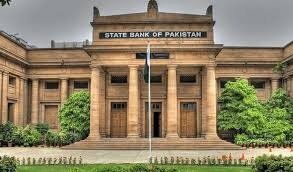
KARACHI: The State Bank of Pakistan (SBP) on Monday kept its benchmark policy rate unchanged at 11.5%, saying the current monetary policy stance remains appropriate to guide inflation towards its medium-term target despite persistent price pressures and uncertainty stemming from regional developments.
In a statement issued after its Monetary Policy Committee (MPC) meeting, the central bank said global oil prices had declined following the recent US-Iran peace agreement, though they remained above pre-conflict levels.
The MPC noted that the economic impact of the Middle East conflict had become evident in domestic indicators, with headline inflation rising into double digits in April and May, while core inflation also increased during the period.
“Economic activity is showing some signs of moderation, reflecting the impact of elevated prices, austerity measures and prevailing economic uncertainty,” the central bank said.
The committee observed that pressures on the external account remained manageable and that the broader macroeconomic outlook was largely unchanged from its previous assessment.
According to the SBP, headline inflation increased from 7.3% in March to 10.9% in April and 11.7% in May. Core inflation also rose to 8.2% in April and 8.7% in May.
The central bank attributed the rise in inflation primarily to higher domestic energy prices linked to the Middle East conflict, as well as indirect effects through transportation and production costs.
The MPC projected inflation to remain in double digits over the coming months before gradually easing. However, it warned that the outlook remained vulnerable to geopolitical developments, energy price adjustments, fiscal risks and weather-related pressures on food prices.
The committee also highlighted improvements in several macroeconomic indicators. Pakistan’s foreign exchange reserves increased to $17.2 billion as of June 5 following successful reviews under the International Monetary Fund’s financing programmes, while consumer and business confidence showed signs of recovery.
The MPC noted that the Pakistan Bureau of Statistics had provisionally estimated real GDP growth at 3.7% for fiscal year 2025-26, compared with 3.2% in the previous year. Growth was driven primarily by the services and industrial sectors, with agriculture also contributing positively.
The government has estimated a primary budget surplus of 2.5% of GDP for FY26 and is targeting a surplus of 2% of GDP in FY27, according to the central bank.
The SBP said proactive macroeconomic management and fiscal consolidation had helped preserve economic stability despite the prolonged regional conflict, while stressing the need for structural reforms to strengthen economic resilience, improve productivity and support sustainable growth.
Despite the improved outlook, the central bank cautioned that spillover effects from regional tensions and weaker agricultural prospects could weigh on economic growth in the months ahead.