

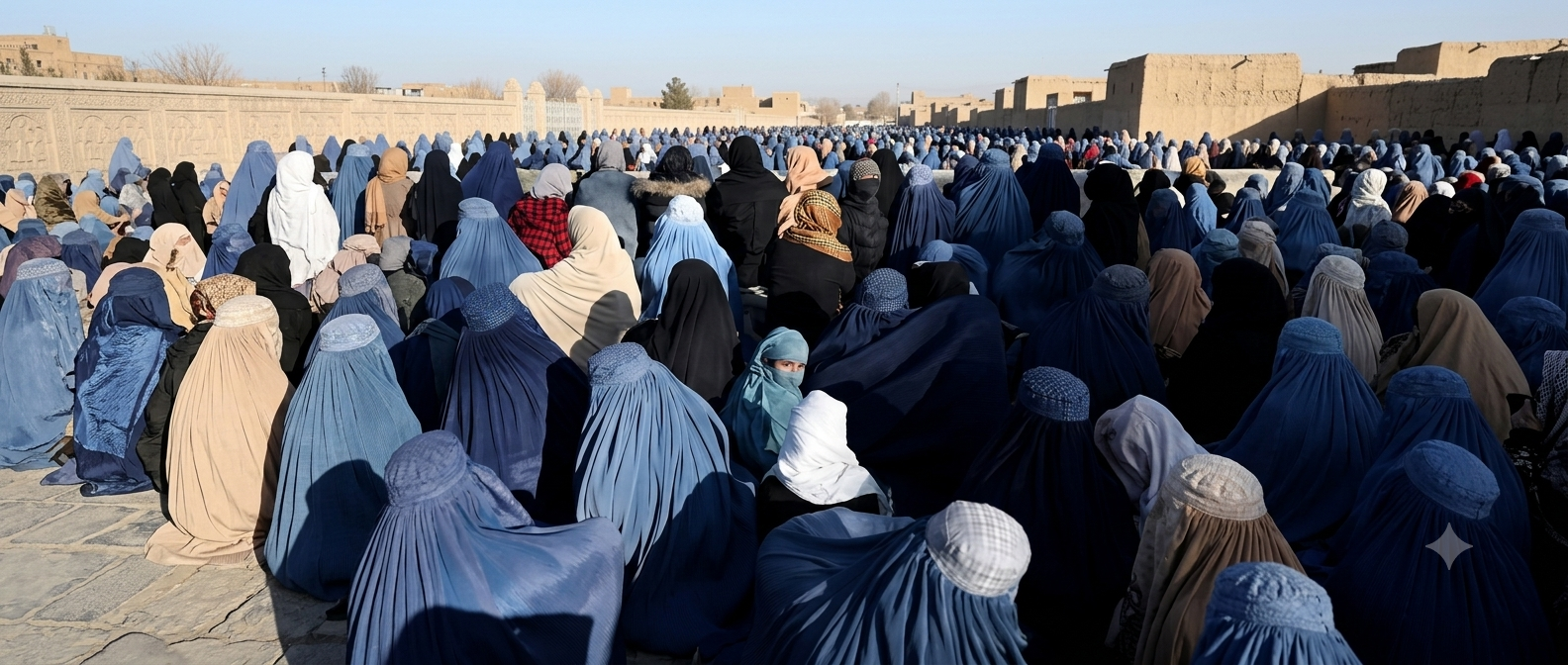
HERAT: A group of United Nations human rights experts has condemned a recent crackdown on women in Afghanistan’s western city of Herat, saying at least two people were killed and more than 20 injured during protests against new restrictions.
According to the experts, Herat’s morality police began arresting dozens of women on Saturday for allegedly failing to comply with strict dress code requirements, including not wearing the chador or burqa.
The situation escalated on Tuesday when a protest against the detentions was dispersed by force. A boy was reportedly shot dead during the incident, while witnesses told AFP that security forces opened fire. Police have denied the use of any weapons.
In a statement issued on Thursday, 10 independent experts appointed by the UN Human Rights Council said the crackdown raised serious concerns over possible arbitrary detention and gender-based discrimination.
“Allegations that women were detained for dress code violations are deeply concerning and may constitute arbitrary and unlawful detention,” the experts said, adding that the actions appeared to violate rights to freedom of expression, equality, and protection from arbitrary detention.
The morality enforcement rules fall under Afghanistan’s Ministry for the Propagation of Virtue and the Prevention of Vice (PVPV), which requires women to be almost entirely covered in public.
Women in Herat commonly wear an abaya, headscarf, and face covering, rather than a chador or burqa, according to local accounts.
The detainees reportedly included a medical worker employed by Médecins Sans Frontières (MSF), who was detained while on her way to Herat Regional Hospital’s paediatric ward. MSF said she was held for two days and released after signing a written commitment to comply with dress code requirements, along with family assurances.
MSF said it was “outraged” by the detention of its staff member, adding that women in Afghanistan already face severe restrictions on movement and access to public life.
The PVPV has not commented on the specific detentions, but its Herat office has recently issued new regulations warning that violations could lead to detention or imprisonment. The rules reportedly include bans on make-up, visible hair, and requirements to wear socks.
UN experts said the developments reflect deepening restrictions on women’s rights in Afghanistan and urged respect for fundamental freedoms, including freedom of expression, peaceful assembly, and movement.