

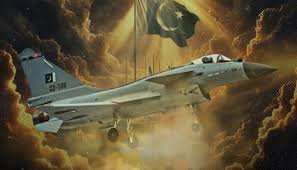
If a nation becomes strong merely through weapons, rockets, and emotional slogans, then history would look very different today. Strength alone does not earn respect; discipline, institutional stability, and national character do. The world ultimately acknowledges those states that combine power with responsibility, and capability with restraint. It is this balance that determines whether a nation rises sustainably or remains trapped in cycles of internal instability.
Pakistan stands at such a historical intersection. It is not a state defined only by geography, but by sacrifice, ideological foundation, and a continuous struggle for stability in a complex regional environment. In such circumstances, national institutions-especially those responsible for defense and continuity-remain central to the survival and coherence of the state.
The recent period marked as Marka-e-Haq has been widely understood as a moment of national resolve and collective strength. Beyond its immediate context, it also represents something deeper: a reminder of the importance of preparedness, unity, and institutional coordination in safeguarding national sovereignty. However, the true value of such moments is not only in achievement, but in how nations convert them into long-term institutional and societal evolution.
Pakistan’s armed forces have historically carried a significant burden of national responsibility during times of external threat, internal security challenges, and national emergencies. Whether confronting terrorism, responding to natural disasters, or managing complex security environments, they have consistently functioned as a stabilizing force for the state. In many critical moments, this institutional continuity has helped prevent fragmentation and ensured national resilience.
At the same time, modern statecraft requires more than operational strength. It requires public awareness, civic maturity, and alignment between institutions and society. A forward-moving nation is one where strength is not perceived as distance from the people, but as protection for them; where authority is not expressed as dominance, but as responsibility; and where institutions function not in isolation, but in harmony with national aspirations.
One of the emerging challenges in many societies, including Pakistan, is the rise of group-based identity thinking-where individuals align themselves more with factions, personalities, or emotional narratives than with institutions and national objectives. This tendency weakens critical thinking and creates polarization. A stable state requires citizens who think institutionally, not emotionally; constructively, not competitively.
In this context, the idea of a “forward-moving Pakistan” becomes important. It implies a transition from reactive cycles to structured progress. It suggests strengthening governance, improving institutional trust, and promoting a national mindset that values discipline, continuity, and long-term planning.
The vision of national strength also aligns with the intellectual legacy of Allama Iqbal, who emphasized self-respect, collective consciousness, and dynamic progress. His philosophy of selfhood was not about fragmentation, but about the awakening of disciplined individuality within a strong collective framework.
A stable Pakistan is therefore not only a security objective; it is a civilizational requirement. It demands that institutions remain strong, governance remains structured, and society develops the maturity to engage with complexity rather than reducing it to slogans or emotional extremes.
The armed forces of Pakistan remain a central pillar of this stability framework. However, the long-term strength of any nation depends on how effectively its institutions, political systems, and society move in the same direction. When alignment exists between these pillars, nations transition from survival mode to development mode.
After Marka-e-Haq, the real challenge is not celebration-it is consolidation. It is transforming moments of unity into systems of progress. It is ensuring that national strength is translated into economic resilience, institutional trust, and social cohesion.
In the end, nations are not sustained by victories alone. They are sustained by the ability to evolve after victory-quietly, steadily, and institutionally. Pakistan’s true rise will be defined not only by its resilience in moments of challenge, but by its capacity to move forward as a disciplined, aware, and forward-looking state.
Disclaimer: The views and opinions expressed in this article are solely those of the author and do not necessarily reflect the views, policies, or position of this website. The website does not endorse or oppose any opinion presented herein.