

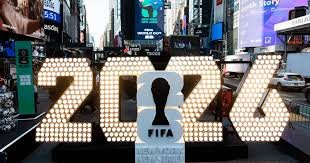
Millions of football fans across the world’s two most populous nations, India and China, face the prospect of missing the upcoming FIFA World Cup 2026 as negotiations over broadcast rights remain unresolved just weeks before kickoff.
Sources familiar with the matter told Reuters that in India, a joint venture between Reliance Industries and The Walt Disney Company has offered approximately $20 million for the tournament’s media rights — significantly below the valuation sought by FIFA. The offer was deemed insufficient, and discussions have yet to yield an agreement.
Meanwhile, Sony Group Corporation, which previously held sports broadcasting rights in India, also opted not to submit a bid after evaluating the commercial viability of the deal, according to a separate industry source.
The situation is similarly unclear in China, where no official broadcaster has been announced. This marks a notable departure from previous tournaments, where state broadcaster China Central Television had secured rights well in advance and begun promotional campaigns ahead of kickoff.
In a statement, FIFA confirmed that media rights agreements have been finalized in more than 175 territories but acknowledged that negotiations with India and China are ongoing and confidential.
The delay is unusual given the scale of both markets. During the FIFA World Cup 2022, China accounted for nearly half of global digital and social media viewing hours, while India and China together represented over one-fifth of total global streaming reach.
Industry analysts attribute the deadlock in India to a combination of pricing disagreements and weaker commercial expectations. FIFA had initially sought up to $100 million for bundled rights covering the 2026 and 2030 tournaments but has reportedly lowered its expectations. Even so, broadcasters remain cautious.
The Reliance-Disney joint venture, now a dominant force in India’s media landscape, is believed to be leveraging its market position amid concerns that viewership may be impacted by unfavorable match timings. The 2026 tournament — hosted across the United States, Canada, and Mexico — will air largely past midnight in India, potentially affecting audience engagement and advertising revenues.
Additional pressure stems from broader economic factors, including a slowdown in advertising spending linked to regional geopolitical tensions, which industry insiders say has dampened appetite for high-value sports rights deals.
With the tournament set to begin on June 11, the window to finalize agreements, establish broadcast infrastructure, and secure advertising commitments is rapidly narrowing. While negotiations continue, the absence of confirmed deals in two of the largest global markets underscores a rare and high-stakes standoff in international sports broadcasting.