

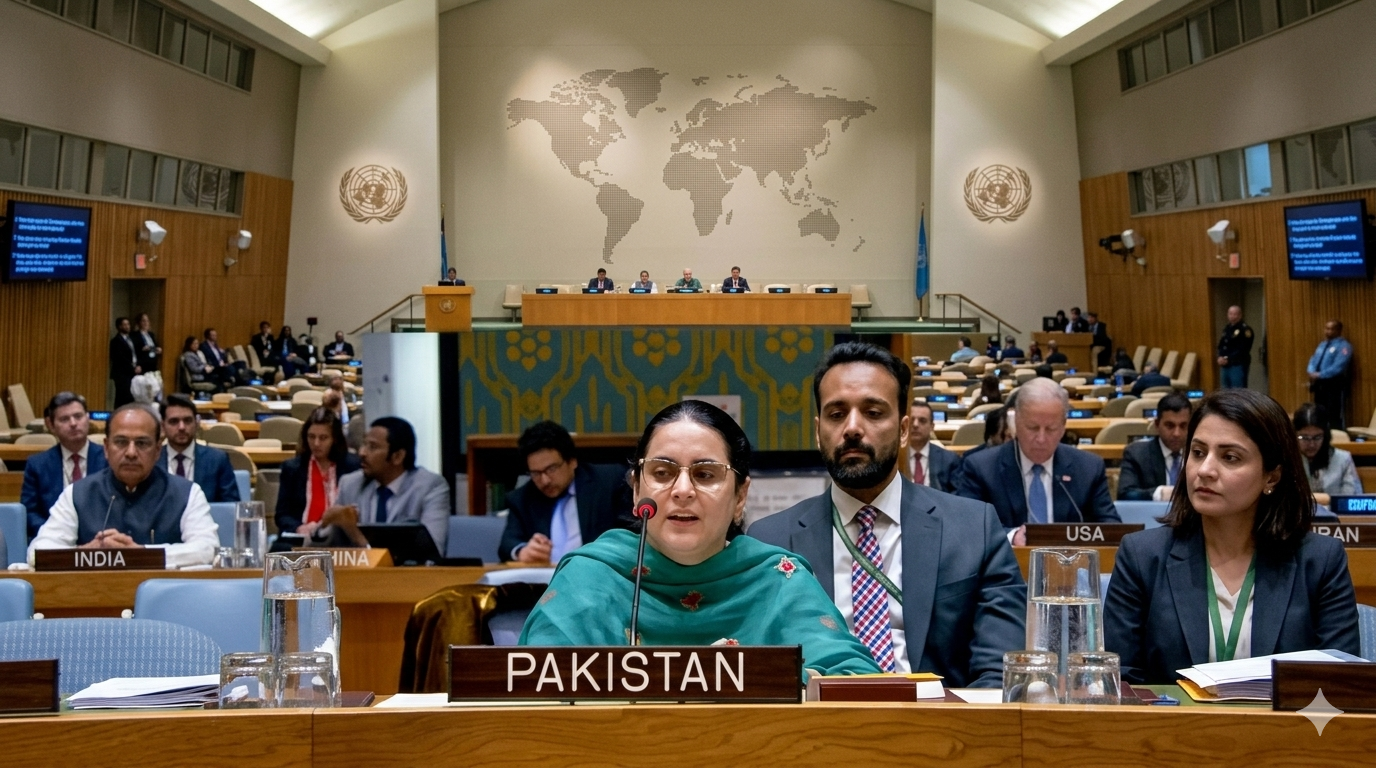
The world came dangerously close to a catastrophe this year. The war between the United States and Iran began on February 28, 2026. It threatened to drag the entire Middle East into chaos. Oil prices surged. The Strait of Hormuz closed. Global markets shook, and the question on every diplomat’s mind was that who can bring these two sides together.
The answer came from an unlikely place. Pakistan stepped forward as the primary mediator. Not the UN. Not the EU. Not China or Russia. Pakistan.
That deserves a moment of recognition.
“Pakistan actually achieved something many diplomats from wealthy democracies and leading global organizations had failed at for nearly five decades.” — Council on Foreign Relations
Pakistan had every reason to stay out of this conflict. It is not an Arab country. It is not a Western ally in the traditional sense. It shares a long border with Iran and has economic ties with the United States. Getting involved was a risk.
However, Islamabad made a choice. It decided that peace was more important than comfort.
The effort began quietly. Pakistan’s Foreign Minister Ishaq Dar publicly confirmed that US-Iran indirect talks were taking place through messages being relayed by Pakistan. He revealed that the United States had shared a 15-point proposal with Iran through Pakistani channels. That is not the work of a bystander. That is the work of a trusted intermediary.
On March 29, Pakistan hosted foreign ministers from Turkey, Saudi Arabia and Egypt in Islamabad to coordinate a unified regional push for de-escalation. That coordination meeting happened before the ceasefire. Pakistan was building the diplomatic scaffolding before anyone else had a blueprint.
On April 7, 2026, Trump warned the world, “A whole civilisation will die tonight, never to be brought back.” The threat was real. The clock was ticking.
Then Pakistan moved.
Field Marshal Asim Munir held direct talks with US Vice President JD Vance, special envoy Steve Witkoff and Iranian Foreign Minister Abbas Araghchi. The result was a ceasefire announced on April 8. Both sides agreed to stop fighting. Oil prices fell by nearly 16 percent within hours of the announcement. Global markets rallied. The world exhaled.
France’s Foreign Minister Jean-Noel Barrot personally called Ishaq Dar to hail Pakistan’s role in achieving the ceasefire. That is not a small thing. It is a recognition from a G7 nation that Pakistan made the difference.
Pakistan then hosted direct face-to-face talks in Islamabad on April 11 and 12. Vice President JD Vance led a 300-member US delegation. Iranian negotiators sat across the table. This was the first direct US-Iran dialogue of this kind in nearly five decades. It happened in Islamabad. At a table Pakistan set.
Think about what that means. For decades, Washington and Tehran refused to speak directly. Pakistan found a way to get them in the same room.
When the Islamabad talks stalled, Pakistan did not give up. It kept working.
Field Marshal Asim Munir flew to Tehran on May 22 to continue mediation efforts. He met Iranian President Masoud Pezeshkian directly. This was not a ceremonial visit. This was active shuttle diplomacy at the highest military and diplomatic level.
Interior Minister Mohsin Naqvi also traveled to Tehran as part of the sustained diplomatic push. On May 24, Iran’s Ambassador to Pakistan, Reza Amiri Moghadam, publicly congratulated Naqvi on his return. In a post on X, the Ambassador said the results were due to “the initiative and dedicated endeavours of the Pakistani mediator.”
US Secretary of State Marco Rubio also acknowledged “slight progress” in the talks. A deal is now reportedly close. A Pakistan-mediated draft agreement between the US and Iran has reportedly been finalised.
Pakistan’s success as a mediator is not an accident. It is the result of a unique position that no other country holds.
Pakistan is a Muslim-majority nation. It has a long history of relations with Iran going back decades. At the same time, it has deep ties with the United States. It is trusted in both capitals. That double-trust is rare. It is why Pakistan could carry messages that no other country could.
Pakistan also brought something else, seriousness. Prime Minister Shehbaz Sharif and Foreign Minister Ishaq Dar flew to China, Iran’s top trading partner, as part of the same peace effort. Pakistan was working every diplomatic lever simultaneously. That is not improvised diplomacy. That is strategy.
Pakistan chose to stand between the world and bad outcome. It absorbed the diplomatic pressure. It took the risk and it delivered results.
History does not always remember the peacemakers. It more often remembers the wars. However this time, the record is clear.
When the world needed someone to step forward, Pakistan did. When the talks needed to be hosted, Pakistan opened its doors. When messages needed to be carried between adversaries, Pakistan’s diplomats and military commanders made the trip, and when a deal finally takes shape, it will carry the mark of Pakistani effort.
Disclaimer: The views and opinions expressed in this article are solely those of the author and do not necessarily reflect the views, policies, or position of this website. The website does not endorse or oppose any opinion presented herein.