

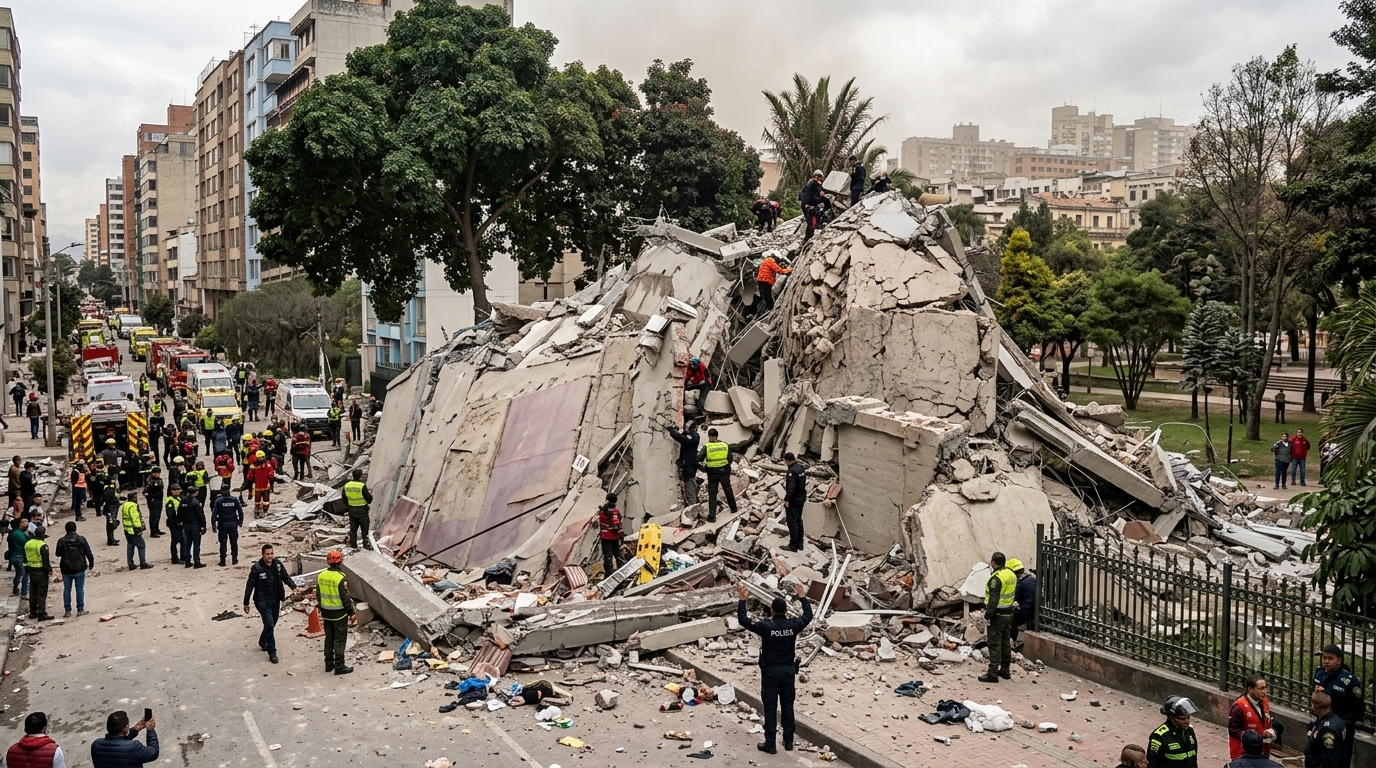
CARACAS: At least 164 people have been killed and nearly 1,000 injured after two powerful earthquakes struck Venezuela, interim President Delcy Rodriguez said early Thursday, as emergency crews raced to locate survivors trapped beneath collapsed buildings.
The earthquakes, measuring magnitude 7.2 and 7.5, struck less than a minute apart about 160 kilometers west of Caracas, according to the U.S. Geological Survey (USGS). Authorities warned the casualty count is expected to rise significantly as rescue operations continue in some of the hardest-hit areas.
Rodriguez said the current figures do not include casualties from La Guaira state, home to Venezuela’s main international airport and one of the regions most severely affected by the disaster.
“Dozens of buildings have collapsed, and we are currently carrying out very intense rescue efforts to save as many lives as possible,” Rodriguez said in a televised address shortly before 1 a.m. local time.
The government announced the creation of an initial $200 million reconstruction fund using resources from the International Monetary Fund (IMF) to support the rebuilding of infrastructure, hospitals, and housing damaged by the earthquakes.
The USGS said preliminary predictive modeling suggested the final death toll could reach into the thousands, with a substantial probability of exceeding 10,000.
Emergency officials reported widespread structural damage across Caracas and surrounding regions. In the capital, district authorities confirmed multiple building collapses. Three people were killed in Baruta after two buildings collapsed, while one person died in neighboring Chacao, where four buildings were destroyed.
Interior Minister Diosdado Cabello said emergency services, security forces, and civil protection teams had been mobilized nationwide.
Video footage broadcast by local media showed rescue workers searching through the ruins of collapsed structures as relatives gathered nearby seeking information about missing family members.
A tsunami warning issued after the earthquakes was later canceled after authorities determined there was no continuing threat.
The tremors struck during a public holiday, when many residents were at home. Witnesses described scenes of panic as buildings shook across Caracas, prompting mass evacuations.
Authorities closed Venezuela’s largest airport in Maiquetia due to damage and suspended classes nationwide for the remainder of the week.
International assistance began mobilizing shortly after the disaster. Rodriguez said rescue teams from several countries were expected to arrive within hours, while leaders across the region offered support and condolences.
U.S. President Donald Trump said Washington stood ready to assist Venezuela following the disaster. The U.S. State Department confirmed it was coordinating with Venezuelan authorities and preparing emergency aid.
Hospitals in Caracas activated emergency protocols and called in additional staff to cope with the growing number of casualties.
Despite the widespread destruction, initial assessments indicated Venezuela’s oil infrastructure had largely avoided significant damage. Authorities reported no major incidents at key refining and production facilities, though officials warned prolonged power outages could disrupt crude output.
Venezuela sits along the boundary between the Caribbean and South American tectonic plates, one of the most seismically active zones in the region.