

Strategic Resilience and the New World Order
Pakistan, Muslim World Cooperation and the Contest Between Military Power and Human Judgment
Man Proposes, God Disposes
The old English proverb, “Man proposes, God disposes,” carries a timeless lesson for a world increasingly absorbed in military competition, technological advancement and geopolitical ambition. Nations devise strategies, build alliances and acquire sophisticated weapons in pursuit of security. Yet history reminds us that no plan is immune to uncertainty, and no military advantage guarantees political success.
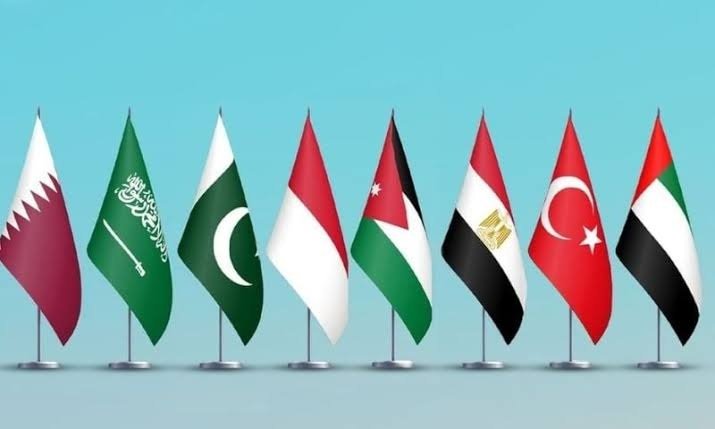
The emerging relationship between Pakistan, Saudi Arabia and other Muslim countries deserves consideration in this wider context. Its importance lies not merely in defence cooperation, but in the possibilities for technological development, economic resilience, diplomatic coordination and greater strategic independence.
The central question is whether these relationships can translate shared interests into lasting capabilities while reducing the risks of regional confrontation.
For Pakistan, the task is to build upon its strategic experience through sound judgment, institutional strength and responsible diplomacy. For its partners, the opportunity is to develop practical cooperation without compromising their individual national interests.
The wider lesson is clear: power can shape events, but wisdom determines how successfully it is employed.
1. Alliances Must Deliver More Than Declarations
Cooperation between Pakistan, Saudi Arabia and other Muslim-majority countries can extend beyond conventional defence arrangements to energy security, industrial development, scientific research, cybersecurity, investment and diplomatic engagement.
However, an alliance is only as effective as its ability to translate commitments into practical results. Mutual trust, clearly defined objectives and institutional continuity matter more than impressive declarations.
Shared religious or historical connections can provide a foundation for cooperation, but each country retains its own political priorities and international relationships. Durable partnerships must respect these differences while identifying common interests.
Pakistan’s opportunity lies in strengthening its domestic capabilities while developing partnerships that expand its strategic options. Saudi Arabia and other partners can similarly benefit from cooperation that supports economic diversification, technological advancement and regional stability.
The wider Muslim world possesses considerable human and economic resources. Turning those resources into international influence requires sustained investment in education, research, industry and effective institutions.
An alliance earns its importance through what its members accomplish together, not merely through what they announce.
2. The Historical Limits of Military Power
History offers repeated examples of powerful states discovering that military superiority does not necessarily produce political success.
A campaign may achieve its immediate objectives yet fail to secure a lasting settlement. Strategic setbacks can arise from unrealistic ambitions, incomplete intelligence, logistical difficulties, economic exhaustion or a misunderstanding of local conditions.
The weakness may lie not in the weapons themselves, but in the assumptions governing their use.
Modern aircraft, precision weapons, surveillance systems and artificial intelligence provide significant advantages. Nevertheless, they cannot independently guarantee political legitimacy, sustainable security or a favourable outcome.
Pakistan’s experience in a demanding regional environment offers important material for examining deterrence, preparedness and decision-making under pressure. Its strengths and achievements deserve serious assessment, supported by evidence and accompanied by an objective understanding of the challenges ahead.
The lesson applies to every country: credible defence is essential, but it must serve realistic political objectives.
The greatest strategic error is to mistake the capacity to act for a guarantee of success.
3. Technological Sovereignty: What Happens When Systems Fail?
Modern security increasingly depends on satellite communications, digital networks, navigation services and interconnected information systems. These technologies improve efficiency and situational awareness, but they can also create vulnerabilities when essential functions depend excessively on external providers.
If a critical communications service becomes unavailable, a navigation system is disrupted or access to essential software is restricted, a country may discover that technological convenience has become strategic dependence.
Services such as Starlink illustrate the broader importance of this question. The issue is not whether a particular technology should be rejected, but whether a nation can continue to function when access to an important service is interrupted.
The answer lies in technological sovereignty: domestic research, secure infrastructure, trained personnel, cybersecurity and credible alternatives for essential services.
Pakistan and other countries seeking greater strategic autonomy should invest in engineering, scientific research, indigenous industries and the ability to maintain critical systems independently.
Yet technological independence does not mean isolation. Foreign technology can offer substantial benefits when its use is supported by appropriate safeguards and contingency planning.
Nor should advanced technology be dismissed because it can fail. The objective is to combine its advantages with the capacity to withstand disruption.
True technological strength lies not in possessing the most sophisticated systems, but in understanding their limitations and preparing for their failure.
4. Human Intelligence Remains Indispensable
Artificial intelligence can process enormous quantities of information, but information alone does not constitute understanding.
Strategic decisions require the interpretation of evidence, an appreciation of local conditions and the ability to distinguish a genuine threat from a misleading signal. An advanced system can still produce an unreliable assessment when its information is incomplete or its assumptions are mistaken.
Human judgment remains essential to determining what information means and what action serves the national interest.
For Pakistan, this underscores the importance of professional expertise, institutional learning and independent assessment. Strategic confidence must be supported by evidence, and effective leadership must retain the willingness to revise its assumptions when circumstances change.
The choice is not between human intelligence and modern technology. It is between using technology as an instrument of informed judgment and allowing dependence upon it to weaken that judgment.
Technology can expand the range of choices; human intelligence must determine which choices are wise.
5. Deterrence, Restraint and the Art of Statecraft
In periods of international tension, military exercises, diplomatic statements and demonstrations of capability can communicate resolve. They can also generate misunderstandings.
A defensive measure may be interpreted as preparation for aggression. An unverified report may create pressure for retaliation before the facts are established. Once public expectations harden, leaders may find it increasingly difficult to reconsider their options.
These dangers are particularly serious in South Asia, where nuclear capabilities make the consequences of miscalculation exceptionally grave.
Restraint should not be mistaken for weakness, just as preparedness should not be regarded as an obligation to escalate every dispute.
For Pakistan and other regional powers, credible deterrence must be accompanied by reliable intelligence, disciplined communication and functioning diplomatic channels.
The purpose of deterrence is to prevent aggression. Diplomacy helps preserve that purpose by providing alternatives to unnecessary confrontation.
The most successful act of deterrence may be the conflict that never takes place.
6. Resilience: The Strength to Withstand Pressure
Resilience extends beyond the battlefield. A nation must be able to sustain essential services, protect its population, absorb economic shocks and recover from disruption.
Military preparedness requires training, logistics and maintenance. National resilience also requires sound institutions, economic stability, technological competence and public confidence.
For Pakistan, these foundations are inseparable. Defence capabilities matter, but their long-term effectiveness is strengthened by education, industrial development, scientific research and a stable economic base.
Resilience should not be confused with an expectation that citizens must endure unlimited hardship. Its purpose is to protect people and preserve the conditions for recovery.
Nor should citizens living abroad automatically be regarded as disloyal. Diaspora communities can contribute professional expertise, investment and constructive engagement, while responsible criticism can help identify weaknesses and improve policy.
A resilient nation does not deny its difficulties. It recognises them, responds intelligently and learns from experience.
7. Misinformation and the Danger of Miscalculation
Geopolitical competition increasingly involves competing narratives, public accusations and the rapid circulation of information.
Unverified claims can damage diplomatic relationships, intensify public anger and narrow the options available to decision-makers. Allegations of false-flag operations or deliberate provocations must therefore be investigated rather than treated as established facts without credible evidence.
Responsible analysis distinguishes confirmed developments from interpretation and speculation.
This discipline is essential because a mistaken assessment can encourage retaliation and transform a manageable dispute into a wider crisis.
The responsibility falls upon governments, analysts and media organisations alike: establish the facts, acknowledge uncertainty and avoid conclusions that exceed the available evidence.
In international affairs, careful judgment is not a sign of hesitation. It is a safeguard against preventable error.
8. Security Must Ultimately Protect Human Life
Military strategy is often discussed through weapons, alliances and geopolitical influence. Yet its consequences are ultimately borne by people.
Conflict can destroy homes, interrupt education, displace families and undermine economic opportunity for generations. A responsible security policy must therefore consider not only military feasibility, but also necessity, foreseeable consequences and compliance with international law.
Protecting civilians and pursuing peaceful settlements are essential responsibilities of statecraft. They do not require nations to disregard genuine security threats; they require leaders to confront those threats with judgment and a clear understanding of the human cost.
For Pakistan, Saudi Arabia and other international partners, cooperation in humanitarian assistance, crisis communication and diplomacy can complement credible defence preparedness.
The ultimate purpose of national security is to preserve the conditions in which people can live safely and build their future.
Conclusion: Wisdom Is the Final Test of Power
“Man proposes, God disposes.” The proverb endures because it recognises the limits of human control.
Military capabilities create advantages, but judgment determines how they are used. Technology expands possibilities, but resilience determines whether essential functions survive disruption. Alliances strengthen cooperation, but trust and shared interests determine their practical value.
Pakistan’s strategic experience and its relationships with Saudi Arabia and other Muslim countries deserve serious, evidence-based examination. The opportunity is to strengthen national sovereignty while contributing to a more stable regional order.
The future will favour countries that combine credible defence with independent judgment, technological advancement with resilience, and national interests with diplomatic responsibility.
The world needs nations capable of protecting their people without becoming prisoners of confrontation.
A nation’s enduring strength is measured not only by its ability to defend its sovereignty, but by its wisdom in preventing war and its commitment to preserving human life.
Disclaimer: The views and opinions expressed in this article are solely those of the author and do not necessarily reflect the views, policies, or position of this website. The website does not endorse or oppose any opinion presented herein.