

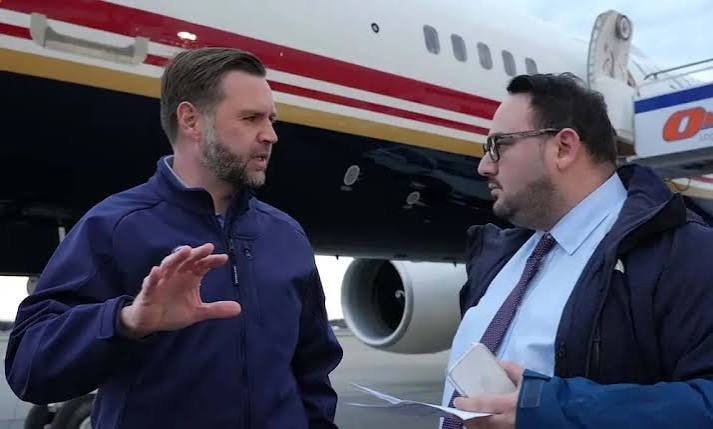
United States: Vice President JD Vance said Iran must make a “meaningful” reduction in its uranium enrichment capacity for Washington to agree to an end to the seven-month war, insisting that Tehran must take concrete nuclear steps rather than offer assurances.
Vance said the United States remained open to an agreement but would require verifiable action to prevent Iran from rebuilding its nuclear programme. He questioned why Tehran would continue enriching uranium to 60% if it does not intend to develop a nuclear weapon.
“If you want to show a commitment to not building a nuclear weapon, don’t build highly enriched fuel,” Vance told Reuters in an interview after a campaign trip to Alaska.
What does the US want Iran to do?
Vance said Washington was seeking “actions for actions” rather than promises, making a reduction in Iran’s enrichment capacity a key condition for any agreement.
The United States and Iran have exchanged proposals aimed at ending the conflict and reopening the Strait of Hormuz, a critical route for global energy shipments. US President Donald Trump has rejected Tehran’s latest offer and warned that military operations could intensify after the US midterm elections.
Vance said Iranian nuclear facilities had been destroyed during the conflict and Washington would oppose any effort to rebuild them.
The war has also disrupted global energy markets and increased political pressure on the Trump administration, with the conflict reportedly costing the United States about $3 billion a month.
Why does Washington question Iran’s decision-making?
Vance said US officials remained uncertain about who has final authority over major decisions in Tehran. He said Washington was communicating with Iranian President Masoud Pezeshkian and Foreign Minister Abbas Araqchi but questioned how much influence they hold within Iran’s political structure.
His comments followed joint US-Israeli strikes that, according to the report, killed Supreme Leader Ayatollah Ali Khamenei at the beginning of the war.
Iranian Foreign Ministry spokesperson Esmaeil Baghaei rejected Washington’s assessment, saying US officials understand Iran’s decision-making structure and that the problem lies in what he described as contradictory US positions and mixed messaging.
Vance also said the United States remained involved in diplomatic efforts but indicated that Trump was ultimately directing negotiations.
“We’re certainly involved,” Vance said. “Ultimately, the president of the United States is driving things.”
The conflict has become a major political issue in the United States as higher energy prices and the cost of the war create additional pressure on the Trump administration and Republican candidates ahead of the November midterm elections.