

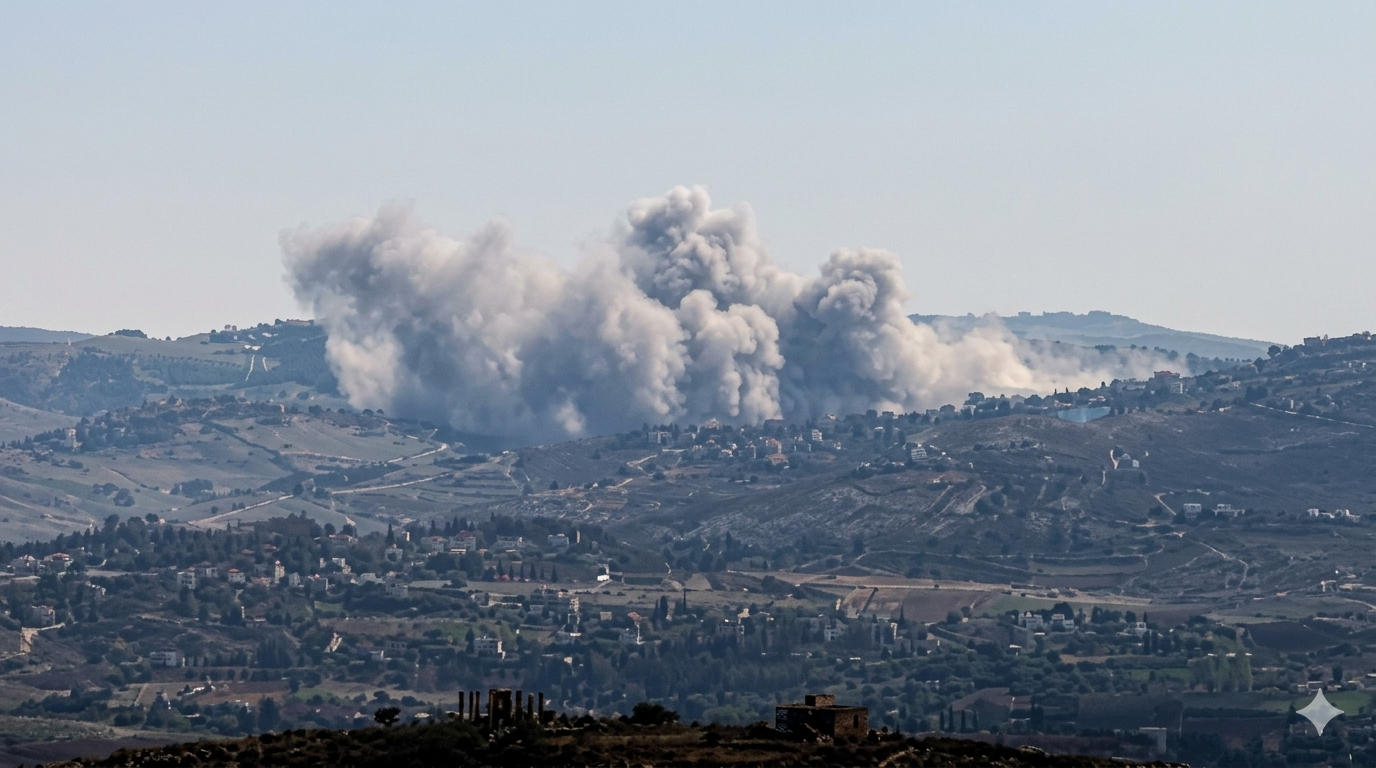
WASHINGTON: United States forces launched strikes on missile sites and mine-laying boats in southern Iran on Monday, according to US Central Command, escalating regional tensions and putting a fragile ceasefire between Washington and Tehran at risk.
US Central Command spokesman Tim Hawkins said in a statement that the attacks were carried out in “self-defence” to protect American troops from threats posed by Iranian forces.
The US military said the strikes targeted missile launch sites and vessels allegedly attempting to place naval mines near strategic waterways in southern Iran.
Iran’s state broadcaster IRIB reported several explosions near the port city of Bandar Abbas around midnight local time but said the situation remained normal and authorities were investigating the incident.
The escalation came as senior Iranian negotiators arrived in Doha for another round of talks aimed at ending months of conflict that have destabilized the Middle East and disrupted global energy markets.
The strikes also coincided with intensified hostilities between Israel and the Iran-backed Hezbollah in southern Lebanon.
Global oil markets reacted sharply to the developments amid concerns over shipping through the Strait of Hormuz, a key route for international energy supplies. Oil prices fluctuated on Tuesday, with US benchmark West Texas Intermediate falling more than 5% while Brent crude recorded gains.
The ceasefire between the United States and Iran, which began on April 8, has largely held despite continued tensions over Gulf shipping routes and disagreements surrounding Iran’s nuclear programme.
US President Donald Trump increased pressure on Tehran by demanding that Iran hand over its enriched uranium stockpile to the United States for destruction or agree to supervised destruction inside Iran under international oversight.
In a social media post, Trump said any final agreement must ensure the complete elimination of Iran’s nuclear threat.
The US president also called on Saudi Arabia, the United Arab Emirates, Qatar, Pakistan, Egypt, Turkiye, Bahrain and Jordan to formally join the Abraham Accords as part of a broader regional peace framework.
Bahrain and the UAE had already signed the accords in 2020 alongside Morocco and Sudan, while Saudi Arabia and Qatar have repeatedly stated they will not normalize ties with Israel without the establishment of an independent Palestinian state.
Analysts warned that Trump’s latest demands could further complicate negotiations.
Anna Jacobs of the Arab Gulf States Institute in Washington said Gulf states were unlikely to accept additional normalization pressure while regional security remained unstable.
US Secretary of State Marco Rubio had earlier expressed optimism about a possible breakthrough in negotiations, saying progress could come “within the day.”
However, Iranian Foreign Ministry spokesman Esmaeil Baqaei said that although significant progress had been made in talks, no final agreement was imminent.
Meanwhile, Israeli Prime Minister Benjamin Netanyahu announced an expansion of military operations in Lebanon, accusing Hezbollah of carrying out drone attacks against Israeli forces.
Netanyahu said Israel and the United States remained aligned on ensuring that any final agreement with Iran fully eliminates Tehran’s nuclear capabilities before a permanent peace settlement is reached.