

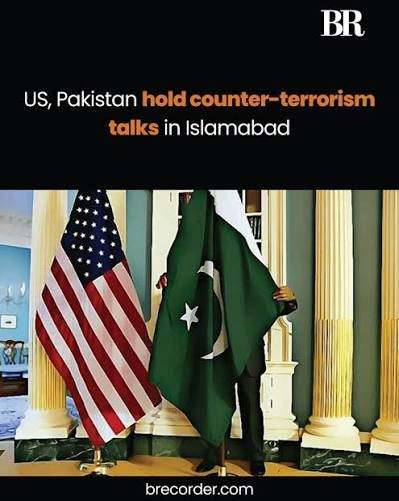
WASHINGTON/UNITED NATIONS: The United States has reaffirmed its support for Pakistan’s right to defend itself against terrorist attacks, following Pakistan’s recent action against terrorist infrastructure along the Pakistan-Afghanistan border.
According to the US State Department, “the Pakistani people have suffered greatly at the hands of terrorists,” adding that Washington supports Pakistan’s right to defend itself against terrorist attacks.
The statement comes after Pakistan launched operations on Sunday night against what it described as terrorist infrastructure along the Afghan border in response to the attack on a Pakistan Rangers Sindh headquarters in Karachi’s Gulistan-i-Jauhar area.
The US has previously expressed similar support. In February, US Under Secretary of State for Political Affairs Allison Hooker said Washington continued to monitor the security situation closely and backed Pakistan’s right to defend itself against attacks by militant groups.
What happened at the United Nations?
The US statement coincided with the ninth review of the United Nations Global Counterterrorism Strategy (GCTS), a framework adopted in 2006 to strengthen international cooperation against terrorism.
For the first time, the strategy’s review was adopted through a recorded vote after consensus among member states could not be achieved. The resolution was approved by 140 countries, including Pakistan.
The United States, Israel and Argentina voted against the resolution, while Japan initially abstained before stating that its vote resulted from a technical error and that it had intended to support the resolution.
Washington criticised the draft, describing it as “bloated, outdated and lacking focus,” and argued that it failed to address several US policy concerns.
What was Pakistan’s position?
Addressing the UN General Assembly, Pakistan’s Permanent Representative to the United Nations, Ambassador Asim Iftikhar Ahmad, said terrorism remained an evolving global threat requiring coordinated international action.
He said Pakistan had remained at the forefront of global counterterrorism efforts and had suffered significant human and economic losses, noting that more than 1,200 Pakistanis were killed in terrorist attacks over the past year.
The ambassador expressed disappointment that the latest review of the Global Counterterrorism Strategy did not incorporate several proposals put forward by Pakistan and the Organisation of Islamic Cooperation (OIC), despite years of negotiations.
He called for reforms to the UN’s counterterrorism framework, stronger measures against online radicalisation and terrorist financing, greater regulation of digital financial systems, and safeguards to ensure international mechanisms remain transparent and free from political influence.
Ambassador Iftikhar also urged the international community to strengthen cooperation against terrorism while rejecting attempts to equate legitimate struggles for self-determination with terrorism.