

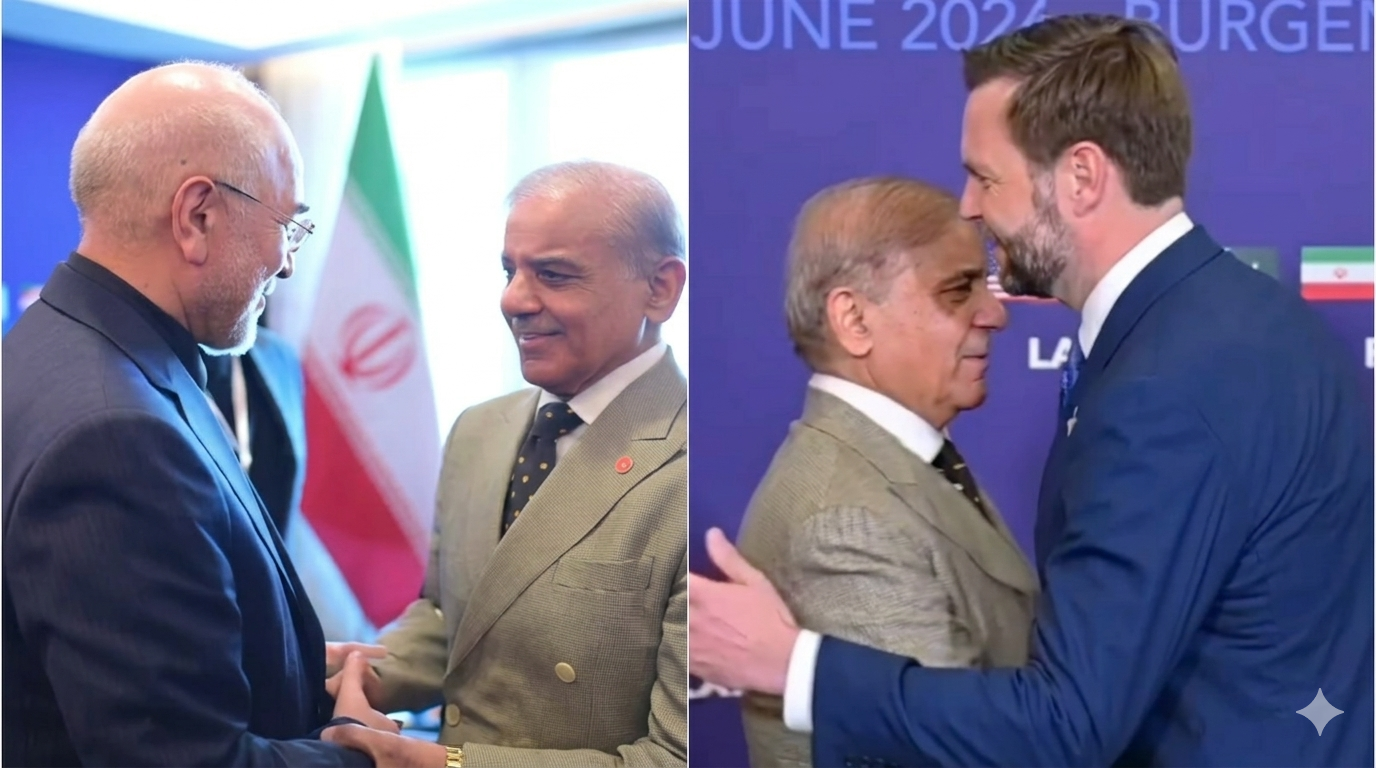
LAKE LUCERNE, Switzerland: Delegations from the United States and Iran met separately with Pakistani mediators in Switzerland on Sunday ahead of four days of technical-level talks aimed at implementing the recently signed Islamabad Memorandum of Understanding (MoU), officials said.
The negotiations, dubbed the “Lake Lucerne Summit,” mark the first formal engagement between Washington and Tehran since both sides signed the Pakistan-mediated agreement on June 17 to end nearly four months of conflict.
The US delegation, led by Vice President JD Vance and including special envoys Steve Witkoff and Jared Kushner, held talks with Prime Minister Shehbaz Sharif and Chief of Defence Staff Field Marshal Syed Asim Munir.
Speaking to reporters before the meeting, Vance praised Pakistan’s role in facilitating diplomacy between the two countries.
“We appreciate Pakistan’s mediation efforts throughout this conflict,” Vance said. “We love Pakistan.”
Later, an Iranian delegation headed by Parliament Speaker Mohammad Bagher Ghalibaf and Foreign Minister Abbas Araghchi met the Pakistani side. The Pakistani delegation included Prime Minister Shehbaz Sharif, Field Marshal Munir and Interior Minister Mohsin Naqvi.
In a statement issued earlier, Pakistan’s Foreign Office said high-level representatives from Iran, the United States and Qatar would participate in the discussions, describing them as the first formal follow-up engagement since the signing of the Islamabad MoU.
The ministry said Pakistan would continue supporting the understandings reached between Tehran and Washington, adding that its facilitative role reflected a “principled, balanced and constructive approach” throughout the crisis.
Islamabad hosted earlier rounds of indirect talks and maintained diplomatic contacts with both sides that ultimately led to the agreement.
The Switzerland meeting comes days after US President Donald Trump and Iranian President Masoud Pezeshkian electronically signed the Islamabad MoU. Prime Minister Shehbaz Sharif subsequently signed the document as mediator, formally concluding the agreement.
According to details released by Washington, the accord includes provisions for reopening the Strait of Hormuz and lifting the US blockade on Iranian ports.
The latest round of talks follows renewed tensions that have complicated efforts to implement the agreement.
On Saturday, Iran announced it was once again closing the Strait of Hormuz following Israeli strikes in Lebanon, raising concerns about the durability of the ceasefire framework and its economic provisions.
The technical talks had originally been scheduled to begin on Friday but were postponed after Israel launched strikes in Lebanon, creating fresh uncertainty over diplomatic efforts to stabilize the wider Middle East.
Officials from all sides expressed hope that the Switzerland negotiations would preserve momentum toward implementing the agreement despite the latest regional escalation.