

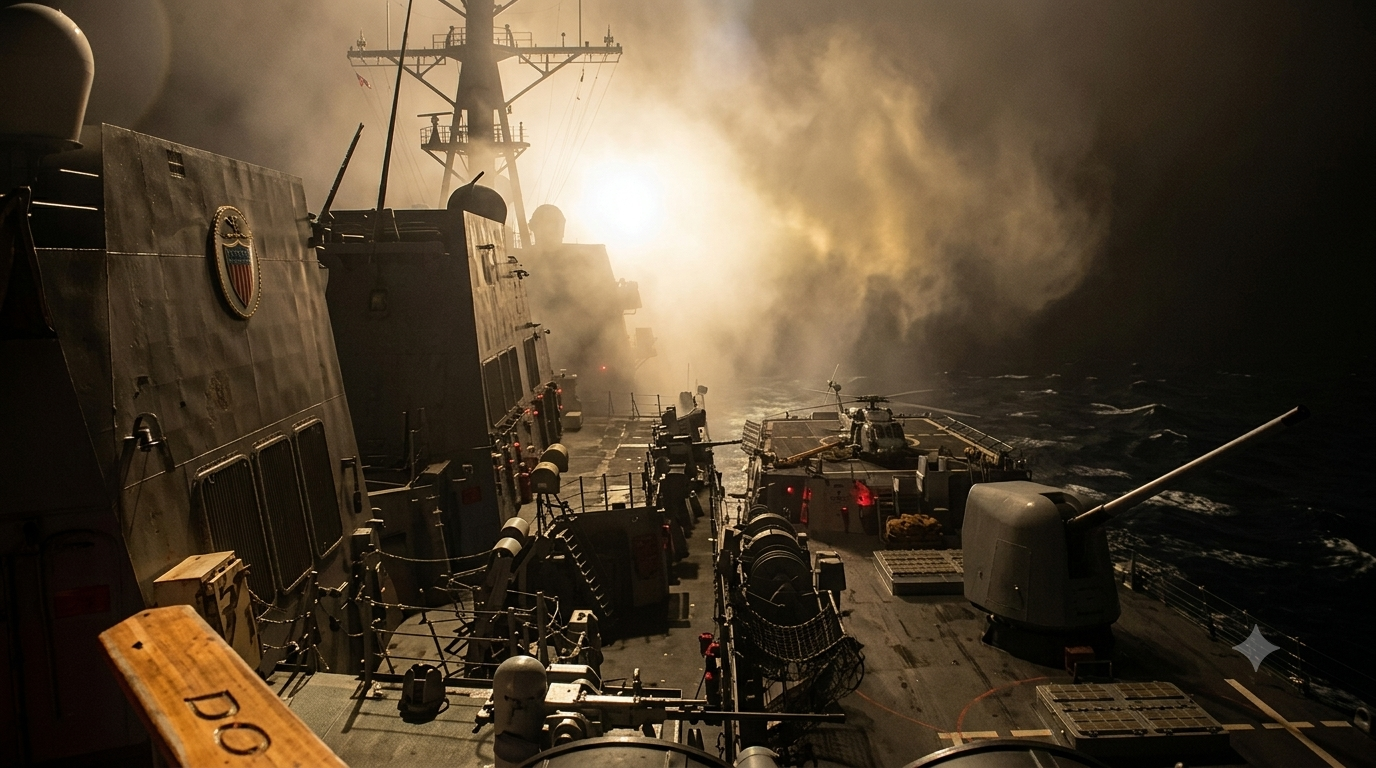
WASHINGTON/TEHRAN: The United States and Iran exchanged military strikes, escalating tensions and raising fresh concerns over the durability of their ceasefire after Washington accused Tehran of attacking a commercial cargo vessel in the Strait of Hormuz.
The US Central Command (CENTCOM) said American forces carried out strikes on Iranian missile and drone storage facilities, as well as coastal radar positions, in response to what it described as an Iranian attack on a commercial ship transiting the Strait of Hormuz.
CENTCOM said the operation targeted military infrastructure used in the alleged attack, calling it “a powerful response” to what it termed an unwarranted act of aggression that violated the ceasefire.
US President Donald Trump condemned the reported attack, describing it as a “foolish violation” of the ceasefire agreement, while Vice President JD Vance warned that any further attacks by Iran would be met with force.
Iranian state television reported that an explosion was heard near Taherouyeh pier in the southern port city of Sirik, with an informed military source attributing the blast to a projectile impact.
Hours later, Iran’s Islamic Revolutionary Guard Corps (IRGC) announced it had launched retaliatory strikes against US positions in the Gulf region, warning that any further military action by Washington would prompt a broader response.
The latest exchange has intensified concerns over security in the Strait of Hormuz, a strategic waterway through which nearly one-fifth of global oil and gas exports normally pass, as the United States and Iran continue negotiations aimed at reaching a permanent settlement to the conflict that began on February 28.
Iran has warned commercial vessels against entering or leaving the Gulf through the strait without its authorization, although maritime traffic has continued. Shipping data showed that many vessels have been using an alternative southern route along Oman’s coast.
Despite the renewed military confrontation, international oil prices declined, reflecting market expectations that shipping through the Strait of Hormuz would continue despite the heightened tensions.
Separately, Israel, Lebanon and the United States signed a framework agreement in Washington aimed at advancing peace efforts along the Israel-Lebanon border.
US Secretary of State Marco Rubio described the accord as the beginning of a framework for lasting peace and security.
Israeli Prime Minister Benjamin Netanyahu welcomed the agreement, saying it would strengthen regional security and allow the Lebanese army to return to limited areas in southern Lebanon while Israeli forces remain in designated security zones until Hezbollah is disarmed.
Lebanese President Joseph Aoun described the framework as a first step toward enabling displaced civilians to return under Lebanese state authority.
However, Hezbollah rejected the agreement, with senior official Hassan Fadlallah warning that the deal undermined broader regional negotiations linked to the US-Iran ceasefire and could deepen internal divisions in Lebanon.
Meanwhile, International Atomic Energy Agency (IAEA) Director General Rafael Grossi said any final agreement between Washington and Tehran must include robust international verification measures to ensure Iran does not develop nuclear weapons.
Grossi said Iran had repeatedly stated it did not intend to build nuclear weapons, but stressed that credible verification mechanisms remained essential. He added that the interim agreement calls for Iran’s stockpile of highly enriched uranium to be downblended as part of the diplomatic process.