

Tehran: Gulf hostilities escalated on Wednesday after the U.S. military reported disabling a vessel near Qeshm Island that it said was attempting to sail toward an Iranian port in violation of what it described as an American blockade.
U.S. Central Command (CENTCOM) stated that the Botswana-flagged oil tanker M/T Lexie, which was unladen, ignored repeated warnings over a 24-hour period. It said an American warplane ultimately struck the vessel’s engine room with a Hellfire missile, rendering it inoperable.
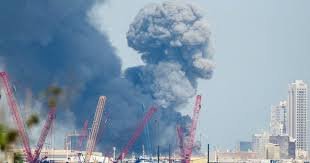
In response, Iran’s Islamic Revolutionary Guard Corps (IRGC) said it had launched attacks on U.S. assets in Bahrain and Kuwait following what it described as a U.S. strike on a communications tower south of Qeshm Island.
Iranian state-linked media reported that IRGC forces targeted the U.S. Fifth Fleet headquarters, as well as an airbase and helicopter facilities in an unnamed regional country, using missiles and drones.
CENTCOM said Iranian missile attacks directed at Bahrain, Kuwait, and other regional locations were either intercepted or failed to reach their targets. It reported that two missiles fired toward Kuwait fell short or disintegrated mid-flight, while several others aimed at regional sites malfunctioned. It added that three missiles targeting Bahrain were intercepted.
U.S. forces said all attacks were unsuccessful and reiterated that they remained prepared to counter what they described as “unwarranted Iranian aggression.”
CENTCOM also said Iranian forces have repeatedly targeted Gulf areas hosting U.S. military installations since the conflict began in late February.
The latest escalation comes more than three months after initial U.S. and Israeli strikes on Iran. The broader conflict remains at a stalemate under a fragile ceasefire framework, while maritime activity in the Strait of Hormuz continues to be heavily restricted.
Diplomatic efforts between Washington and Tehran remain uncertain. Both sides said last week they had reached a tentative initial understanding to halt the war, but no formal agreement has been signed.
Iranian media claimed Tehran has had no direct communication with Washington for several days. However, U.S. President Donald Trump stated that negotiations are ongoing, saying in a social media post that contacts had taken place continuously, including within the past several days.
Separately, the wider regional conflict continues to intensify. Israel has maintained strikes on towns in southern Lebanon despite a U.S.-mediated partial ceasefire announced earlier in the week. Lebanese security sources confirmed continued Israeli operations on Tuesday.
The conflict, which began on February 28, has resulted in thousands of deaths, primarily in Iran and Lebanon, and has contributed to global economic disruption through rising energy prices. It has also triggered renewed Israel-Hezbollah fighting, including what reports describe as Israel’s deepest military incursion into Lebanon in 25 years.
The escalation has displaced an estimated 1.2 million people in Lebanon, while ongoing Israeli drone activity over Beirut has continued to heighten civilian concern despite ceasefire announcements.