

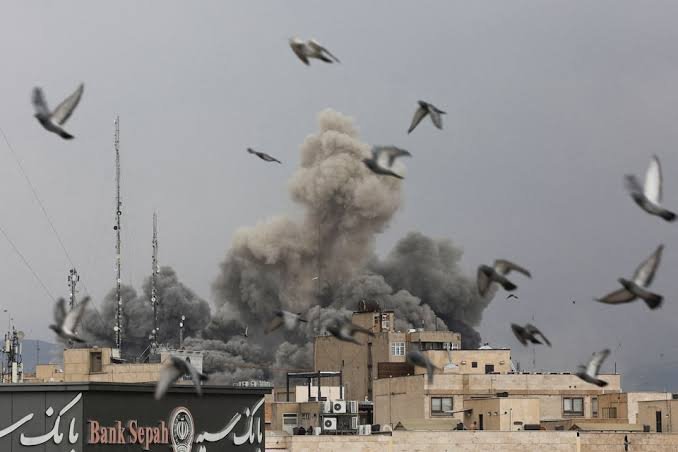
WASHINGTON/TEHRAN: The United States launched a fresh wave of military strikes against Iran on Wednesday, targeting sites along the country’s southern coast in response to attacks on commercial shipping in the Strait of Hormuz.
The US military said the operation was aimed at preventing further threats to international shipping after three cargo vessels were attacked while transiting the strategic waterway a day earlier.
“US Central Command forces have started conducting additional strikes against Iran to further degrade their ability to threaten freedom of navigation in the Strait of Hormuz,” CENTCOM said in a statement.
The US added that it was holding Iran responsible for what it described as “unjustified aggression” against commercial shipping and civilian crews.
How Did Iran Respond to the US Attacks?
Iran retaliated by launching missiles and drones toward Kuwait and Bahrain, both of which host US military bases.
Kuwait’s Defence Ministry said its air defence systems intercepted the incoming projectiles, while Qatar briefly issued an elevated security alert before later lifting it.
Iran’s chief negotiator, Mohammad Baqer Qalibaf, warned Washington against further military action.
“The US has yet to learn that bullying and breaking its commitments no longer come without a cost. If you strike, you will be struck back,” he said, adding that the Strait of Hormuz would remain under Iranian arrangements.
What Did President Trump Say About the Conflict?
US President Donald Trump said the latest military action was retaliation for Tuesday’s attacks on merchant vessels and warned that any further attacks would trigger a stronger response.
“This is in retribution for yesterday’s bombing of ships by Iran. If it happens again, it will get much worse,” Trump wrote on Truth Social.
Speaking at a NATO summit, Trump also said the interim memorandum of understanding reached with Iran in June was effectively over.
“To me, I think it’s over. I don’t want to deal with them,” he said, while adding that he did not expect the conflict to return to full-scale war.
Which Areas Were Targeted in Iran?
Iranian media reported that US strikes hit several locations along the country’s southern coast, including Bandar Abbas, Konarak, and Chabahar.
Power outages were reported in parts of Chabahar, while a maritime traffic control tower was damaged.
State media also reported that a firefighter was killed in a strike on Iranshahr Airport, while another attack targeted a railway bridge near Aqqala in northern Iran.
How Has Iran Reacted Diplomatically?
Iran accused the United States of violating the June memorandum of understanding and challenged Washington’s actions in the Strait of Hormuz.
The Iranian Foreign Ministry said the strikes violated an agreement recognising Tehran’s responsibility for ensuring safe passage through the waterway.
Iran also submitted a formal complaint to the United Nations Security Council, accusing the United States of violating the UN Charter and international law.
Iranian lawmakers said Tehran was considering further retaliatory measures, including withdrawing from the Nuclear Non-Proliferation Treaty (NPT), revising its nuclear policy, and potentially disrupting shipping through the Bab el-Mandeb Strait.
What Is the Impact on Global Oil Markets?
The renewed fighting pushed global oil prices higher, with Brent crude rising around one per cent to $78.80 per barrel.
Although prices increased following the latest strikes, they remained below the late-April peak of more than $120 per barrel.
The Strait of Hormuz remains one of the world’s most critical energy corridors, carrying roughly one-fifth of global oil supplies before the conflict, making the latest escalation a major concern for international energy markets and regional security.