

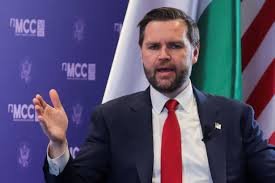
The White House’s confirmation that Vice President JD Vance will lead the US delegation in upcoming talks in Islamabad reflects a broader diplomatic shift following Iran’s decision to engage at a senior level, rather than being driven solely by security considerations.
Earlier, US President Donald Trump had indicated that Vance might not travel to Pakistan, citing security concerns and suggesting that other senior officials would represent Washington. However, the White House later confirmed that Vance will head the negotiating team, accompanied by Special Envoy Steve Witkoff and Jared Kushner, with discussions scheduled to begin Saturday morning local time.
Officials said the decision underscores Washington’s commitment to direct engagement at a high political level, particularly after Tehran signaled its readiness to participate in structured negotiations.
Iran is expected to send a high-level delegation led by Parliament Speaker Mohammad Bagher Ghalibaf, alongside Foreign Minister Abbas Araghchi, indicating the seriousness with which Tehran is approaching the talks. The presence of senior political figures from both sides has raised the diplomatic profile of the negotiations.
Ghalibaf, a former Revolutionary Guards commander and long-time political figure close to Iran’s leadership, is seen as a key link between Iran’s political, military, and clerical establishments. Known for combining hardline positions with pragmatic engagement, he has previously held roles as Tehran’s mayor, national police chief, and a presidential candidate.
His participation, alongside Araghchi, suggests that Iran aims to balance firmness with flexibility while negotiating with Washington.
Pakistan’s mediation efforts, which had faced earlier uncertainty due to mixed signals from Tehran, were sustained through continued diplomatic engagement involving senior officials from all three sides. Intensive discussions helped preserve the framework for talks despite reported setbacks.
As the Islamabad переговорs approach, attention is focused on whether the participation of senior-level delegations can translate into progress toward a more stable agreement and whether ongoing dialogue can reinforce the fragile ceasefire framework.