

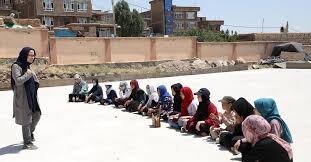
A new UNICEF report has warned that Afghanistan could lose more than 25,000 female teachers and health workers by 2030 if restrictions imposed by the Taliban on girls’ education and women’s employment are not lifted.
The report, released on Monday, states that the Taliban administration has banned women from most public sector employment and restricted girls’ education to primary level, up to the age of 12.
According to UNICEF, these measures have already impacted at least 1 million girls, with projections suggesting the number could double by 2030 if current policies continue.
The report, titled “The Cost of Inaction on Girls’ Education and Women’s Labour Force Participation in Afghanistan,” highlights a sharp decline in the number of qualified women entering key sectors such as education and healthcare.
It estimates that up to 20,000 female teachers and 5,400 health workers could be lost by 2030, representing nearly 25% of Afghanistan’s 2021 female workforce. It further projects that an additional 9,600 health workers could be lost by 2035.
UNICEF Executive Director Catherine Russell warned that excluding girls from education would have long-term consequences, stating that Afghanistan risks losing future doctors, nurses, midwives, teachers, and social workers essential for public services.
The report also notes that female healthcare workers are critical for treating women patients, while female teachers remain essential in girls-only educational settings.
Economically, UNICEF estimates the decline could cost Afghanistan around AFN 5.3 billion (approximately $84 million) annually, equivalent to 0.5% of the country’s GDP.
The agency has urged Afghanistan’s de facto authorities to restore girls’ access to education and allow women to re-enter the workforce, warning that continued restrictions could deepen the country’s humanitarian and economic challenges.