

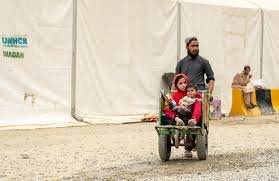
GENEVA: The number of forcibly displaced people worldwide fell in 2025 for the first time in ten years, largely due to increased returns to home countries, according to the United Nations refugee agency (UNHCR).
The agency said 117.8 million people were forcibly displaced by the end of 2025, marking a decline of 5.4 million compared with the previous year. Despite the drop, UNHCR stressed that displacement levels remain “unacceptably high” amid ongoing global conflicts and instability.
According to the annual report, 14.7 million displaced people returned to their places of origin in 2025, including 4.4 million refugees who crossed international borders. The agency said this represents one of the highest recorded levels of refugee returns in decades.
UNHCR attributed the decline in overall displacement primarily to increased return movements, particularly in Afghanistan, Sudan, and Syria, which accounted for more than 90% of refugee returns during the year.
However, UN officials warned that many returns took place under unsafe and unstable conditions, with returnees going back to countries affected by insecurity, damaged infrastructure, and limited access to basic services.
UN refugee chief Barham Salih said that returns under pressure and without adequate safety guarantees risk triggering renewed displacement cycles rather than providing durable solutions.
The report also noted that 41.6 million people were classified as refugees at the end of 2025, including 5.4 million new refugees during the year. A significant proportion of new refugee flows originated from a small number of conflict-affected states, including Sudan and Ukraine.
UNHCR highlighted ongoing crises as major drivers of displacement, citing continued violence in several regions as well as worsening humanitarian conditions. It also pointed to secondary displacement linked to return movements in conflict zones.
The agency raised concern over a shrinking global resettlement system, reporting that available resettlement places dropped sharply to 81,800 in 2024, compared with significantly higher levels in previous years. UNHCR noted that demand for resettlement far exceeds available capacity.
Officials warned that 70% of refugees remain in protracted displacement situations lasting years or even decades, describing the trend as unsustainable for both host countries and humanitarian systems.
UNHCR has called for expanded resettlement pathways, voluntary return frameworks, and long-term development support aimed at reducing dependence on emergency humanitarian assistance and addressing structural causes of displacement.