

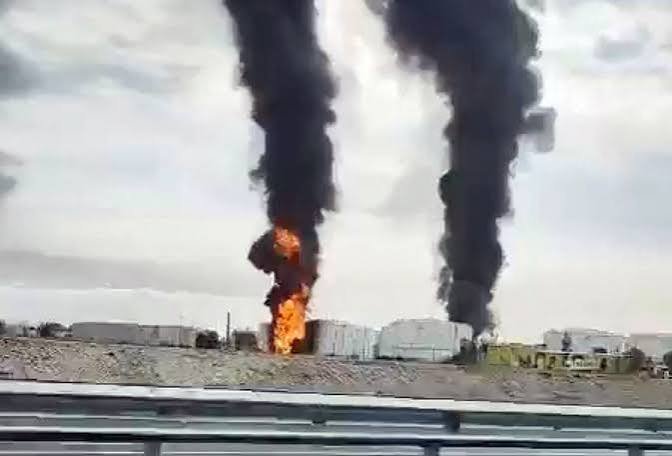
MOSCOW: Ukrainian drone attacks targeted key Russian energy and military infrastructure on Monday, damaging the Baltic Sea ports of Ust-Luga and Vysotsk, while causing a temporary power blackout in Sevastopol, the Crimean headquarters of Russia’s Black Sea Fleet, Russian authorities said.
Officials said air defence systems intercepted dozens of drones, but several strikes reached strategic facilities, highlighting Ukraine’s continued campaign against Russia’s energy export network and military assets.
Which Strategic Facilities Were Targeted?
Authorities in Russia’s Leningrad region said drones damaged the ports of Ust-Luga and Vysotsk. Ust-Luga is one of Russia’s largest oil export terminals and a critical hub for shipments of crude oil and petroleum products.
Regional Governor Alexander Drozdenko said 56 Ukrainian drones had been shot down during the latest wave of attacks.
The strikes come as Russian crude exports from the Baltic ports of Primorsk, Ust-Luga, and the Black Sea port of Novorossiysk reached nearly 3 million barrels per day in June, close to record levels.
What Happened in Crimea?
Russian-installed authorities in Sevastopol reported that a Ukrainian drone attack caused a temporary power outage across parts of the city, which hosts Russia’s Black Sea Fleet. Electricity was later restored to households.
In Kerch, another city in Russian-controlled Crimea, regional head Sergei Aksyonov said a woman was killed in a separate drone strike.
Were Other Russian Regions Hit?
Drone attacks were also reported in several other regions. In Kaluga, south of Moscow, Governor Vladislav Shapsha said drones struck an industrial facility, causing a fire.
Authorities in the Yaroslavl region also reported drone activity, with officials saying two people were injured, although further details were not immediately released.
Why Do the Attacks Matter?
Ukraine has repeatedly targeted Russian oil refineries, fuel depots and export terminals in an effort to weaken Moscow’s war economy and disrupt fuel supplies supporting military operations.
Previous attacks on Russian energy infrastructure have contributed to fuel shortages, rising domestic fuel prices and logistical disruptions across parts of Russia.