

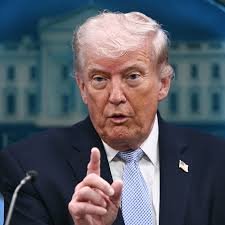
WASHINGTON: US President Donald Trump on Sunday issued a stark warning to Iran, urging it to accelerate peace negotiations or face severe consequences, as the ongoing conflict between Washington, Tehran, and their allies continues to destabilise the Middle East and disrupt global energy flows.
In a post on his Truth Social platform, Trump said Iran must move “fast” toward an agreement, warning that failure to do so would leave “nothing left” of the country. He stated: “For Iran, the clock is ticking, and they better get moving, FAST… TIME IS OF THE ESSENCE,” reinforcing Washington’s hardline stance amid stalled diplomatic engagement.
The United States and Israel have been engaged in a sustained military campaign against Iran since late February, with strikes intensifying after February 28. Despite diplomatic efforts, the conflict has persisted, with both sides failing to bridge core disagreements on nuclear restrictions, sanctions relief, and regional security arrangements.
The war has significantly disrupted regional stability, including what reports describe as an effective blockade of the Strait of Hormuz, a critical maritime chokepoint through which roughly 20% of global oil shipments pass. The disruption has contributed to rising global energy prices and heightened volatility in international markets.
The conflict has also expanded into a broader regional confrontation involving Israel and Lebanon. Iranian-aligned Hezbollah has remained active despite a ceasefire arrangement, with an Israeli military official reporting that around 200 projectiles were fired into Israel over the weekend. In response, Israeli strikes on southern Lebanon continued, with Lebanon’s health ministry confirming that five people, including two children, were killed in Sunday’s attacks. Lebanese authorities say Israeli strikes have killed more than 2,900 people since the start of the conflict, including approximately 400 since the April 17 truce.
Diplomatic efforts remain stalled. Washington and Tehran had agreed to a temporary truce on April 8, but subsequent negotiations have failed to produce substantive progress. Iranian media reports claim that the latest US response to Tehran’s proposals contained no significant concessions.
According to Iran’s Fars news agency, Washington’s five-point framework includes demands that Iran restrict nuclear activity to a single facility and transfer its stockpile of highly enriched uranium to the United States. The report further claimed the US rejected Iranian demands for release of frozen assets and compensation for wartime damages.
The Mehr news agency described the US position as inflexible, stating that Washington is seeking concessions “it failed to obtain during the war,” warning that such an approach risks pushing negotiations into deadlock.
Security concerns across the region remain elevated. Authorities in the United Arab Emirates reported a drone strike that caused a fire near a nuclear power station in Abu Dhabi. No casualties or radiation impact were reported. Iranian-aligned groups operating in Iraq, as well as Yemen’s Houthi movement, are widely believed to possess drone capabilities, raising concerns about wider spillover effects.
Pakistan has meanwhile emerged as a diplomatic interlocutor in ongoing negotiations. Interior Minister Mohsin Naqvi met Iranian parliamentary speaker and chief negotiator Mohammad Bagher Ghalibaf in Tehran on Sunday, as Islamabad continues efforts to facilitate dialogue between Washington and Tehran.
Following the meeting, Ghalibaf stated that the US–Israel conflict with Iran had destabilised the broader region, arguing that reliance on external military presence has increased insecurity rather than reducing it.
Separately, discussions on Iran were held between US President Donald Trump and Chinese President Xi Jinping during a recent high-level summit. While Trump claimed Xi assured him that China was not preparing military assistance for Iran, Beijing maintained that regional maritime routes must be reopened to ensure stability in global trade.
As diplomatic efforts remain fragile and military tensions persist across multiple fronts, the conflict continues to carry significant implications for regional security and global energy markets.